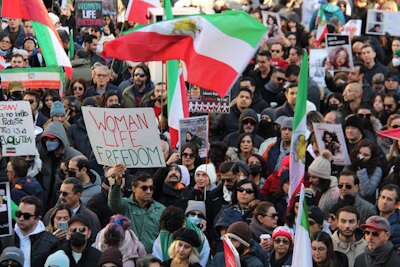
 In early March 2026, the people of Iran face a major turning point. The Islamic Republic’s regime’s long hold on power is dramatically weakening after nearly 50 years in power. On February 28, joint U.S. and Israeli strikes killed Supreme Leader Ayatollah Ali Khamenei and other top officials (50 and counting). This followed months of intense protests starting in late 2025, with widespread calls for change.
We must recognize the heavy price the Persian people have paid under this regime since 1979. Estimates show 250,000 to 700,000 Iranian deaths, including 200,000 to 600,000 during the Iran-Iraq War (with 20,000 to 50,000 children used in dangerous roles like mine-clearing). Political executions and massacres added 10,000 to 30,000 more, while protest crackdowns—including the deadly 2025-2026 events—claimed an estimated 30,000 to 40,000.
Human rights groups report 1 to 2 million people arrested or detained for political reasons, many in places like the notorious Evin Prison. And that doesn’t account for the Islamic terrorism that Iran has sponsored and spread throughout the Middle East through Hamas, Hezbollah, Islamic Jihad, and others. Many terrorists that attacked American troops in Iraq and Afghanistan were financed and equipped by Iran, and we can’t forget that the 1983 terrorist attack on the US Marine barracks in Beirut, Lebanon was sponsored by Iran to drive the United States out of the Middle East.
The Iranian diaspora that the Islamic Revolution in 1979 triggered, numbers between approximately 2 million and 5 million worldwide, with some estimates reaching up to 4 million based on official Iranian government figures from recent years and others citing around 1.6–1.8 million first-generation migrants per UN data. Significant communities exist in the United States (over 500,000–1 million, especially in California), Canada, Germany, the United Kingdom, Australia, and other countries. Many left after the 1979 revolution due to political, economic, or religious pressures, and in early 2026, diaspora groups have actively supported the protests through rallies and advocacy.
 This moment offers real hope for real change — historic change — not merely flowery words or meaningless rhetoric. The strikes have targeted regime leadership and military sites, not the Iranian people when at all possible. President Trump has urged Iranians to take control of their future, framing it as support for their freedom. Israel has stood firm against threats from the regime, sharing goals of security and democracy. Regime opposition figures like Crown Prince Reza Pahlavi (in exile) have called this a chance for Iranians to build a secular, democratic system that ensures liberty and equality for all. Diaspora communities around the world are showing support with rallies and symbols like the Lion and Sun flag.
For tens of millions of Iranians, this could mean real change: women free to choose their clothing, religious minorities able to practice openly, and young people with opportunities unhindered by repression. A free Iran could become a force for stability in the region, built on equality and tolerance.
 While we don’t know exactly what the future holds for the Persian people, liberty and personal freedom must be at the center of any new leadership and representation that emerges from the ashes of the Islamic Republic.
As was inscribed on our own Liberty Bell in 1752, let this be at the forefront of the new nation of Iran:
“Proclaim LIBERTY Throughout All the Land Unto All the Inhabitants Thereof” — Leviticus 25:10.