The Reign Series: Thy Kingdom Come

Have you ever considered that when Jesus returns and reigns after the Tribulation, what could His Kingdom — and the new world that He will create (or remake) — look like?

Imagine a world ruled with perfect justice yet coupled with mercy and grace? Imagine a world with no disease, no wars, much longer lifespans, an ideal climate, and no violence even in the animal kingdom?

What might it be like to live on Earth during Jesus’s literal 1000-year reign (the Millennium)? How will people heal after the Tribulation and all the trauma from it? What happens to the raptured Church, the survivors of the Tribulation, and the martyrs who are resurrected? What happens to the multitudes of orphaned, abused, and enslaved children from that time in which so many adults will die or be removed from the earth?

Several years ago, I came up with the idea for an “After the End” Series that would seek to address many of those questions, and I’ve recently found there’s already a published series that does exactly that, but in a much better and more creative way than I had surmised.

“The Reign Series” by Jeffrey McClain Jones (Author) is a wonderful blend of End Times novelization and science fiction, while holding true to the Biblical/prophetic narrative, as well as giving the Gospel for today’s readers.
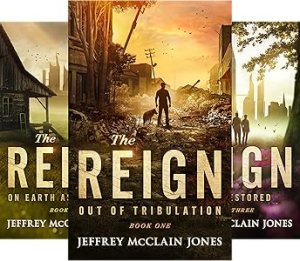
Book 1: “Out of Tribulation”
The war is over. A damaged world awaits healing. Will the self-proclaimed savior destroy and dominate … or restore and reconcile?

Book 2: “On Earth as in Heaven”
The old limits to human power have disappeared, what will the new generations do with their freedom?

Book 3: “Eden Restored”
In the face of surging technology and massive construction, is there still room for paradise?

Book 4: “War to End Wars”
Rebellion swells across the solar system and billions rise against the one King. Will the faithful survive the onslaught of the greatest military machine ever?

Several of the elements I enjoyed in the series was how it presents the saints from the Rapture and the Tribulation as “the Immortals” and how they interact with regular humans, what the saints’ responsibilities are in the Kingdom, the world at peace during the King’s reign, and of course, how it presents “the King” and His capital at Jerusalem. The adversaries in the series are “the Rebels” — those humans dwelling on earth with all the liberties and blessings of the Kingdom yet refuse to submit to the King’s rule — despite ALL they see and hear and experience, they STILL refuse to believe. One of the plot conflicts is how the Immortals rescue children from abusive (or Rebel) homes, which the Rebels contend is kidnapping by the “aliens”.

Often while reading the series, I found myself yearning for the Kingdom (even more than usual!) and praying about that glorious time to come. One of the surprises in the series towards the end (when Satan is released) is how he deceives vast swaths of humanity into believing that the King in Jerusalem isn’t really Jesus, that He’s an “alien imposter” and that they should go to war against Him in order to bring the true Messiah’s kingdom to earth — which in that case, it would be Satan’s. And despite 1000 years of peace, prosperity, and perfection, billions of people on earth still choose to rebel against the King and His rule, and then surround Jerusalem to overthrow the Monarchy.

Given our history as Americans, we tend to believe that monarchies are inherently evil and that democracies (or even constitutional republics) are inherently good. But that’s not Biblical — nor is it true. The Bible shows several examples of good governments that range from simple communism (such as in Acts) to monarchies to republics. It’s not the form of government that really matters as much as how righteous the rulers/government and the people are. The only reason the American republic has been more good than evil is because we historically had a Judeo-Christian foundation. However, as our culture has become increasingly secular (and even anti-Christian), our democratic government has followed the will (and whims) of the people.
However, as Christians we are not called to be “democrats” or “republicans” (or communists, libertarians, or socialists) but monarchists in that we are fully loyal to a king — specifically, King Jesus, the King of Kings. As we see from history (even American history) every form of government is prone to entropy and moral decline/decay. That’s why Jesus’s Kingdom will be the only perfect, just, and righteous government we can ever hope for — because the King is perfect, just, and righteous, and also because He never changes and is never prone to entropy, decline, or decay.

After reading several of the “Left Behind” books years ago, I initially thought that “The Reign Series” would be similar to that, but it actually wasn’t — it was much better! The plot, characters, settings, and the portrayal of the King, His Kingdom, and the time of the Millennium in which there’s no evil, violence, poverty, or war was very well done and has me looking forward to those days ahead.
Posted in Uncategorized | Leave a comment

The Days of Noah Series Update

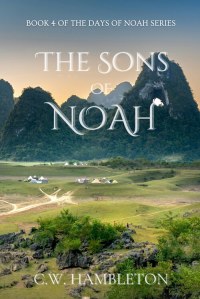
“The Sons of Noah” is the fourth book in the “Days of Noah Series” and one I’ve been looking forward to writing for quite some time! It’s available on Amazon at: https://www.amazon.com/dp/B0FJ7Q51BP

While I had written a preliminary draft of the novel a few years ago, the latest archaeological discoveries concerning the likely location of Noah’s Ark, the First Villages, and also the possible location of Babel, warranted several new directions for the series. Also, rather than merely draft one book at a time, I decided that it would be best to simultaneously draft the next several novels that spanned the time from the Landing to the Dispersion to improve consistency, character development, and cohesion with the Biblical narratives of Genesis 8-11.

The primary discoveries for this change are the shifting of the Noah’s Ark site to southeastern Turkey near Karaca Dag, and the Babel site from southern Mesopotamia to that area of Turkey as well. In 2021, Kenneth C. Griffith and Darrell K. White wrote a paper in the “Answers Research Journal” titled “Candidate site for Noah’s Ark, Altar, and Tomb” which focused on a new possible location for the landing of Noah’s Ark in the mountains of Karaca Dag in eastern Turkey rather than the traditional Mount Ararat site, the Durupinar site, Mount Cudi, or Mount Suleiman in northern Iran. I found their arguments to be quite compelling, particularly with their follow-up paper about Babel: “An Upper Mesopotamian Location for Babel”.

The basis for their papers was the PPNA (Pre-pottery Neolithic-A) sites of southeastern Turkey and the origin of several domesticated plant and animal species. Genetic technologies and their related sciences continue to make new discoveries as to not only our origins, but also the origins of ceramics, domestication of wheat, olives, grapes, horses, dogs, and other animals we take for granted. While evolutionary theory espouses that early humans came from East Africa in the region of Ethiopia and Sudan (ancient Cush), the oldest archaeological and genetic evidence all point to the true place of origin being in the upper Fertile Crescent, specifically eastern Turkey in the region surrounding Karaca Dag. I’ve marked the location for the possible Ark ballast site in Google Maps.

Within the region of southeast Turkey (near the top of the Fertile Crescent) are the oldest evidences of pottery, domestication, PPNA sites, and nearby are the oldest, most sophisticated sites that demonstrate that ancient man was quite sophisticated, cultured, organized, and intelligent – the examples being Boncuklu Tarla, Karahan Tepe, and of course, Göbekli Tepe. Several of these sites are mentioned in the new book and the subsequent ones as well.

With the decision to go in this new direction, I’ve lightly revised the Prologues and Epilogues of the first three books of the series to fit into the new framework/settings (the ‘modern’ portions of the series). The full list of books of the Days of Noah Series are:

  1. “Rise of the Anshar”
  2. “Fountains of the Deep”
  3. “Chains of Darkness”
  4. “The Sons of Noah”
  5. “The Table of Nations”
  6. “The Kings of Old”
  7. “The Land of Canaan”
  8. “The Castors of Giza”

Even though “The Castors of Giza” novel was written more than a decade ago, I’m bringing that into the series to conclude the story of Noah and his sons, as well as doing some revisions to make it flow better with the rest of the series. I had also considered including the novelization of the Book of Job (“Out of the Whirlwind”) as book 7, but it seemed better to just include that as a standalone story in the set rather than actually being part of the series.

Also, I’ve recently updated the cover for “Out of the Whirlwind” to include a “behemoth” grazing in a river, as described in Job 40 for additional effect, as well as just giving the book a light refresh.

The current schedule for the series is for it to conclude by the late 2026, with each book being released every several months.

For the latest news and updates, visit my author site at https://cwhambleton.com/.

Posted in Uncategorized | Leave a comment

A Grain of Wheat

Like millions of other Americans, I was shocked, saddened, and also angry when I first heard of Charlie Kirk’s assassination last week. His memorial service is happening as I write this, and I hope my words can do him some measure of justice.

Though I had certainly heard of Charlie Kirk and had listened to several clips of him before last week, since his death I’ve been watching and hearing so much more of him, and have grown to admire and respect him far more than I likely would have before, even though we hold to the same morals, beliefs, and values. Like with several others who have been taken away from us quite suddenly and without warning, as I learned more about him, I wish I had gotten to know him and his work much, much sooner than I did.

Charlie was highly influential in the last two presidential elections and on many university campuses across the nation, though I think his focus and intention was more to reach America’s mis-educated youth with the Gospel, wisdom, truth, and common-sense rather than mere politics. From what I’ve observed, Charlie consistently pointed others to God, Jesus, the Bible, and actual truth and wisdom — all of which far too many young Americans have little to no exposure to today.

What’s truly tragic in our over-educated “Information Age” is that so many people think they know so very much about so many subjects but in reality do not — they merely think they do. And Charlie was doing his best to correct that by taking the truth directly to the very people that didn’t want to hear it — unfiltered, undiluted, and unapologetically. He went, he saw, he listened, and he spoke truth into those areas. So many people (including myself) tend to hear what’s happening in the world, the news, and with today’s kids and think, “Why bother? America is lost and there’s no hope for our country or the next generation.”

But that’s not true — that’s exactly what our Enemy wants us to think and believe so that we give up and not even bother to try to speak out against the evil and darkness around us, much less get involved to change things. The truth is that there is ALWAYS hope, and one never knows how God will move in a nation or a generation. One never knows what may spark a spiritual awakening or a revival except God himself. Charlie understood that — and more importantly, he did something about it. Instead of giving up or playing it safe, Charlie put on his spiritual armor and engaged the Enemy on his turf: the universities and the college campuses that have torn more people away from the truth and God than any other institution in history. Since the 1950’s Western universities have been incubators for immorality, injustice, atheism, and even evil in the name of liberalism, tolerance, and education.

I grieve for Erika his widow and his two young children, who will only know of their father from their family, past recordings, and second-hand stories; they will never really know him on this side of Heaven. As they grow up, they will never have his direct, personal influence in their lives, and they will have to battle some deep, painful things. Over the last week like so many others, I find myself asking “Why, Lord?” and thinking that Charlie’s death is so very, very unfair, almost like, “God, this is really, really messed up! Charlie followed hard after You and tried to live his life according to Your standards, and this is how he and his family are rewarded? With an assassin’s bullet? With a shocking, public assassination? If this is how You treat your friends, then what’s the point?”

However, as I’ve been watching the world’s reaction to Charlie’s senseless killing — the theft of his life in an attempt to silence him — his voice has become louder and more widespread than he could have ever imagined. Really — in all honesty, I don’t think Charlie could have imagined the impact that his murder is having on our country. Within a week of his murder, 66,000 applications for more university chapters of Turning Point USA have been filed (there were only 900 before), and tens of millions of his clips and recordings have spread not only over American social media, but the entire world. Whereas before only those involved in American politics and such had heard of Charlie, now the entire world not only knows who he is, but what his message is. (And yes, I say “is” rather than “was” because Charlie and his legacy lives on, even if he’s no longer with us.)

A verse that has been running through my mind since all this happened with Charlie Kirk is from John 12:24, in which Jesus says to his disciples, “Most assuredly, I say to you, unless a grain of wheat falls into the ground and dies, it remains alone; but if it dies, it produces much grain.” While Jesus was metaphorically speaking of Himself when He said that, He was also speaking that of every believer who gives up their life for Him — each of us, a seed of life willing to die to bring forth much more of that life for our King.

Yesterday while I was thinking of Charlie and his legacy, this curious conversation ran through my mind — an imaginary conversation between him and God. I imagined them engaging in an Abraham-like bartering exchange in which Charlie sees so many lost people of his generation and he asks God how he can better reach them — what more can he do (even though he’s already done so much). So God says, “Charlie, what would you give to reach them?” Charlie thinks for a long moment and replies, “More time. More of my life.”

Then God says, “Let’s say that if I were to bring 1,000 people into My Kingdom in exchange for a year of your life, would you do it?” Almost without thinking, Charlie responds, “Of course, Lord — for 1,000 people — I would give up one year of my life.” Then God says, “Okay, so would you give 5 years of your life for 5,000, 10 years for 10,000, 20 years for 20,000, or even 50 years of your life for 50,000 people?” And Charlie, realizing what God is implying, is slower to respond this time, but then finally he says, “Yes, Lord. My life is Yours anyway. For 50,000 people, you can take the rest of my life.” Then God says, “What about for 5,000 for those 50 years instead of 50,000?” And Charlie again says, “Yes, Lord, even for 5,000,” but he wonders why God has now reduced that number.

So God keeps asking Charlie that same question, but reducing that number by a factor of 10 until the exchange is for only 50 people — one soul for each year of his life. And Charlie, seeing that 50 years of his life means that 50 people will go to Heaven instead of Hell for eternity again agrees. At this point, he knows he would miss out on a lifetime with his wife, his children, his grandchildren, and his friends. But those lost people — they won’t be lost for eternity any more. And then Charlie says, “Lord — I would do it for even just one — just one person not spending an eternity without You.”

Then God smiles and tells him, “Well done, Charlie. Because of your willingness and your faith, therefore millions upon millions of people — not mere thousands — will hear the Gospel and enter My Kingdom because of your sacrifice. In fact, tens of millions who would never, ever hear nor even be open to My message will hear it because of you and My message being told through you. Your impact in death will be far, far greater than even in life.”

Before last week, I never fully understood or fully knew what the “Grain of Wheat” verse was all about. It’s one thing to intellectually understand a passage or idea but quite another to understand and experience it firsthand and in real-time. As I see what’s happening in America and around the world since Charlie’s death, he truly is modelling that one grain of wheat that our Lord spoke of thousands of years ago.

“Unless a grain of wheat falls into the ground and dies, it remains alone; but if it dies, it produces much grain.” 

Like many, many others this week, I have joined Turning Point USA and will be getting more involved in their events and their organization, and I’d like to encourage everyone who reads this to do the same. From the beginning, Charlie Kirk called his organization “Turning Point” because he wanted to see America and our people turn — not just politically — but culturally, relationally, and spiritually. And his death marks the turning point for our country in this generation that he worked so hard to reach.

The harvest from Charlie’s sacrifice is going to be far greater than he could have ever imagined.

Posted in Uncategorized | 1 Comment

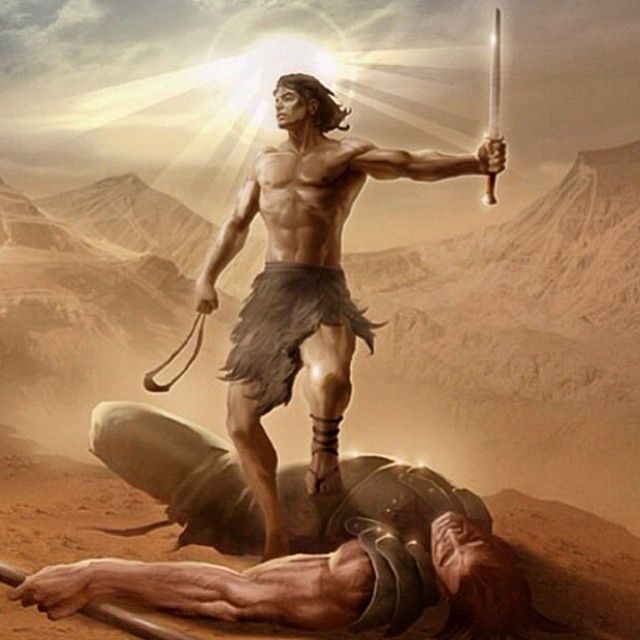
David: The Unlikely King

My wife and I recently finished watching the first season of the new biblical series “House of David” on Amazon. The series was very well done, even though it doesn’t exactly follow the biblical narrative in places, along with some embellishments and liberties taken for dramatic effect. And while it only covers the beginning of David’s story, it was enough to get me thinking about him and his life in my morning devotional time.

I’ve written before about David and about how his true focus was on God for all his life, and how his deepest desire was to simply be with Him and be in His presence in That One Thing (Psalm 27) and the series only reinforced that. While most seek after fame, fortune, and power (just spend 10 seconds on social-media!), David did not. It struck me that even though David obtained all of those things during his life, he never intentionally sought those things for himself or for his own glory. He sought after God and His name and he made himself available in whatever way God might use him. And in doing so, God provided those things to him much like He later would for his son Solomon after he had simply asked God for wisdom in governing His people.

David was so focused on God and innately knew that his satisfaction would only be found in Him that he would’ve been happy regardless of whether he had become king or not. While few people like being shepherds back in those days (it was typically the lowest job given to the lowest of servants and children), David made the best of it. There’s no record of him complaining, and apparently he used those long, boring, solitary days and nights in the fields to grow closer with God. Then when the time came, he relied on his relationship, faith, and trust in God for God to guide and deliver him in whatever situation he found himself. And God richly rewarded that faith, loyalty, and trust.

God even says as much in 2 Samuel 7:8-9 when David is wanting to build a Temple for Him: ‘This is what the Lord Almighty says: I took you from the pasture, from tending the flock, and appointed you ruler over my people Israel. I have been with you wherever you have gone, and I have cut off all your enemies from before you. Now I will make your name great, like the names of the greatest men on earth.”

David’s focus was not on greatness, his own glory, or even himself — but on God. In reviewing the lives of Saul, Solomon, and most other kings in the Bible, that is by far the exception rather than the rule. David stands alone.

David’s life-story also parallels that of Job in many ways, save for the boils and ashes and three accusing friends. For example, God provided the growth, wealth, reputation, and honor/glory for both. Both were regarded as very wealthy, faithful, wise, and of impeccable reputation. He provided wives and many children for both, and the very picture of an ideal household, in that both had ten children or more. But then at the height of their greatness, God allowed all those things to be stripped from them:  Job in his testing by Satan and David in his sin with Bathsheba that opened the pathway for Satan to destroy his household from the inside.

In both cases of David and Job, God allowed nearly everything that mattered to be stripped from them so that they, He, and others (and us by their stories) could see what remained. And what was that? Their faith and desire to be with God. Despite all that had happened to them, both men clung to God with everything they had and refused to give up on their faith in Him and that He would ultimately deliver them. Somehow.

In the case of Job, all that had been lost during his time of testing was later restored twofold, though with David, it wasn’t quite as dramatic — likely because of his sin. David’s kingdom and much of his household was restored, but his reputation never was. How differently David’s life would have turned out if he had not sinned with Bathsheba and then murdered her husband to cover it up — to save his reputation and hide his disloyalty and sin! All the family turmoil and tragedy that befell him would have likely been avoided, as well as his near-loss of the kingdom to his son Absalom and the heavy burdens of grief, loss, and regret that David then carried for the rest of his life. There was probably not an hour that passed that he didn’t think of one of those evils, and only God knows how much that interfered in their relationship and their intimacy/walk.

Yet despite all the tragedy, loss, and grief, David still clung to God — even if it was by the very tips of his fingers at times — and God didn’t tear the kingdom away from him despite his sin. Remember, God removed the kingship from David’s predecessor Saul over his disobedience with the sacrifice and King Agag, and then God split the kingdom after David’s son Solomon fell into idolatry and lost faith with Him. But God continued to honor David because he continued to honor God and he returned to Him whenever he sinned and went off the rails. David continued to be humble before God and knew he was still “little” despite his greatness.

Consider all the stories of the kings and rulers throughout history and even many of our leaders today. How many would actually humble themselves and confess their sins and wrongdoings when accused or exposed? How many would not merely call for a day of prayer but actively fast and participate in it? Yet David did all that in 2 Samuel 24 when he sinned and took an unlawful census of the people (relying upon the strength of the army/people rather than God).

David’s life — through all the highs and lows — continued to reflect his desire to be close to God and his reliance upon Him, as well as his inner humility.

While the “House of David” wasn’t preachy and didn’t delve too much into the spiritual side of David’s life, it was great to see the portrayal of him and the biblical characters we’re familiar with, and of course, all the action-scenes and being able to see what they might have looked like three thousand years ago.

I’m already looking forward to seeing what Season 2 of “House of David” will bring and how his onscreen character will be developed!

Posted in Uncategorized | Leave a comment

A Reflection on Names

During the Christmas Eve service at Calvary Chapel Merritt Island, one of the songs that was featured was the song Names by Elevation Worship and Maverick City Music. And while it’s not what anyone would consider to be a typical Christmas song, there were several elements within it that declared the truths of the Christmas message, and also the wonder of God the Son coming down into our midst and taking on flesh and bone in order to dwell among us (Immanuel). In the midst of celebrating Christ’s birth, this song  reminding me of the richness of God’s names and the power they hold in our lives.

The Power of God’s Names

Names is more than just a song; it is a declaration of who God is, His visible and invisible attributes that each of His names describes. The names that God takes for Himself and those that others give Him are scattered throughout the Scriptures, often as different elements and attributes of God are revealed to people. Each name of God reveals a deep aspect of His character, His promises, and His relationship with us. The lyrics powerfully articulate these truths:

You are the medicine
The only cure for everything I feel within
Redeeming what was lost and all that could have been
Oh, this is a healing kind of love.

In these words, we see Jehovah Rapha—the Lord who heals. The song continues to describe God as our truest friend, our comfort, and our Prince of Peace. These attributes are not just poetic descriptions; they are reflections of His very essence.

A Song of Worship and Surrender

As the congregation at Calvary Chapel Merritt Island worshiped together, I was struck by how the song’s chorus so beautifully aligns with Isaiah 9:6:

Everlasting Father, Prince of Peace
Immanuel, God with us, You’re here with me
Wonderful Counselor
The government is resting on Your shoulders.

These names were prophesied about Jesus long before His birth, affirming His divine nature and eternal reign. Singing them aloud became a moment of surrender, a reminder that no matter the uncertainties of life, His Name is above all.

The Names of God: A Deeper Understanding

When the song was was being sung in the church, each of the names of God was displayed on the screen, which really added to the depth and intimacy of the worship experience:

  • El Shaddai – Lord God Almighty
  • El Elyon – The Most High God
  • Adonai – Lord, Master
  • Yahweh – Lord, Jehovah
  • Jehovah Nissi – The Lord My Banner
  • Jehovah-Raah – The Lord My Shepherd
  • Jehovah Rapha – The Lord That Heals
  • Jehovah Shammah – The Lord Is There
  • Jehovah Tsidkenu – The Lord Our Righteousness
  • Jehovah Mekoddishkem – The Lord Who Sanctifies You
  • El Olam – The Everlasting God
  • Elohim – God
  • Qanna – Jealous
  • Jehovah Jireh – The Lord Will Provide
  • Jehovah Shalom – The Lord Is Peace
  • Jehovah Sabaoth – The Lord of Hosts

Each of these names is a promise, a truth we can hold onto in every season of life. Whether we need healing, provision, peace, or righteousness, God’s names declare His unchanging nature and faithfulness.

A Call to Worship

Hearing Names during the Christmas season was a powerful reminder that Jesus is Immanuel—God with us. As we reflect on His names, may we stand in awe of who He is and trust in His sovereignty.

I invite you to listen to this incredible song and meditate on the names of God. Let it be a moment of worship, reflection, and renewed faith in the One who holds all things together.

Posted in Uncategorized | Leave a comment

The Sons of Ashur … Released!

Now available on the Kindle and in paperback!

My latest fiction work (“The Sons of Ashur”) is ready for Kindle download at Amazon.com! The book is also available in paperback format.

The synopsis for the book is:

As the dust begins to settle after the sudden fall of the Islamic regime in Iran, freedom, personal liberty, and optimism are once again rising after being dormant for many years. The religious police have been outlawed and women have regained many of their rights that had been lost for decades. The nuclear program has ended and new democratic movements are sweeping over the country.

To the west in Syria, the long civil war is winding down, but the Syrian dictator-for-life is still in power. Rumors are circulating that several Iranian nuclear weapons are missing and may be hidden in the Bekka Valley, now under Hezbollah’s control. As Israel scours the land for the missing weapons, they launch a new initiative to dismember Hezbollah before they can find the weapons and claim them for themselves.

With an opportunity for peace before them, a group of esteemed foreign leaders devise a new peace initiative called the Amman Accords to remake the Middle East in the name of peace and prosperity. But in the timeless, war-torn land of Iraq, another group sees a chance to reclaim their ancient homeland in the Assyrian Triangle. And a charismatic, determined Assyrian leader will stop at nothing to secure their homeland before it’s too late?

The setting and timeline of this book takes place about eighteen months after the events of Book 1 of the series, “The Seed of Haman“.

Posted in Books, Christian-life, God | Tagged , , , , , , , , | Leave a comment

Howling Like Hell

The wind here in the mountains has been fiercely blowing since late yesterday evening. After a nearly perfect spring day on Palm Sunday, the wind picked up and hasn’t stopped since. The huge trunks of the great oak in the back are even moving (which they rarely do). And while our house was built to withstand such winds, it’s been creaking and even shuddering at times from the gusts and billows. “Howling like Hell” is a perfect description for the weather this morning, which brings me to this entry.

In a recent interview with Pope Francis (early 2024), he said that he hoped that Hell would be empty. On the surface, that sounds great — but it misses the real point of Hell on so many levels. A few were quick to respond, with one of the better rebuttals coming from Dennis Prager, a reformed Jew who said that he hoped for the opposite: that some people would go to Hell (i.e., that it would indeed not be empty, or at least not completely). He went on to say why, both in his weekly column and in a Fireside Chat that followed (https://dennisprager.com/column/the-pope-hopes-no-one-is-in-hell-we-should).

So how can someone counter another who wants no one to go to Hell? Because without Hell (or at least some form of punishment in the afterlife), God would not be just. And if God is not just, then He’s not a god worth following (paraphrased). And those are soberingly true statements. Those who wish for Hell to be empty are awfully close (theologically) to those who would deny the very existence of Hell.

Nearly ten years ago in a Washington Post interview, Ben Carson surprised many people by saying he doesn’t believe in a literal hell, because he contends that a loving God would never torment anyone in Hell, especially for eternity (https://www.washingtonpost.com/news/post-politics/wp/2015/12/01/why-ben-carson-doesnt-believe-in-hell/). As a member of the Seventh Day Adventist church, this is one of several significant differences between that belief system and mainstream/orthodox Christianity. However, this is a common hindrance to faith in God that many cite when they ask: “How can a loving God allow pointless suffering?” or “How can a loving God send someone to Hell?”

Such questions are the type in which the people asking them don’t necessarily want answers as much as stating ( in the form of a question) why they’re refusing to believe in God. Whether they realize it or not (let’s assume “not”), they’re impugning God’s character and several of His primary traits: that He is holy, that He is just, and that He is loving. With one simple rhetorical question much like that which was first asked in the Garden of Eden (“Did God really say…?”), the faith of many has been hampered or destroyed and the character of God called into question.

The issue is trifold much like the Trinity (Three in One): that God is perfectly just while being perfectly holy AND perfectly loving. He cannot and does not violate His nature, and therefore the resolution of the conflicts between those three traits can sometimes seem odd to us, or at least unintuitive. Though He loves fiercely,  He cannot tolerate evil or sin and His very being demands justice — and not just for those wronged or harmed when injustice occurs — but for His own Self.

A real-world example of His nature is to consider the sun: the sun provides incredible light, power, and unfathomable heat, but they are inseparable; you cannot have one without the others. The sun is completely intolerant of anything cooler than itself and vaporizes anything that approaches it — unless it’s wrapped in some form of heat-shield capable of protecting it from the sun’s unforgiving fury!

Such it is with God and His holiness, love, and justice; He cannot tolerate sin and evil in any form unless it’s somehow shielded or protected from Him. His very nature demands justice, yet He is also incredibly merciful and loving. The only way we sinful creatures are protected from His holy nature is by wrapping ourselves in the righteousness of Jesus, the one and only Mediator that God has provided for us to draw near to Him — and for Him to draw near to us. God is committed to making us holy, to burning away all the sin and evil from our hearts so we can dwell with Him in Heaven.

Since God created everything and will fill all Creation with Himself and His love and holiness (and those who are conformed to Himself), what is He to do with those who refuse His love? What is He to do with those who refuse to wrap themselves in the blood of Christ, our “sin-shield”? They must either be annihilated or be cast completely out of the entire Creation — into the Outer Darkness. And annihilation isn’t really an option for God because He has created us in His image: as eternal beings.

Ironically, the Person who spoke the most about the reality of Hell was Jesus Christ Himself. Before He began teaching on the reality of Hell and its torment, Sheol (or the Pit) was where souls went after people died — usually described as into the bowels of earth. It was Jesus — God the Son in the Flesh — Who revealed what Hell was all about, and He should know because He created it (Colossians 1:16-17)!

In the beginning, God never intended to send people to Hell because it was a place created specifically for Satan and his angels (Matthew 25:41). It wasn’t until we sinned that Hell (or the Outer Darkness) was a possible destination for human beings. Not only that, but because we had chosen Sin and Death over Life (ie, from Him), Hell became our default destination after we die. Again, if God has made everything and people choose not to be with Him by accepting His salvation, then what is He to do with them? He has to send them outside of His Creation — into the Outer Darkness.

The horrible reality of Hell and the tragic majority of the population of people who will be going there some day is also foretold by Jesus in Matthew 7:13-14 where He says:

“Enter by the narrow gate; for wide is the gate and broad is the way that leads to destruction, and there are many who go in by it. Because narrow is the gate and difficult is the way which leads to life, and there are few who find it.”

While Jesus likely has the same desire as Pope Francis (that few will be sent to Hell), from this passage it seems to be that He knows that this will not be the case. That’s why He came into the world in the first place: to offer salvation through His blood/sacrifice so that no one would have to go to Hell. However, many (or most) will remain on the broad road to destruction (Hell) and very few will actually find the way to life and be saved (ie, through Him).

We can assume that everyone wants to go to Heaven after they die, but how many people would actually want to go there to be with God and Jesus as they’re described in the Bible? My personal belief is very few indeed; if people really want to have a relationship with God and Jesus, wouldn’t they be pursuing it in this life, while they actually have a choice? If you don’t care about God in this life, why would you want to spend eternity with Him in the next?

Another insight into holiness relates to the subject of suffering. Why does God allow so much suffering in this world? He certainly has the power to do something about it, but all too often He doesn’t. He allows it or even instigates it in some circumstances, particularly in His command to take the Gospel to the ends of the earth and make disciples of every tongue, tribe, and nation.

Were there mass-slaughters in Africa before a few decades ago when the Gospel really began to penetrate the so-called Dark Continent? Yes, but nowhere near on the scale they have been recently. This has been the history of Christianity from the beginning: wherever the Gospel goes and begins to invade a culture, contention, strife, and upheavals follow because Satan and his demons oppose it. They’re not willing to surrender a single inch and will do whatever they can to oppose the Gospel from bringing others to Christ. Jesus gave His message to twelve men who eventually overturned one of the greatest empires in the history of the world, even though it cost them and many others their very lives.

A last insight into God’s holiness is its locale with regards to the earth. Most people speak of going to this wonderful place called Heaven after they die and dwell there forever, but that’s not the picture of the afterlife that the Bible paints. According to the New Testament, people who are saved go to be with Jesus, who currently dwells in Heaven. However, sooner or later, He promises to return to the earth and bring all of His people with Him. Not only that, but after His 1,000-year reign on this earth, the current heavens and earth will vanish away and new ones are created and New Jerusalem (or Heaven) descends to the earth and remains there for Eternity (Revelation 19-22).

The overarching theme of the Bible is of God dwelling with us. He reaches down and invades our culture, our world with His influence, His Word, and sometimes even His presence. It is HE who’s taking action and making things happen — not us. Yet He has a problem. A BIG problem. He is blindingly holy and just but we are appallingly unholy and unjust. So He invades us and replaces our unholy hearts with His Holy one and sets out to remake us from in the inside out. His plan is to make the world holy again not merely imposing His Will upon it, but by filling it with people who have been made holy.

While Pope Francis may have had the best of intentions when he said that he hoped that Hell will be empty, I believe it would have been much better for him to say that Hell will be full, that it is humanity’s default destination because of our sin, and that he wishes that everyone would come to a saving knowledge of Jesus Christ by turning to Him in faith, in repentance, and seeking His forgiveness and therefore be saved.

Posted in Uncategorized | Leave a comment

Virtual Voice by Amazon KDP

In early November 2023, Amazon’s Kindle Digital Publishing (KDP) surprised the publishing industry by announcing that a beta program for creating audiobooks from eBooks was in the works called “Virtual Voice”. The new service would use AI (Artificial Intelligence) to “read” your KDP eBooks and quickly generate audiobooks which would then be published to Amazon’s Audible store. Left unsaid was that Amazon/KDP would have some sort of exclusivity program to list books produced by their services only in their stores and no other channels.

As with other initiatives from Amazon, their Virtual Voice program announcement has had a mixed reception, with opinions ranging from “revolutionary and game-changing” to “its-the-end-of-the-publishing-world” extremes. There’s no disputing that Amazon has had a huge impact on every part of the book industry, from retailers to publishers to readers. Since Amazon began selling books online in 1995, many bookstores and publishers have been put out of business (or have significantly scaled back their services). Meanwhile, since 2007 when KDP began, many authors who would’ve likely never been published can quickly and easily publish their own books in a variety of forms from eBooks to paperback to hardcovers. And what does it cost to publish with KDP? $0.00 per book.

For myself, the announcement of Virtual Voice couldn’t have come at a better time, as I was looking to publish several more audiobooks in 2024. Ideally I would publish all my books as audiobooks, but that would be a big undertaking. Two years ago, I used FindAway Voices to publish two audiobooks (“The Author of Life” and “The Seed of Haman”), though the process was cumbersome and expensive. Even with the royalty-sharing program in which the expenses are split between the author and narrator, the cost per book was at least $450 — and more if your book is longer. And that doesn’t include the time spent on producing audiobooks that could be better used elsewhere — like writing more books.

To traditionally produce an audiobook, you first have to find a narrator whose voice fits with your manuscript, interview them, hope they’ll want to narrate your book, and then contract their services. Depending on their schedule, you might get the audiobook proofs back for review within a few weeks up to several months. After receiving the proofs, you need to manually review the audio content, send back the corrections, wait for those to be re-produced, then finally approve the finished audio content when everything is correct. At minimum, in my experience this process will take at least 1-2 months. You can narrate and produce your own audiobooks, but then you would need to buy the equipment, record your material, and then find the time to professionally produce the material.

While the traditional audiobook process may be acceptable for one or two books (not to mention affordable), it isn’t for many more. In my case, I have over thirty books in my library — and more on the way. I simply can’t afford the overhead nor the time to produce more than a few audiobooks a year — at least not traditionally. As with my previous self-publishing experience, the new KDP program came along just in time, so my plans to publish more audiobooks was put on hold until Virtual Voice was ready.

By mid-December, I received the invitation to join the Virtual Voice beta and I dove in headfirst, with plans to generate as many audiobooks from my existing materials as possible. I was a bit skeptical at first, so I started with some of the smaller books and put it to the test. After playing around with their Virtual Voice Studio editor a bit and listening to the AI narrators/voices, it didn’t take long to publish the first audiobook and then I was off and running. At the start of the beta, there were four voices to choose from but now there are eight. And the cost for publishing an audiobook with KDP’s new Virtual Voice service? $0.00!

On the first day of the beta (after about 2-3 hours), I had fifteen audiobooks published and on their way to the Audible store. After resolving several issues with KDP, by mid-January all my eBooks had been published as audiobooks (33 in all). The main issues I encountered were how KDP processes the eBook’s Table of Contents, along with a quirk that was likely unique to one of my books. The bug was with a book I had written about the Bible character Job (pronounced like “robe” not “rob”). The KDP editor kept erroring when trying to replace the pronunciation, likely because it occurred over 1,000 times in the book. KDP ended up having to fix the code on their side to resolve the issue.

I found the quality of the AI narrators to be acceptable though not perfect, and it’s certainly better than Siri’s or Google’s voice used in their Maps mobile app. I expect the quality to improve over time as the technology matures and more authors use the Virtual Voice service. Machine Learning “learns” and improves as more data (and a variety of data) is added, and I would expect that Amazon/KDP will continue improving the voices and the narration over the upcoming months/years. Also, I would expect that other languages will soon be supported too.

While the AI narrators in Virtual Voice did sound a bit “artificial” at times, in my case the tradeoffs and benefits were certainly worth it. For myself, I’d rather have my books reach a larger audience at a low publishing cost immediately rather than wait several months or years (if at all). Also, with a niche readership, it doesn’t make sense to spend hundreds of dollars per book and never recoup the production costs. If I decide to traditionally publish another audiobook, I can always de-list it from KDP and then re-distribute the new version made through another service.

All in all, I’ve had a great experience with KDP’s Virtual Voice program and am looking forward to seeing how it grows and evolves as more authors join it.

For a more in-depth analysis on Virtual Voice and its potential impact on the audiobook world, I found this article most helpful:

Amazon’s Virtual Voice poised to change Audiobook Industry

Posted in Books, Writing | Tagged , , , | Leave a comment

The Space Between

I’ve been spending the week here in Cape Canaveral, where it’s been a healthy mix of sun and rain (though the high humidity is constant!). My brother is visiting on a working vacation, and it’s been nice showing him around and getting a little work done here. He takes long walks in the morning and has probably seen more of the town than I have!

Before my trip, my wife asked me to find her some sand dollars while I was here, but after a couple of days scouring the beach, I only managed to find her a couple of broken ones. The best sand dollars (or at least the complete ones!) are usually found on the west side of the state on the gulf beaches, particularly Sanibel Island.

She’s asked me before why I like to come here, and I wasn’t able to give her a very good answer, at least not when she first asked. It was a good question, and therefore it deserves a good answer. It’s a dichotomy of sorts: I like to visit and spend time here and think of it often, yet not put down roots when I’ve had the opportunity to do so. I’ve been to many areas in Florida and along the coast, but this tends to be the place I gravitate back to.

The community of Cape Canaveral / Cocoa Beach is an interesting mix of sun, sand, space, snowbirds, tourists, retirees, and regular working people building their families and lives here. While most are nice, the beaches and homes and town aren’t the busiest, the richest, or the flashiest when compared to Miami, Tampa, and other hotspots on the coast. Surfing and other water sports are big here, even though the waves aren’t the biggest or most powerful, at least not like Hawaii or the West Coast. There are seashells, starfish, and other sea-treasures to be found, but not like on the gulf side or in the Bahamas. The people are usually friendly and laid back, enjoying the beach-life and the slower pace. 

As I’ve had some time to really think about my wife’s question (while on the beach, of course!), I was able to come up with some answers. At first, they ranged from the familiarity of the place to the beaches, the surfing culture, the weather, the nearby port filled with huge cruise ships, the beach bars and restaurants, and every tourist-trap in between. Not only that, but with SpaceX and NASA, the Space Coast is booming (literally!) with frequent rocket launches and a revitalized space industry. The sunrises are often breathtaking, and then at the end of the day you can walk down the street to the Banana River and see equally stunning sunsets.

However, the main reason I like this area is because on some level, it feels like home — even though I know it’s not nor is it intended to be (at least for me). This was the first place I moved to after graduating from high school and where I started out on my own. It’s where I’ve always been drawn to yet know I’m not meant to stay for long. Also (and most importantly to me), it’s where I started my walk, my journey with God thanks to a good church with great people over in Merritt Island. For those reasons, I always feel closer to God, His creation, and even people when I’m here.

However, even though this place feels so familiar after so many years coming here that it almost feels like home, I know that it’s not nor was it ever meant to be. For me, this is a place of peace and perspective — a place to pray, contemplate, and find direction again. A place to take a little break from normal life that’s more than just a typical vacation spot or getaway.

Over the last three decades since my first time here, I’ve found that a place loses its specialness once the familiarity sets in, for good or bad, and I’ve always been well aware of that happening here. Everyone needs their own “thinking spot”, and I suppose this is mine. When I’m here, I rarely miss a chance to see a sunrise, and I often get up extra early to make sure I see the best colors. I began writing my first book here more than thirty years ago, and it’s still one that’s dear to my heart (even though it never did well). Maybe I’ll even re-write it someday — again!

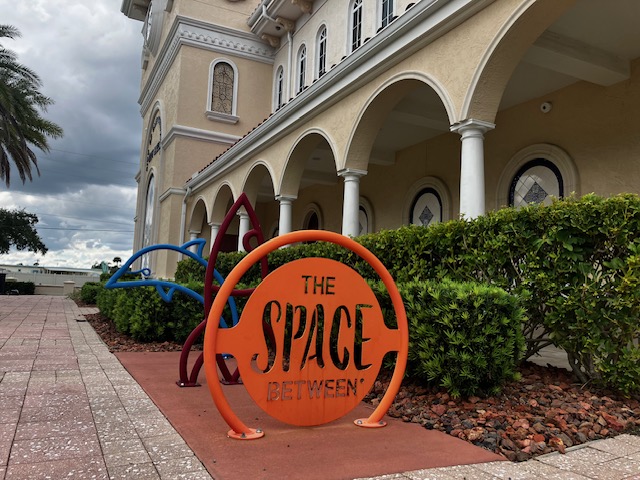
One time several years ago when I came back for a visit, the city of Cape Canaveral had begun promoting a new motto, “The Space Between”, meaning that it’s the “space between sea and sky.” That seemed a little odd to me, especially at first. But as I thought more about it, that’s been my experience here to a certain extent: a space between.

In different ways, this is my personal “Space Between”… the space between different phases of my life, of the ending of old things and the beginning of new ones. I came here when first starting out after leaving home, after graduating from college, after my divorce, and when life seemed to have gone sideways yet again. And this most recent visit is another entry in my story here, one I could share with my brother.

God is good, and He knows what we need better than we ourselves often do. He creates beautiful things and places that can reach us and speak to us like no others can. For some, that means the desert, the mountains, a countryside, the beach, small quaint towns, or even bustling cities.

For myself, that place seems to be here — in this Space Between.

Posted in Character, Christian-life, God, Personal, Uncategorized | Leave a comment

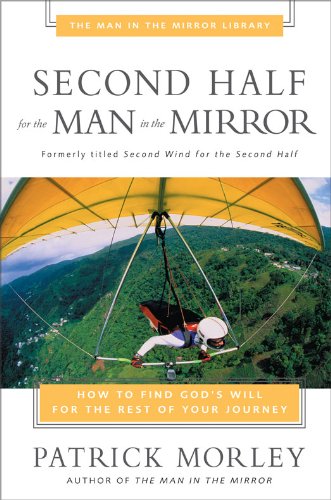
The Second Half

A few years ago, my men’s group from church did a great study about “The Second Half” by Patrick Morley. The focus of the book is to help men understand the different phases of their lives, how to navigate through the mid-life phase, and then how to build the “second half” of their lives. Though both men and women experience the mid-life phase, men experience it differently because much of their identity is defined by their work or career rather than their children.

Generally speaking, our adult lives are divided into two parts, a first half and a second. The first half (starting roughly after graduating from high school) encompasses college and early career, finding a partner, and often building a family. The second half begins soon after the children begin their first halves, either by leaving for college or moving out of the house. When the “empty nest” sets in, people often find themselves restless, purposeless, bored, or even depressed.

Often during this time of the ending of the first half or the beginning of the second half is when “mid-life crises” occur, when extra-marital affairs take place, long-standing life habits and routines suddenly change, or people pursue a change in careers. During midlife, people often try to change their lifestyle, their appearance, moving elsewhere, getting a divorce, buying a new home or car, changing their tastes, and all sorts of other things to try to fill that sudden void or listlessness that they’re now feeling.

It’s also during this time of mid-life when chemical, physical, or biological changes are occurring, such as menopause, our metabolism slowing down, our strength and stamina decreasing, and odd aches and pains that crop up. However, those changes aren’t the primary cause for such mid-life crises as much as a confusion in identity: how that person sees themselves and even realizing that they’re not who they want to be. It’s in this mid-life stage that many people wake up one morning and question what they’ve really done with their lives and wonder who they are.

Over the last year, my wife and I have been preparing for the “second half” of our lives together, though we didn’t really consciously set out to. A year and a half ago, I found myself back in Cape Canaveral, Florida, where I had lived thirty years earlier starting a new life after leaving home. While I was there (both times), I had no clue as to what the future had in store, often not really even knowing where I’d be living beyond a month or two. Six months later, I was in Michigan for a few months helping my parents after my dad had open-heart surgery, and then soon after that my wife and I were back together. It was a rough year, to say the least.

Now we’re in the process of moving to a different home in a different state with a different climate than we’re both used to. Our kids are all graduated and well on their way with their own lives. The conflict and tension that had hung over us and our marriage has ended, and the last year has been one of rest and rebuilding together. For both of us, it’s the start of our second half. We’re both rather surprised at where this journey in life has taken us.

While I was out for a long walk this morning listening to an audio-book on the Holy Land, it struck me that our spiritual lives generally follow the same pattern/sequence as the ancient Israelites. In their history, they went from infancy to bondage (in Egypt) and were then liberated by God to go to the Promised Land, but along the way, they had to first sojourn in the wilderness where they would be tested. They had expected to enter the Promised Land in a matter of weeks, but because of their faithlessness, complaining, and rebellion, their journey that could have taken less than forty days turned into one that lasted forty years!

In our own journey (spiritually speaking), we go from infancy/youth to bondage (sin), and then from bondage to liberation when God brings us into His family and sets our sights on the Promised Land (Heaven). However, before we can go there, He places us in the wilderness of this world, where we are to sojourn and undergo our time of testing, refinement, and even wandering until He calls us Home.

By faith Abraham, when called to go to a place he would later receive as his inheritance, obeyed and went, even though he did not know where he was going. By faith he made his home in the promised land like a stranger in a foreign country; he lived in tents, as did Isaac and Jacob, who were heirs with him of the same promise. For he was looking forward to the city with foundations, whose architect and builder is God.” — Hebrews 11:8-10

Like Abraham, Isaac, Jacob, and our other spiritual patriarchs, we are called to be strangers in a strange land and sojourners, all the while spreading our faith and knowledge of Him to those we encounter along the way.

Posted in Uncategorized | Leave a comment