Tag: Character of God

  • A Reflection on Names

    A Reflection on Names

    During the Christmas Eve service at Calvary Chapel Merritt Island, one of the songs that was featured was the song Names by Elevation Worship and Maverick City Music. And while it’s not what anyone would consider to be a typical Christmas song, there were several elements within it that declared the truths of the Christmas message, and also the wonder of God the Son coming down into our midst and taking on flesh and bone in order to dwell among us (Immanuel). In the midst of celebrating Christ’s birth, this song  reminding me of the richness of God’s names and the power they hold in our lives.

    The Power of God’s Names

    Names is more than just a song; it is a declaration of who God is, His visible and invisible attributes that each of His names describes. The names that God takes for Himself and those that others give Him are scattered throughout the Scriptures, often as different elements and attributes of God are revealed to people. Each name of God reveals a deep aspect of His character, His promises, and His relationship with us. The lyrics powerfully articulate these truths:

    You are the medicine
    The only cure for everything I feel within
    Redeeming what was lost and all that could have been
    Oh, this is a healing kind of love.

    In these words, we see Jehovah Rapha—the Lord who heals. The song continues to describe God as our truest friend, our comfort, and our Prince of Peace. These attributes are not just poetic descriptions; they are reflections of His very essence.

    A Song of Worship and Surrender

    As the congregation at Calvary Chapel Merritt Island worshiped together, I was struck by how the song’s chorus so beautifully aligns with Isaiah 9:6:

    Everlasting Father, Prince of Peace
    Immanuel, God with us, You’re here with me
    Wonderful Counselor
    The government is resting on Your shoulders.

    These names were prophesied about Jesus long before His birth, affirming His divine nature and eternal reign. Singing them aloud became a moment of surrender, a reminder that no matter the uncertainties of life, His Name is above all.

    The Names of God: A Deeper Understanding

    When the song was was being sung in the church, each of the names of God was displayed on the screen, which really added to the depth and intimacy of the worship experience:

    • El Shaddai – Lord God Almighty
    • El Elyon – The Most High God
    • Adonai – Lord, Master
    • Yahweh – Lord, Jehovah
    • Jehovah Nissi – The Lord My Banner
    • Jehovah-Raah – The Lord My Shepherd
    • Jehovah Rapha – The Lord That Heals
    • Jehovah Shammah – The Lord Is There
    • Jehovah Tsidkenu – The Lord Our Righteousness
    • Jehovah Mekoddishkem – The Lord Who Sanctifies You
    • El Olam – The Everlasting God
    • Elohim – God
    • Qanna – Jealous
    • Jehovah Jireh – The Lord Will Provide
    • Jehovah Shalom – The Lord Is Peace
    • Jehovah Sabaoth – The Lord of Hosts

    Each of these names is a promise, a truth we can hold onto in every season of life. Whether we need healing, provision, peace, or righteousness, God’s names declare His unchanging nature and faithfulness.

    A Call to Worship

    Hearing Names during the Christmas season was a powerful reminder that Jesus is Immanuel—God with us. As we reflect on His names, may we stand in awe of who He is and trust in His sovereignty.

    I invite you to listen to this incredible song and meditate on the names of God. Let it be a moment of worship, reflection, and renewed faith in the One who holds all things together.

  • Knowing and Being Known

    Knowing and Being Known

    “You have been weighed in the balances and found wanting…” (Daniel 5:27).

    These were the words which were read from a wall in ancient Babylon to an ancient king who’s time was up. And while this divine proclamation was first made over 2,500 years ago on the very night of Babylon’s fall, these sobering words should still cause all of us to carefully consider our paths in life, particularly when it comes to our eternal future.

    One of the most sobering (if not scariest) verses I’ve long pondered and even worried about is found in Matthew 7 (specifically, Matthew 7:21-23), which involves Jesus addressing some of those who will one day stand before Him. To their surprise and dismay, He will mercilessly condemn them to the Outer Darkness:

    “Not everyone who says to Me, ‘Lord, Lord,’ shall enter the kingdom of heaven, but he who does the will of My Father in heaven. Many will say to Me in that day, ‘Lord, Lord, have we not prophesied in Your name, cast out demons in Your name, and done many wonders in Your name?’ And then I will declare to them, ‘I never knew you; depart from Me, you who practice lawlessness!’”

    What has always really gotten me about this passage (to put it mildly) is that the very ones Jesus calls “evildoers” were completely convinced they were following Him and were by all accounts His disciples. They were doing everything in His Name such as prophesying, casting out demons, working miracles, and bearing all sorts of other spiritual fruit, yet He plainly declares to them, “I never knew you!”

    If that doesn’t give every single one of us who profess to follow Him a long moment’s hesitation, then perhaps we need to re-read His words ― and maybe several more times for good measure! In their words and deeds, weren’t they in fact “doing His will”? And “you who practice lawlessness”? What on earth does He mean by that? Those people He’s condemning were doing all sorts of good works in His Name and likely not breaking any “laws”, nor practicing what we would consider to be “lawlessness” (idolatry, murder, stealing, adultery, etc.).
    However, those standing before Him were indeed breaking one law ― the primary One. The One Law that really matters. The One Law that God raises above all others that says we are to “Love the Lord your God with all your heart, soul, mind, and strength” (Matthew 22:37, Jesus citing the Sh’ma from Deuteronomy 6:5). And while they were doing good works in His Name, they weren’t exactly “doing His will”, meaning to love Him with all their heart, mind, soul, and strength.

    Now, it’s one thing to be loved by God and us to acknowledge Him as God and even fear/revere Him, but quite another thing to actually LOVE GOD, to enjoy God for who He is and for who He reveals Himself to be in His Word. After all, isn’t everyone inherently loved by God simply because He’s our Creator? (Of course, God has those He likes and dislikes, loves and even hates at times, such as Jacob vs Esau in Malachi 1:2-3.) However, the fear and reverence of God is still a far cry from actually loving God as you would your spouse, children, parents, etc.

    Really, truly, loving God means knowing God, and that’s where we should really start to realize that we’re in over our heads, as CS Lewis discovered after the death of his wife in his book, “A Grief Observed”. When his time of grief and suffering came, he found that God felt as if He was nowhere to be found, unlike the rest of their relationship when life was good:

    “When you are happy, so happy you have no sense of needing Him, so happy that you are tempted to feel His claims upon you as an interruption, if you remember yourself and turn to Him with gratitude and praise, you will be — or so it feels— welcomed with open arms. But go to Him when your need is desperate, when all other help is vain, and what do you find? A door slammed in your face, and a sound of bolting and double bolting on the inside. After that, silence.” 

    And then elsewhere in that same book, he considered his feelings and beliefs and wrote:

    “Not that I am (I think) in much danger of ceasing to believe in God. The real danger is of coming to believe such dreadful things about Him. The conclusion I dread is not ‘So there’s no God after all,’ but ‘So this is what God’s really like. Deceive yourself no longer.”

    What if we only “think” or feel that we know Him, but we in fact do not? What if God isn’t who we believe Him to be at all, and we’ve been inadvertently fooled by our Sunday-school teachers, pastors, and even our own studies, thoughts, and feelings? What if we live our entire Christian lives self-deceived to the point that we “know” we’re saved and on our way to Heaven, only to find out on that Day we really aren’t? Personally, I can’t think of a more disappointing ― and utterly terrifying ― thing in the universe! And that’s the thing that used to worry me every time I read that Matthew 7 passage.

    However, a year or so ago I was reading an old Desiring God post titled “Knowing God Versus Being Known by God“, when the following verse jumped out at me from 1 Corinthians 8:3:

    “But if anyone loves God, this one is known by Him.”

    While I’ve read that verse and passage many times over the years, I never really had an “AHA!” moment until I’d read that short DG post. Suddenly, the roof was opened and bright sunlight streamed in. I must’ve read that verse over and over that night and thought about it for a long time. In my mind, that “What if I’m weighed and found wanting?” question was finally settled in my mind and heart, and it opened up an entirely new line of thought, prayer, and contemplation.

    Instead of me worrying over and over about the Matthew 7 passage (among others), the answer was right there in front of me the entire time: “If we want to be known by God, we are to simply, purely, and completely LOVE God just as He tells us to in His Primary Law”. That’s it. Love the Lord our God with all our heart, mind, soul, and strength. Our everything. Nothing more, nothing less.
    Our “good works” and the rest of the tangible fruits of “doing His will” naturally flow out of that love, His love for us and our reciprocal love for Him. The tragedy of those being condemned in Matthew 7 are that while they were doing good works in His Name, they really didn’t love Him nor know Him, and therefore He didn’t know them either. Even in their response to Him, the focus was on them and what THEY had done rather than on Him and what HE had done for them on the Cross. The Gospel is all about HIM and He has done, not us and our works.

    How important is His One Law that towers above all others? Well, to start off with, it’s mentioned five times in Deuteronomy, the fifth book of the first several books of the Bible which was to be read and recited often among the Israelites. It’s also explicitly mentioned in the first three Gospels (Matt 22:37, Mark 12:30, Luke 10:27) by Jesus Himself.

    So then the question becomes, “How exactly do we love God?” By obeying Him and keeping His commandments, namely the first two: love God and love others as ourselves. While we have five “love languages”, God really has only one: obedience. But even that one starts with and is firmly rooted in love:

    “If you love me, you will keep my commandments.” ― John 14:15

    Does that mean we are to diligently keep the hundreds of commandments as specified in the Torah and the Old Testament? For Jews at that time, yes ― but like the Pharisees who kept the Letter of the Law (rules and regulations) but not the Spirit of the Law (intent/motives), they could not because they did not love God nor love others. Because of that, they fell far, far short, showing their dire need for the Promised Redeemer regardless of how well they kept the written and oral Law.

    So what are we to do now in the Church Age, in which through Jesus fulfilling the Law and establishing the New Covenant, God has broken down the distinction between Jew and Gentile and divided the world between the “saved” and the “lost”? Exactly as Jesus said in the Gospels:

    Love God and love others the way we want to be loved. Forgive as we would want to be forgiven. Bless as we would want to be blessed.

    It’s that simple yet that daunting, that easy yet that difficult. In fact, sometimes loving God and loving others is the hardest thing to do in the world, especially when they’ve hurt, insulted, betrayed, or maligned us in some way. Any way. Every way. And loving God? It’s hard to love God when it feels like life (or even He Himself) is completely against us. It’s hard to love God when we can’t see, hear, or feel Him. It’s hard to love God when we’re downcast and brokenhearted, particularly for long stretches of time. It’s hard to love God in the dark seasons of trials and waiting.

    But that’s where His unchanging, everlasting Word comes into play, the timeless passages about Him being for us and not against us (Romans 8:31), about Him never forsaking us (Hebrews 13:5), and the multitudes of psalms, Jesus’s words, the Epistles, and rest of Scripture are to be our comfort and strength in our times of trial. We are to rely upon Him and His Word and not ourselves nor our ever-changing thoughts and turbulent feelings.

    And then the Payoff ― being known by Jesus and God Himself on that great day when we stand before Him and He welcomes us into His Kingdom― is far worth whatever grievance we may have against anyone or anything in this life.

  • The Author of Life … Released!

    The Author of Life … Released!

    The Author of Life
    The Author of Life

    Now available on the Kindle and in paperback!

    My latest non-fiction work (“The Author of Life”) is ready for Kindle download at Amazon.com! The book is also available in paperback format.

    The synopsis for the book is:

    When you think about God, what’s the first image that pops into your mind? Even when you hear the word “God”, what feelings arise? Are those thoughts and feelings of a loving, forgiving Father or a harsh, distant Judge or Someone in between two – or perhaps even something else entirely?

    Could it be that because of our preconceptions, culture, and own personal history, the very word “God” itself colors our views and perceptions of Him at a fundamental level? What if our biases have actually blinded us to Him, His Word, and His heart?

    What if we were able to reset those preconceptions and free ourselves from the baggage of our biases, perceptions, and our past experiences with God and those who claim to know Him?

    What if we could start over from the beginning and learn about God without all our preconceived notions getting in the way and just learn about Him as He is, or rather, who He’s revealed Himself to be in His Word and throughout His Creation?

    What if we could re-learn and re-think what we each individually believe about God and honestly get to know Him not as this distant, abstract religious entity but as something of an Author – the Author of Authors – who has a grand story to tell that He wants to share with each and every one of us?

    The primary purpose of this book is to re-discover the Author of the Bible and examine precisely why He describes Himself as the “God of Living”, the “Living God”, and of course, the “Author of Life”. It’s my hope that its readers would get to know Him as not as some Cosmic Wizard Behind the Curtain, but as the Author of Life, the Writer of the Greatest Book of All Time, the Creator, the Grand Storyteller, the Artist, the Architect, the Master Builder, and the Great Genius who not only created all things and set them into motion, but who created living, sentient beings who He desires to have a personal, intimate relationship with: each one of us.

  • Revealing My Secret Identity

    Revealing My Secret Identity

    If you’re reading this, then you’ve proven one of my premises: anything with the words “secret” or “reveal” in a title or headline is just too enticing to pass up. There’s just something in us that wants to know secrets or revelations, particularly when it comes to other people. Though in fact I do not have any such secret identity, this post is about identity — and I think it’s worth reading.

    What Shapes Our Identity?

    A topic that’s been on my mind for a while is the matter of identity and how identity (and its confusion) plays into so many of the issues we’re encountering in our modern culture. One example is the transgender movement and the gender confusion that seems to be increasingly pervasive in our schools. I remember thinking several years ago that transgenderism would become the next big cultural topic, and sure enough, it’s here in full swing.

    At the core of these issues is a matter of identity, or rather, identity confusion or even dislike of your identity or perceived identity. It’s not uncommon for middle-schoolers or high-schoolers to want to change their names to something that’s more neutral rather than more masculine or feminine. A few steps beyond that is when they start wearing clothes or styling their hair in a way that is neutral or belongs to the opposite gender. And over the last several years, these topics have even found their way into elementary schools.

    As I’ve thought about these issues, I think it’s common for kids of any age to ask questions related to their identity, such as “Who do I want to be?”, “What do I want to be when I grow up?”, or “Who do I want to hang out with?” As kids get older, they typically ask deeper questions such as “Who am I?” or “Where am I going?” Such questions are all rooted in identity: how we are perceived by others, how we think we’re perceived by others, how we perceive ourselves, and how we want to be perceived.

    A blank name tag lying on an old wooden school desk

    Growing up in a small town in rural Ohio, I must confess that I wasn’t all that crazy about my own name (Chris), mostly because no one else had it except for a couple of girls (Christy, Christine, Christina). All the cool kids were named John, Kevin, Matt, or David. My last name didn’t make it any easier either (Hambleton), rather than Smith, Jones, Adams, or even Hamilton. There were many times I thought that my life would be so much better if my name was more common, like one of theirs, rather than something different.

    As we get older and go through more of life, our identity — who we are, who we’re perceived to be, and who we perceive ourselves to be — changes based upon the choices we make, the things we do, our gifts and talents, our jobs and careers, what we drive, what we wear, where we live, our friends and relatives, and a myriad of other identity-determining factors. When we get married, our identity inherently changes because we’re now joined to another person and their family, especially for women if and when they take their husband’s surname.

    When people divorce, one of the first things that is changed is their name (again, mostly for women). Why? It’s not the name itself that’s the issue; it’s the inherent association with their former spouse and, on a greater level, their own identity. (I wrestled with some of this myself in Single, Divorced, or Other?) It’s not very common for children to have their last names changed after their parents divorce, though it does occur sometimes. And some divorced women do choose to keep their married name for several reasons, but the main one is likely for the sake of their children or for simplicity.

    When Everything Is Taken: Lessons from Job

    Since our identity is so often shaped by others or defined by things external to ourselves, what if those things which define us were taken away? Who would we be? What would we be known for if our house, job, wealth, car, spouse, children, location, name, etc. just disappeared one day? Would our personality, our character, or our soul and spirit — who we actually are as people — be enough to help us maintain our identity to both ourselves and those around us, particularly our friends and family?

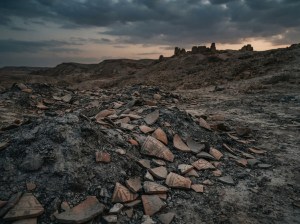
    A desolate ash heap with broken pottery shards in an ancient landscape at dusk

    Consider the story of Job in the Bible: along with losing everything that was near and dear to him (along with his health), he suffered the loss of identity which came with the loss of those things (Job 29–30). Whereas once he was respected and revered by everyone, after losing everything he was scorned and mocked by even the worst of the people:

    “But now they mock at me, men younger than I, whose fathers I disdained to put with the dogs of my flock.”

    Job 30:1 (NKJV)

    Whereas before many sought him for benefits and honor, after his great losses everyone abandoned him except his three best tormenters (er, friends). In Job’s mind, even God Himself had abandoned him and cursed him, though he had no idea why.

    Known Before We Were Born

    Since all things outside ourselves can indeed be taken away (and sometimes are), shouldn’t we anchor our identity in something (or to Someone) that cannot? While the world perceives and defines our identity based on worldly, external things, how does God define our identity? Indeed, God our Father knows us before we know ourselves — before we were even born. Our Maker knows us because He made us.

    “Before I formed you in the womb I knew you; before you were born I sanctified you.”

    Jeremiah 1:5 (NKJV)

    “For You formed my inward parts; You covered me in my mother’s womb.”

    Psalm 139:13 (NKJV)

    “Your eyes saw my substance, being yet unformed. And in Your book they all were written, the days fashioned for me, when as yet there were none of them.”

    Psalm 139:16 (NKJV)

    Our Father knows us. Our Father sees us. Our Father hears us. And not only does He see and hear us, He knows us on levels we don’t even know ourselves. He knows us as we truly are, which no one else possibly can. He knows our thoughts and even the intentions of those thoughts. He knows us and gives no mind to all the external things we put on to present our identity to others, or even to ourselves.

    A New Name on a White Stone

    Another passage that comes to mind that’s related to identity is Revelation 2:17, in which Jesus promises to give those who belong to Him a new name:

    “To him who overcomes I will give some of the hidden manna to eat. And I will give him a white stone, and on the stone a new name written which no one knows except him who receives it.”

    Revelation 2:17 (NKJV)

    For years I never quite understood why that verse was included in the Bible. Why would He even want or need to give us new names? But after thinking about it some, our names are intended to convey something about us, a piece of our identity — which is rather ironic, because we’re named at birth before we can do anything but cry and wriggle. And that’s why God found it fitting to change the names of several of His people in His Book after they came to faith or had a life-changing encounter with Him, such as Abraham and Sarah, Jacob (Israel), and Peter.

    A change in name signifies a change in identity, and vice versa. In the Bible, the change in identity occurs first, and then God changes their names to signify and cement it. The new identity has come, and the old has passed away — just as with us when we become believers and are brought into His Family and His Kingdom.

    “Therefore, if anyone is in Christ, he is a new creation; old things have passed away; behold, all things have become new.”

    2 Corinthians 5:17 (NKJV)

    Who We Are in Christ

    As believers in Christ, we’re no longer who we were, or defined by what we’ve done or what we have, where we work, what we drive, or anything else. After we come to faith, we’re someone completely new — refactored, if you will — and are defined solely by who we are in Him, and nothing else. Like Job, we can lose everything we can possibly lose in this life, and it no longer matters, because those things no longer define us or give us our identity. Only He does. As Paul says in Philippians:

    “Yet indeed I also count all things loss for the excellence of the knowledge of Christ Jesus my Lord, for whom I have suffered the loss of all things, and count them as rubbish, that I may gain Christ.”

    Philippians 3:8 (NKJV)

    Perhaps the new name that He gives us will be according to who we are or what we’ve done in this life. Or perhaps His new names for each of us will come from something else entirely that only He knows.

    Which brings me back to that title. I don’t have a secret identity — at least not one I know about yet. But if Revelation 2:17 is true (and it is), every one of us who belongs to Him does have one: a name written on a white stone, known only to Him and to the one who receives it. It’s not the name our parents gave us, or the one we built for ourselves with our jobs, our marriages, or our reputations. It’s the name He gives us, and no one can ever take it away.

    So whether you’re a kid wondering who you are, a newly divorced adult wondering who you are now, or someone like Job who has lost everything that used to define you — your identity is safe with Him. He knew you before you were born, and He already knows the name He’s going to call you.

  • The Lord of the Flood

    The Lord of the Flood

    Who is God — really? How often do we stop and actually consider who He IS? If God were to take Myers-Briggs test, who would He turn out to be? Would He be an INTJ, ISTP, ESFJ, or one (or more!) of the sixteen different personality types that identify/define us?

    (photo credit: Seth Reed)
    (photo credit: Seth Reed)

    Now that your curiosity has been piqued, I must confess that I cannot possibly answer that question, nor should I even attempt to. I would venture to guess that God — the Creator of everything and everyone — would be all those different personality types, and probably many more we don’t even know of! Just speculating about “who God is” is the ultimate writer’s hook that can’t possibly be delivered! The first picture we really get of “who God is” is in the early chapters of Genesis, particularly how He destroyed the world with the Flood. And given that a life-size replica of Noah’s ark is opening this week, I thought a post about the subject would be rather appropriate.

    In my spare time this year, I’ve been working on my latest book, “Fountains of the Deep”, a novel about the Flood. Often it’s called the “Flood of Noah” but Noah really had nothing to do with it; Noah was merely God’s instrument in preserving a tiny remnant of life upon the earth when God destroyed it. He destroyed it so completely that all we have is a couple of brief accounts, a plethora of fossils, and some strange ancient artifacts here and there embedded in rock and coal (like a beautiful brass-bell, a hammer, and even a doll). There are no ruins of cities, shards of tablets, graveyards, or even human skeletons (that we know of). When God says He was going to “wipe man from the face of the earth”, He meant it!

    The problem I’m having with the book is I can’t seem to get much traction with it, between more work (though that’s back to normal now), different writing goals, and new parenting responsibilities. The characters are all mapped out and relatively developed, but the meat of the story just isn’t quite there. Typically when I write a novel, I picture the entire story in my head much like a movie, break it down into scenes, and then write what I see onto the paper (er, laptop screen). But the main problem I’m having with this book in particular is that I can’t quite wrap my head around what that world was like, that it had become so violent, corrupt, and wicked that God had to completely — and I mean COMPLETELY — wipe it from existence.

    8As someone who interprets the Bible as literally as possible, I can’t help but hold to the “young-earth” creation model of roughly 6,000 years. Yes, that’s extremely unpopular these days, but Truth is Truth.It’s not just the first ten chapters of Genesis that require this, but God’s spoken words through Moses in Exodus, Leviticus, Deuteronomy, and of course, Jesus Himself that attest to a literal six-day, young-earth creation. I’ve always loved dinosaurs (known throughout history as “dragons”), and am quite convinced that they were present before the Flood, particularly since they’re described by God in the latter chapters of Job, various historical accounts, as well as the recent discoveries of “fresh” dinosaur bones in which the tissues are still soft and unmineralized.

    It’s not merely the challenges of describing a world very, very different than ours in which people lived for nearly a thousand-years in a nearly perfect environment with who-knows-what type of strength and ingenuity, it’s the bigger questions that keep getting dredged up about who God really is. It’s so easy to paint the picture that “mankind was wicked so God had to wipe the entire slate clean”, but there’s much, MUCH more to it than that! To add to the difficulty, I’ve never liked horror books/movies — I don’t like seeing or reading about abject evil, so how am I supposed to write it myself? How can one accurately portray the horrors of that world which is likened to “Jurassic Park” mixed with “Lord of the Flies” and “Alien” all wrapped into one never-ending nightmare? And that’s without throwing in the even creepier topics like the Nephilim, demons, and mutants/hybrids!

    Though it is very likely that the fallen “sons of God” (angels) were instrumental in mankind’s downward spiral, God still holds humanity’s inherent depravity responsible for His worst judgment in all history. The key verses about why God sent the Flood are in Genesis 6:5-6 and then amplified in v11-12: “The Lord saw that the wickedness of man was great in the earth, and that every intention of the thoughts of his heart was only evil continually. And the Lord regretted that he had made man on the earth, and it grieved him to his heart…Now the earth was corrupt in God’s sight, and the earth was filled with violence. And God saw the earth, and behold, it was corrupt, for all flesh had corrupted their way on the earth.”

    Stop and think about it for a moment: “EVERY intention of the thoughts of man’s heart was ONLY evil ALL the time.” (emphasis added). Now, I’m sure there was love, affection, and the wonderful emotions of getting married, having children, and happiness…yet God was horribly grieved over the condition of man’s hearts. It wasn’t merely man’s sin that grieved Him, but that every thought of man’s heart was wicked all the time. Completely corrupt! 100% unredeemable! Man’s wickedness had reached it’s zenith in that he could practically NOT become more evil and wicked? Consider some of the TV shows and horror movies out there — these were far worse, and they were horrifically REAL. How can anyone accurately portray that in any book?!

    To add to that difficult picture, not only mankind was corrupt, God says that ALL flesh had become corrupt too! What could that mean? If it was only mankind that was corrupt, He could have merely sent a plague to wipe man out, couldn’t He? Ancient mythology is full of bizarre creatures of half-man, half-animals, creatures that are part one type and part another, huge giants, monsters, hybrids, demi-gods, etc. The question is: what if those monsters (or some form of them) were actually real? In His creation, God set down clear boundaries between male and female and the various “kinds” (not species) of animals, reptiles, birds, and fish. God loves order and hates chaos, while Satan always seeks to corrupt, disrupt, and continually blur order. What if there was far more “corruption” occurring on the earth than what the Bible merely calls wickedness?

    Consider our own day and age: as we have become more comfortable and technological, the line between male and female is blurring as it is in the transgender movement, as well as the bizarre genetic experiments underway in some of our laboratories that are mixing different types of animals together and sometimes even human components. Sometimes this is done in the name of medicine or science, but sometimes it’s done simply to see if it can be. The question is: “How far is too far?” Could it be that these sorts of “experiments” were being done on a large-scale before the Flood such that God declared that “all flesh had corrupted their way” and was forced to wipe them out? Not only that, but consider that the more technological we have become, the deadlier we have become — the very notion of being able to kill millions of people in a very short time was unthinkable only seventy years ago!

    garden-of-eden-21359726Despite the horrors of the pre-Flood world, God certainly not intend it to be that way — that was a result of sin. After all, imagine a world that (though cursed) portrayed the incredible handiwork of God in all its glory. Imagine the ground perfectly composed for growing things instead of the couple of inches of topsoil we have today. Imagine mists watering the earth every morning instead of rain which make plants and trees thrive. Imagine most animals being docile and friendly to mankind — even many of the big ones! Imagine a world in which nearly every day was perfect, with no natural disasters, no famines, abundant fresh-water, no disease, incredible plant-life and animal-life, and a nearly perfect environment. Imagine having an almost perfect body, being far stronger, healthier, smarter, and faster than you are. Imagine living for nearly a thousand years!

    Yet that nearly perfect world was completely destroyed by God. Why? Because of sin and it’s parasitic, destructive effects. Because that perfect world had become nothing short of Hell on Earth. The pre-Flood world is a perfect picture of why Jesus had to die for our sins before being resurrected and then giving eternal life to us: paradise with long lives but without holiness and love becomes a horrible, terrible place very quickly! Imagine what eternity without holiness would be like? It would be Hell — and it is. God is the ONLY source of goodness in this world, and without His sustaining and restraining Hand, sin would turn everything into Hell.

    There have been moments where I’ve felt a certain remorse for the pre-Flood world, that maybe God was too harsh and too cruel — that He was too extreme in His judgment, that maybe there was another way besides the Flood. But is the problem with God or with me in that I don’t know what it was really like and cannot comprehend the full destructive nature of sin? Of course, it’s with me! The more I walk with Him and the more life I experience, the more He surprises me as He is revealed — and sometimes He makes me very uncomfortable. This quote by C.S. Lewis about his walk with God is so fitting for me at times: “Not that I am (I think) in much danger of ceasing to believe in God. The real danger is of coming to believe such dreadful things about Him. The conclusion I dread is not ‘So there’s no God after all,’ but ‘So this is what God’s really like. Deceive yourself no longer.’”

    When God says ‘I AM who I AM’ in His Word, He’s not being flippant or obscure — He’s being perfectly, brutally honest. After all, God cannot lie and has never been one to sugar-coat the Truth. How can an infinite God be described in human words or even a 1,189-chapter book? He IS who He IS, and it will take eternity for us to learn who He IS (and then some!).

    Throughout the Bible, God metes out seemingly disproportional judgments for various infractions. Even with the Fall, one small act of rebellion (a piece of forbidden fruit) has ushered in an unbelievable amount of horror for thousands of years. A couple of days of partying with foreign women cost the lives of 24,000 Israelites, not to mention nearly 15,000 earlier from grumbling in the desert. What about David and his prideful census that cost 70,000 Israelites, or the “sword never leaving his house” because of what he did with Bathsheba? Doesn’t the punishment seem to far outweigh the infraction at times? To me as a fallen creature, yes. But to Him as the perfect Holy One, no!

    There’s no denying that God drowned the entire world once — much to everyone’s surprise (including His angels and Satan with his fallen ones). Why the Flood? Because it left evidence of His judgment all over the world buried in stone. Did He enjoy it? Certainly NOT! God had been deeply grieved in His heart for centuries before He drowned the world! And it wasn’t just over a couple people, but everyone on earth, millions if not billions of people. Remember, God created the earth to be inhabited (Isaiah 45:18), filled with people and life of every sort. It’s very likely that the pre-Flood earth was 70% land instead of 70% water. Imagine knowing the minds and hearts of everyone one on earth and only seeing evil continually all the time for hundreds of years and billions of people… it’s amazing that He didn’t hit His limit after the fourth or fifth generation!

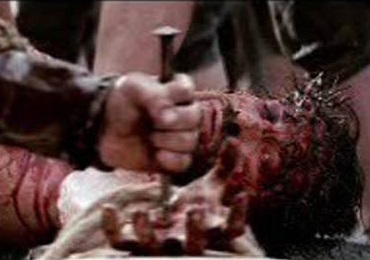
    2004 Passion NailingThe problem isn’t with God, but with us — we are so fallen that we cannot fathom the least bit of His sheer holiness and hatred of sin. If He as the perfect holy God didn’t have unfathomable love and mercy towards us, we would ALL be consumed in His wrath! Even the best of us fall so short of His standard of holiness that we are nearly indistinguishable from the worst of men in His eyes.

    Yet this same “God of wrath” loves us with incomprehensible fury and abandon, and proved it by sending His own beloved Son to be mercilessly tortured and crucified as a sacrifice for Himself — so we could be with Him once again.

    “The Lord sits enthroned over the flood; the Lord sits enthroned as king forever. May the Lord give strength to his people! May the Lord bless his people with peace!” — Psalm 29:10-11