Tag: Bible

  • They’re Here… Sort Of.

    They’re Here… Sort Of.

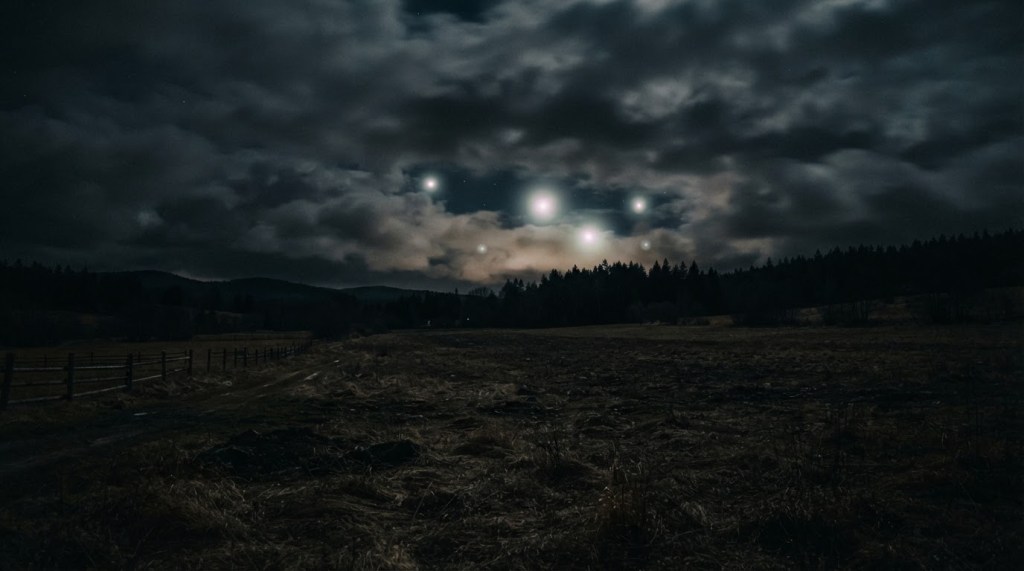
    Over the last few months, the government has been doing something I never thought I’d see: releasing its UFO files to the public. Since May, the Department of War has been posting batch after batch of declassified documents, photos, and military sensor videos of what the government now calls UAPs (unidentified anomalous phenomena) on its PURSUE website. The sixth batch came out just this past Friday, and among other things it includes a video of six small spheres or orbs changing direction at an estimated 480 miles per hour.

    Naturally, the internet has lit up with theories: alien visitors, secret government aircraft, foreign drones, deception, cover-ups (or cover-ups of cover-ups). And to be fair, some of these videos are genuinely strange. But for all the hype, the Pentagon’s own UFO office (AARO) has said it’s found no evidence that any of these incidents are extraterrestrial, even while admitting that many of them remain unresolved.

    So are they here? I think the answer is “sort of,” just not in the way most people think.

    If They’re From Out There, Why Are They Always Down Here?

    A person in silhouette on a hill looking up at the Milky Way

    Here’s what strikes me most as I’ve looked through the files: the encounters all seem to happen close to home. They’re over military bases, alongside Navy ships, near airliners, and above population centers. As far as I can tell, none of them shows anything being tracked on its way in from deep space — from beyond the Moon, never mind beyond our solar system or galaxy. If there really are beings traveling here from other star systems, why hasn’t a single one been observed on the way in?

    So what if many of these strange manifestations aren’t “out there” at all? What if they’re not even real in the material sense that we assume, but are manipulations of energy, light, sound, or even our own perceptions of reality?

    The Prince of the Power of the Air

    The Bible doesn’t mention flying saucers, but it does speak plainly about intelligent, non-human beings who operate in our skies:

    “…in which you once walked according to the course of this world, according to the prince of the power of the air, the spirit who now works in the sons of disobedience.”

    Ephesians 2:2 (NKJV)

    Scripture describes these beings as spiritual, but not always invisible or immaterial. Angels appeared as men, ate meals, and even wrestled (Genesis 18; 32). And in the days before the Flood, fallen ones crossed the line into the physical world in a way that produced the Nephilim — something I’ve spent years exploring in The Days of Noah series:

    “There were giants on the earth in those days, and also afterward, when the sons of God came in to the daughters of men and they bore children to them. Those were the mighty men who were of old, men of renown.”

    Genesis 6:4 (NKJV)

    It’s also worth remembering that the demons of medieval paintings and Halloween costumes, with their horns, pitchforks, and red skin, aren’t reality. Those caricatures may be the most effective disguise of all, because Scripture warns that the enemy doesn’t usually show up looking evil. He shows up looking good:

    “And no wonder! For Satan himself transforms himself into an angel of light.”

    2 Corinthians 11:14 (NKJV)

    Beings of light. Glowing orbs. Apparitions of goodness, with messages of peace and enlightenment from “advanced” visitors who’ve come to help humanity evolve. If I were the father of lies (John 8:44) planning a grand deception, I’m not sure I could come up with a better one.

    Caught Up in the Air

    Rays of sunrise breaking through dark storm clouds

    Interestingly enough, when the Bible speaks of Christ gathering His bride, the Church, He doesn’t meet her on the ground. When He returns to the earth at the end, He’ll come first to Petra and then to the Mount of Olives (Zechariah 14:4). But at the Rapture, He meets us in the air — right in the middle of Satan’s own stronghold:

    “For the Lord Himself will descend from heaven with a shout, with the voice of an archangel, and with the trumpet of God. And the dead in Christ will rise first. Then we who are alive and remain shall be caught up together with them in the clouds to meet the Lord in the air. And thus we shall always be with the Lord.”

    1 Thessalonians 4:16–17 (NKJV)

    When the Rapture occurs and the Church is caught up and removed from the earth (the dead first, then the living), I would expect there to be great “signs in the heavens” immediately following, if not preceding. Jesus Himself said there would be “fearful sights and great signs from heaven” (Luke 21:11). And I wouldn’t be surprised if some of those signs are imitations of that great event, meant to convince those who are left behind that no Rapture occurred at all. Maybe everyone was “taken” by visitors from another world, or “removed” to make way for humanity’s next stage. Paul warns that when people refuse the truth, God will let them have the lie they prefer:

    “And for this reason God will send them strong delusion, that they should believe the lie.”

    2 Thessalonians 2:11 (NKJV)

    (I wrote more about the timing of the Rapture a few years back in Rethinking the Rapture.)

    Above It All

    So are they here? Sort of. I don’t believe little green men are visiting us from another galaxy. But I do believe the Bible when it says we’re not alone, and that the beings who share our skies aren’t neutral. Some are holy angels doing God’s work. Others are fallen ones whose work is lies, deception, confusion, chaos, and murder (John 8:44; John 10:10).

    God may allow confusion or even delusion for a time, but He is never the author of it:

    “For God is not the author of confusion but of peace, as in all the churches of the saints.”

    1 Corinthians 14:33 (NKJV)

    Whatever comes out in the next batch of files (and there will be more), believers don’t need to be afraid or confused. We know who rules the heavens, and we know Who is coming for us in the air. So keep looking up — just make sure you know Who you’re looking for.

  • David: The Unlikely King

    David: The Unlikely King

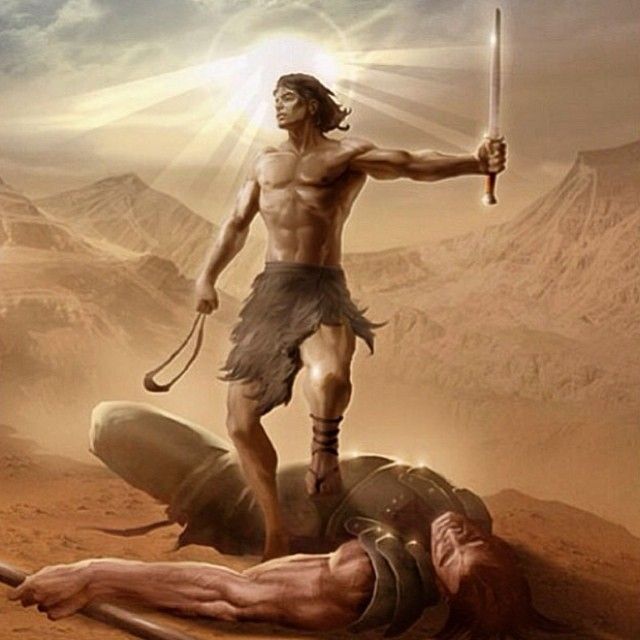
    My wife and I recently finished watching the first season of the new biblical series “House of David” on Amazon. The series was very well done, even though it doesn’t exactly follow the biblical narrative in places, along with some embellishments and liberties taken for dramatic effect. And while it only covers the beginning of David’s story, it was enough to get me thinking about him and his life in my morning devotional time.

    I’ve written before about David and about how his true focus was on God for all his life, and how his deepest desire was to simply be with Him and be in His presence in That One Thing (Psalm 27) and the series only reinforced that. While most seek after fame, fortune, and power (just spend 10 seconds on social-media!), David did not. It struck me that even though David obtained all of those things during his life, he never intentionally sought those things for himself or for his own glory. He sought after God and His name and he made himself available in whatever way God might use him. And in doing so, God provided those things to him much like He later would for his son Solomon after he had simply asked God for wisdom in governing His people.

    David was so focused on God and innately knew that his satisfaction would only be found in Him that he would’ve been happy regardless of whether he had become king or not. While few people like being shepherds back in those days (it was typically the lowest job given to the lowest of servants and children), David made the best of it. There’s no record of him complaining, and apparently he used those long, boring, solitary days and nights in the fields to grow closer with God. Then when the time came, he relied on his relationship, faith, and trust in God for God to guide and deliver him in whatever situation he found himself. And God richly rewarded that faith, loyalty, and trust.

    God even says as much in 2 Samuel 7:8-9 when David is wanting to build a Temple for Him: ‘This is what the Lord Almighty says: I took you from the pasture, from tending the flock, and appointed you ruler over my people Israel. I have been with you wherever you have gone, and I have cut off all your enemies from before you. Now I will make your name great, like the names of the greatest men on earth.”

    David’s focus was not on greatness, his own glory, or even himself — but on God. In reviewing the lives of Saul, Solomon, and most other kings in the Bible, that is by far the exception rather than the rule. David stands alone.

    David’s life-story also parallels that of Job in many ways, save for the boils and ashes and three accusing friends. For example, God provided the growth, wealth, reputation, and honor/glory for both. Both were regarded as very wealthy, faithful, wise, and of impeccable reputation. He provided wives and many children for both, and the very picture of an ideal household, in that both had ten children or more. But then at the height of their greatness, God allowed all those things to be stripped from them:  Job in his testing by Satan and David in his sin with Bathsheba that opened the pathway for Satan to destroy his household from the inside.

    In both cases of David and Job, God allowed nearly everything that mattered to be stripped from them so that they, He, and others (and us by their stories) could see what remained. And what was that? Their faith and desire to be with God. Despite all that had happened to them, both men clung to God with everything they had and refused to give up on their faith in Him and that He would ultimately deliver them. Somehow.

    In the case of Job, all that had been lost during his time of testing was later restored twofold, though with David, it wasn’t quite as dramatic — likely because of his sin. David’s kingdom and much of his household was restored, but his reputation never was. How differently David’s life would have turned out if he had not sinned with Bathsheba and then murdered her husband to cover it up — to save his reputation and hide his disloyalty and sin! All the family turmoil and tragedy that befell him would have likely been avoided, as well as his near-loss of the kingdom to his son Absalom and the heavy burdens of grief, loss, and regret that David then carried for the rest of his life. There was probably not an hour that passed that he didn’t think of one of those evils, and only God knows how much that interfered in their relationship and their intimacy/walk.

    Yet despite all the tragedy, loss, and grief, David still clung to God — even if it was by the very tips of his fingers at times — and God didn’t tear the kingdom away from him despite his sin. Remember, God removed the kingship from David’s predecessor Saul over his disobedience with the sacrifice and King Agag, and then God split the kingdom after David’s son Solomon fell into idolatry and lost faith with Him. But God continued to honor David because he continued to honor God and he returned to Him whenever he sinned and went off the rails. David continued to be humble before God and knew he was still “little” despite his greatness.

    Consider all the stories of the kings and rulers throughout history and even many of our leaders today. How many would actually humble themselves and confess their sins and wrongdoings when accused or exposed? How many would not merely call for a day of prayer but actively fast and participate in it? Yet David did all that in 2 Samuel 24 when he sinned and took an unlawful census of the people (relying upon the strength of the army/people rather than God).

    David’s life — through all the highs and lows — continued to reflect his desire to be close to God and his reliance upon Him, as well as his inner humility.

    While the “House of David” wasn’t preachy and didn’t delve too much into the spiritual side of David’s life, it was great to see the portrayal of him and the biblical characters we’re familiar with, and of course, all the action-scenes and being able to see what they might have looked like three thousand years ago.

    I’m already looking forward to seeing what Season 2 of “House of David” will bring and how his onscreen character will be developed!

  • A Reflection on Names

    A Reflection on Names

    During the Christmas Eve service at Calvary Chapel Merritt Island, one of the songs that was featured was the song Names by Elevation Worship and Maverick City Music. And while it’s not what anyone would consider to be a typical Christmas song, there were several elements within it that declared the truths of the Christmas message, and also the wonder of God the Son coming down into our midst and taking on flesh and bone in order to dwell among us (Immanuel). In the midst of celebrating Christ’s birth, this song  reminding me of the richness of God’s names and the power they hold in our lives.

    The Power of God’s Names

    Names is more than just a song; it is a declaration of who God is, His visible and invisible attributes that each of His names describes. The names that God takes for Himself and those that others give Him are scattered throughout the Scriptures, often as different elements and attributes of God are revealed to people. Each name of God reveals a deep aspect of His character, His promises, and His relationship with us. The lyrics powerfully articulate these truths:

    You are the medicine
    The only cure for everything I feel within
    Redeeming what was lost and all that could have been
    Oh, this is a healing kind of love.

    In these words, we see Jehovah Rapha—the Lord who heals. The song continues to describe God as our truest friend, our comfort, and our Prince of Peace. These attributes are not just poetic descriptions; they are reflections of His very essence.

    A Song of Worship and Surrender

    As the congregation at Calvary Chapel Merritt Island worshiped together, I was struck by how the song’s chorus so beautifully aligns with Isaiah 9:6:

    Everlasting Father, Prince of Peace
    Immanuel, God with us, You’re here with me
    Wonderful Counselor
    The government is resting on Your shoulders.

    These names were prophesied about Jesus long before His birth, affirming His divine nature and eternal reign. Singing them aloud became a moment of surrender, a reminder that no matter the uncertainties of life, His Name is above all.

    The Names of God: A Deeper Understanding

    When the song was was being sung in the church, each of the names of God was displayed on the screen, which really added to the depth and intimacy of the worship experience:

    • El Shaddai – Lord God Almighty
    • El Elyon – The Most High God
    • Adonai – Lord, Master
    • Yahweh – Lord, Jehovah
    • Jehovah Nissi – The Lord My Banner
    • Jehovah-Raah – The Lord My Shepherd
    • Jehovah Rapha – The Lord That Heals
    • Jehovah Shammah – The Lord Is There
    • Jehovah Tsidkenu – The Lord Our Righteousness
    • Jehovah Mekoddishkem – The Lord Who Sanctifies You
    • El Olam – The Everlasting God
    • Elohim – God
    • Qanna – Jealous
    • Jehovah Jireh – The Lord Will Provide
    • Jehovah Shalom – The Lord Is Peace
    • Jehovah Sabaoth – The Lord of Hosts

    Each of these names is a promise, a truth we can hold onto in every season of life. Whether we need healing, provision, peace, or righteousness, God’s names declare His unchanging nature and faithfulness.

    A Call to Worship

    Hearing Names during the Christmas season was a powerful reminder that Jesus is Immanuel—God with us. As we reflect on His names, may we stand in awe of who He is and trust in His sovereignty.

    I invite you to listen to this incredible song and meditate on the names of God. Let it be a moment of worship, reflection, and renewed faith in the One who holds all things together.

  • Knowing and Being Known

    Knowing and Being Known

    “You have been weighed in the balances and found wanting…” (Daniel 5:27).

    These were the words which were read from a wall in ancient Babylon to an ancient king who’s time was up. And while this divine proclamation was first made over 2,500 years ago on the very night of Babylon’s fall, these sobering words should still cause all of us to carefully consider our paths in life, particularly when it comes to our eternal future.

    One of the most sobering (if not scariest) verses I’ve long pondered and even worried about is found in Matthew 7 (specifically, Matthew 7:21-23), which involves Jesus addressing some of those who will one day stand before Him. To their surprise and dismay, He will mercilessly condemn them to the Outer Darkness:

    “Not everyone who says to Me, ‘Lord, Lord,’ shall enter the kingdom of heaven, but he who does the will of My Father in heaven. Many will say to Me in that day, ‘Lord, Lord, have we not prophesied in Your name, cast out demons in Your name, and done many wonders in Your name?’ And then I will declare to them, ‘I never knew you; depart from Me, you who practice lawlessness!’”

    What has always really gotten me about this passage (to put it mildly) is that the very ones Jesus calls “evildoers” were completely convinced they were following Him and were by all accounts His disciples. They were doing everything in His Name such as prophesying, casting out demons, working miracles, and bearing all sorts of other spiritual fruit, yet He plainly declares to them, “I never knew you!”

    If that doesn’t give every single one of us who profess to follow Him a long moment’s hesitation, then perhaps we need to re-read His words ― and maybe several more times for good measure! In their words and deeds, weren’t they in fact “doing His will”? And “you who practice lawlessness”? What on earth does He mean by that? Those people He’s condemning were doing all sorts of good works in His Name and likely not breaking any “laws”, nor practicing what we would consider to be “lawlessness” (idolatry, murder, stealing, adultery, etc.).

    However, those standing before Him were indeed breaking one law ― the primary One. The One Law that really matters. The One Law that God raises above all others that says we are to “Love the Lord your God with all your heart, soul, mind, and strength” (Matthew 22:37, Jesus citing the Sh’ma from Deuteronomy 6:5). And while they were doing good works in His Name, they weren’t exactly “doing His will”, meaning to love Him with all their heart, mind, soul, and strength.

    Now, it’s one thing to be loved by God and us to acknowledge Him as God and even fear/revere Him, but quite another thing to actually LOVE GOD, to enjoy God for who He is and for who He reveals Himself to be in His Word. After all, isn’t everyone inherently loved by God simply because He’s our Creator? (Of course, God has those He likes and dislikes, loves and even hates at times, such as Jacob vs Esau in Malachi 1:2-3.) However, the fear and reverence of God is still a far cry from actually loving God as you would your spouse, children, parents, etc.

    Really, truly, loving God means knowing God, and that’s where we should really start to realize that we’re in over our heads, as CS Lewis discovered after the death of his wife in his book, “A Grief Observed”. When his time of grief and suffering came, he found that God felt as if He was nowhere to be found, unlike the rest of their relationship when life was good:

    “When you are happy, so happy you have no sense of needing Him, so happy that you are tempted to feel His claims upon you as an interruption, if you remember yourself and turn to Him with gratitude and praise, you will be — or so it feels— welcomed with open arms. But go to Him when your need is desperate, when all other help is vain, and what do you find? A door slammed in your face, and a sound of bolting and double bolting on the inside. After that, silence.” 

    And then elsewhere in that same book, he considered his feelings and beliefs and wrote:

    “Not that I am (I think) in much danger of ceasing to believe in God. The real danger is of coming to believe such dreadful things about Him. The conclusion I dread is not ‘So there’s no God after all,’ but ‘So this is what God’s really like. Deceive yourself no longer.”

    What if we only “think” or feel that we know Him, but we in fact do not? What if God isn’t who we believe Him to be at all, and we’ve been inadvertently fooled by our Sunday-school teachers, pastors, and even our own studies, thoughts, and feelings? What if we live our entire Christian lives self-deceived to the point that we “know” we’re saved and on our way to Heaven, only to find out on that Day we really aren’t? Personally, I can’t think of a more disappointing ― and utterly terrifying ― thing in the universe! And that’s the thing that used to worry me every time I read that Matthew 7 passage.

    However, a year or so ago I was reading an old Desiring God post titled “Knowing God Versus Being Known by God“, when the following verse jumped out at me from 1 Corinthians 8:3:

    “But if anyone loves God, this one is known by Him.”

    While I’ve read that verse and passage many times over the years, I never really had an “AHA!” moment until I’d read that short DG post. Suddenly, the roof was opened and bright sunlight streamed in. I must’ve read that verse over and over that night and thought about it for a long time. In my mind, that “What if I’m weighed and found wanting?” question was finally settled in my mind and heart, and it opened up an entirely new line of thought, prayer, and contemplation.

    Instead of me worrying over and over about the Matthew 7 passage (among others), the answer was right there in front of me the entire time: “If we want to be known by God, we are to simply, purely, and completely LOVE God just as He tells us to in His Primary Law”. That’s it. Love the Lord our God with all our heart, mind, soul, and strength. Our everything. Nothing more, nothing less.

    Our “good works” and the rest of the tangible fruits of “doing His will” naturally flow out of that love, His love for us and our reciprocal love for Him. The tragedy of those being condemned in Matthew 7 are that while they were doing good works in His Name, they really didn’t love Him nor know Him, and therefore He didn’t know them either. Even in their response to Him, the focus was on them and what THEY had done rather than on Him and what HE had done for them on the Cross. The Gospel is all about HIM and He has done, not us and our works.

    How important is His One Law that towers above all others? Well, to start off with, it’s mentioned five times in Deuteronomy, the fifth book of the first several books of the Bible which was to be read and recited often among the Israelites. It’s also explicitly mentioned in the first three Gospels (Matt 22:37, Mark 12:30, Luke 10:27) by Jesus Himself.

    So then the question becomes, “How exactly do we love God?” By obeying Him and keeping His commandments, namely the first two: love God and love others as ourselves. While we have five “love languages”, God really has only one: obedience. But even that one starts with and is firmly rooted in love:

    “If you love me, you will keep my commandments.” ― John 14:15

    Does that mean we are to diligently keep the hundreds of commandments as specified in the Torah and the Old Testament? For Jews at that time, yes ― but like the Pharisees who kept the Letter of the Law (rules and regulations) but not the Spirit of the Law (intent/motives), they could not because they did not love God nor love others. Because of that, they fell far, far short, showing their dire need for the Promised Redeemer regardless of how well they kept the written and oral Law.

    So what are we to do now in the Church Age, in which through Jesus fulfilling the Law and establishing the New Covenant, God has broken down the distinction between Jew and Gentile and divided the world between the “saved” and the “lost”? Exactly as Jesus said in the Gospels:

    Love God and love others the way we want to be loved. Forgive as we would want to be forgiven. Bless as we would want to be blessed.

    It’s that simple yet that daunting, that easy yet that difficult. In fact, sometimes loving God and loving others is the hardest thing to do in the world, especially when they’ve hurt, insulted, betrayed, or maligned us in some way. Any way. Every way. And loving God? It’s hard to love God when it feels like life (or even He Himself) is completely against us. It’s hard to love God when we can’t see, hear, or feel Him. It’s hard to love God when we’re downcast and brokenhearted, particularly for long stretches of time. It’s hard to love God in the dark seasons of trials and waiting.

    But that’s where His unchanging, everlasting Word comes into play, the timeless passages about Him being for us and not against us (Romans 8:31), about Him never forsaking us (Hebrews 13:5), and the multitudes of psalms, Jesus’s words, the Epistles, and rest of Scripture are to be our comfort and strength in our times of trial. We are to rely upon Him and His Word and not ourselves nor our ever-changing thoughts and turbulent feelings.

    And then the Payoff ― being known by Jesus and God Himself on that great day when we stand before Him and He welcomes us into His Kingdom― is far worth whatever grievance we may have against anyone or anything in this life.

  • Revealing My Secret Identity

    Revealing My Secret Identity

    If you’re reading this, then you’ve proven one of my premises: anything with the words “secret” or “reveal” in a title or headline is just too enticing to pass up. There’s just something in us that wants to know secrets or revelations, particularly when it comes to other people. Though in fact I do not have any such secret identity, this post is about identity — and I think it’s worth reading.

    What Shapes Our Identity?

    A topic that’s been on my mind for a while is the matter of identity and how identity (and its confusion) plays into so many of the issues we’re encountering in our modern culture. One example is the transgender movement and the gender confusion that seems to be increasingly pervasive in our schools. I remember thinking several years ago that transgenderism would become the next big cultural topic, and sure enough, it’s here in full swing.

    At the core of these issues is a matter of identity, or rather, identity confusion or even dislike of your identity or perceived identity. It’s not uncommon for middle-schoolers or high-schoolers to want to change their names to something that’s more neutral rather than more masculine or feminine. A few steps beyond that is when they start wearing clothes or styling their hair in a way that is neutral or belongs to the opposite gender. And over the last several years, these topics have even found their way into elementary schools.

    As I’ve thought about these issues, I think it’s common for kids of any age to ask questions related to their identity, such as “Who do I want to be?”, “What do I want to be when I grow up?”, or “Who do I want to hang out with?” As kids get older, they typically ask deeper questions such as “Who am I?” or “Where am I going?” Such questions are all rooted in identity: how we are perceived by others, how we think we’re perceived by others, how we perceive ourselves, and how we want to be perceived.

    A blank name tag lying on an old wooden school desk

    Growing up in a small town in rural Ohio, I must confess that I wasn’t all that crazy about my own name (Chris), mostly because no one else had it except for a couple of girls (Christy, Christine, Christina). All the cool kids were named John, Kevin, Matt, or David. My last name didn’t make it any easier either (Hambleton), rather than Smith, Jones, Adams, or even Hamilton. There were many times I thought that my life would be so much better if my name was more common, like one of theirs, rather than something different.

    As we get older and go through more of life, our identity — who we are, who we’re perceived to be, and who we perceive ourselves to be — changes based upon the choices we make, the things we do, our gifts and talents, our jobs and careers, what we drive, what we wear, where we live, our friends and relatives, and a myriad of other identity-determining factors. When we get married, our identity inherently changes because we’re now joined to another person and their family, especially for women if and when they take their husband’s surname.

    When people divorce, one of the first things that is changed is their name (again, mostly for women). Why? It’s not the name itself that’s the issue; it’s the inherent association with their former spouse and, on a greater level, their own identity. (I wrestled with some of this myself in Single, Divorced, or Other?) It’s not very common for children to have their last names changed after their parents divorce, though it does occur sometimes. And some divorced women do choose to keep their married name for several reasons, but the main one is likely for the sake of their children or for simplicity.

    When Everything Is Taken: Lessons from Job

    Since our identity is so often shaped by others or defined by things external to ourselves, what if those things which define us were taken away? Who would we be? What would we be known for if our house, job, wealth, car, spouse, children, location, name, etc. just disappeared one day? Would our personality, our character, or our soul and spirit — who we actually are as people — be enough to help us maintain our identity to both ourselves and those around us, particularly our friends and family?

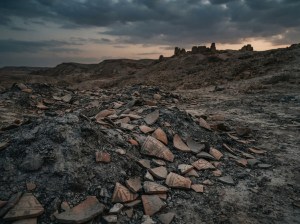
    A desolate ash heap with broken pottery shards in an ancient landscape at dusk

    Consider the story of Job in the Bible: along with losing everything that was near and dear to him (along with his health), he suffered the loss of identity which came with the loss of those things (Job 29–30). Whereas once he was respected and revered by everyone, after losing everything he was scorned and mocked by even the worst of the people:

    “But now they mock at me, men younger than I, whose fathers I disdained to put with the dogs of my flock.”

    Job 30:1 (NKJV)

    Whereas before many sought him for benefits and honor, after his great losses everyone abandoned him except his three best tormenters (er, friends). In Job’s mind, even God Himself had abandoned him and cursed him, though he had no idea why.

    Known Before We Were Born

    Since all things outside ourselves can indeed be taken away (and sometimes are), shouldn’t we anchor our identity in something (or to Someone) that cannot? While the world perceives and defines our identity based on worldly, external things, how does God define our identity? Indeed, God our Father knows us before we know ourselves — before we were even born. Our Maker knows us because He made us.

    “Before I formed you in the womb I knew you; before you were born I sanctified you.”

    Jeremiah 1:5 (NKJV)

    “For You formed my inward parts; You covered me in my mother’s womb.”

    Psalm 139:13 (NKJV)

    “Your eyes saw my substance, being yet unformed. And in Your book they all were written, the days fashioned for me, when as yet there were none of them.”

    Psalm 139:16 (NKJV)

    Our Father knows us. Our Father sees us. Our Father hears us. And not only does He see and hear us, He knows us on levels we don’t even know ourselves. He knows us as we truly are, which no one else possibly can. He knows our thoughts and even the intentions of those thoughts. He knows us and gives no mind to all the external things we put on to present our identity to others, or even to ourselves.

    A New Name on a White Stone

    Another passage that comes to mind that’s related to identity is Revelation 2:17, in which Jesus promises to give those who belong to Him a new name:

    “To him who overcomes I will give some of the hidden manna to eat. And I will give him a white stone, and on the stone a new name written which no one knows except him who receives it.”

    Revelation 2:17 (NKJV)

    For years I never quite understood why that verse was included in the Bible. Why would He even want or need to give us new names? But after thinking about it some, our names are intended to convey something about us, a piece of our identity — which is rather ironic, because we’re named at birth before we can do anything but cry and wriggle. And that’s why God found it fitting to change the names of several of His people in His Book after they came to faith or had a life-changing encounter with Him, such as Abraham and Sarah, Jacob (Israel), and Peter.

    A change in name signifies a change in identity, and vice versa. In the Bible, the change in identity occurs first, and then God changes their names to signify and cement it. The new identity has come, and the old has passed away — just as with us when we become believers and are brought into His Family and His Kingdom.

    “Therefore, if anyone is in Christ, he is a new creation; old things have passed away; behold, all things have become new.”

    2 Corinthians 5:17 (NKJV)

    Who We Are in Christ

    As believers in Christ, we’re no longer who we were, or defined by what we’ve done or what we have, where we work, what we drive, or anything else. After we come to faith, we’re someone completely new — refactored, if you will — and are defined solely by who we are in Him, and nothing else. Like Job, we can lose everything we can possibly lose in this life, and it no longer matters, because those things no longer define us or give us our identity. Only He does. As Paul says in Philippians:

    “Yet indeed I also count all things loss for the excellence of the knowledge of Christ Jesus my Lord, for whom I have suffered the loss of all things, and count them as rubbish, that I may gain Christ.”

    Philippians 3:8 (NKJV)

    Perhaps the new name that He gives us will be according to who we are or what we’ve done in this life. Or perhaps His new names for each of us will come from something else entirely that only He knows.

    Which brings me back to that title. I don’t have a secret identity — at least not one I know about yet. But if Revelation 2:17 is true (and it is), every one of us who belongs to Him does have one: a name written on a white stone, known only to Him and to the one who receives it. It’s not the name our parents gave us, or the one we built for ourselves with our jobs, our marriages, or our reputations. It’s the name He gives us, and no one can ever take it away.

    So whether you’re a kid wondering who you are, a newly divorced adult wondering who you are now, or someone like Job who has lost everything that used to define you — your identity is safe with Him. He knew you before you were born, and He already knows the name He’s going to call you.

  • The Most Important Question

    The Most Important Question

    If someone pulled you aside and asked you “What is the most important question ever asked?” what would you answer? Some of the more probable answers would be “Where did I come from?”, “Where am I going?, or “Why am I here?”

    imagesWith such a question in mind, the Bible quickly comes to the rescue. In fact, the very first question asked just happens to be the most important one that we can ask: “Did God really say?” All other questions we might come up with in this world are secondary to that primary question.

    Though it’s one of the more significant concepts in the Bible, the Law of First Mention is often not applied nearly enough when studying the Bible. In theological terms, the Law of First Mention is “the principle in the interpretation of Scripture which states that the first mention or occurrence of a subject in Scripture establishes an unchangeable pattern, with that subject remaining unchanged in the mind of God throughout Scripture.” In layman’s terms, this means that whenever a particular word or concept is encountered in the Bible, its first occurrence should be used as the main source to more fully understand and interpret it.

    As the Creator, God has created a universe full of laws which are extremely precise, detailed, and complex which govern all entities from atoms to huge galaxies and everything in between. Things that may seem so basic and simple such as bacteria or a simple cell are actually incredibly complex the more closely they’re examined. Yet when it comes to His Word, we often don’t ascribe that same precision, complexity, and depth — though it’s His Book, to many of us it’s still ink on a page and not this supernatural thing filled with life, depth, and complexity. Like His Creation, the deeper we dig into His Word, the more detailed, intricate, and astounding it becomes. When applied consistently to the Bible, the Law of First Mention alone can provide several years’ worth of studies if one has the time (and patience!).

    One of the best examples of the Law of First Mention in the Bible is the first occurrence of the word “love”. It’s not found until Genesis 22:2 in which God commands Abraham, “Take now your son, your only son Isaac, whom you love, and go to the land of Moriah, and offer him there as a burnt offering on one of the mountains of which I shall tell you.” It’s not that God didn’t love us before this (a nearly 2,000 year-span), but that His Word simply didn’t use it in it’s current inspired form — by His design. In this passage, God is having Abraham and Isaac prophetically act out the sacrifice that the Father would make of His Son 2,000 years later, and in the very spot no less! In this context, the word “love” means much more than simply deep affection and parental love — it means how he feels about the thing he cherishes most. Aside from God and Sarah, Isaac was Abraham’s entire world, the son of promise, as well as his heir and legacy. Also, God refers to Isaac as Abraham’s “only son” even though he wasn’t (remember Ishmael?), yet God slights him to make the prophetic model perfectly fit. In the end, Abraham chose to obey God and keep the faith even though it might cost him his beloved son. His faith in God was so great that he even believed that He could — and would — raise the dead (Hebrews 11:19). Now if God wants us to not only know how much He loves us and the great lengths He would go to redeem us, wouldn’t the best place to first mention the word “love” be in the greatest foreshadowing of what He would one day do for us on the cross?

    garden-of-eden-21359726With the Law of First Mention in mind, the first question in the Bible is asked from the serpent to Eve in Genesis 3:1: “Did God really say, ‘You shall not eat of any tree in the garden’?” While the question is simple enough, what the serpent did was nothing short of revolutionary, as it questioned God’s authority, integrity, and benevolence. For the first time (that we know of), God’s Word was called into question. And while that first question is focused primarily on the trees in the Garden, the most significant part of the question can be boiled down to “Did God really say [fill in the blank]?” That blank can be filled in with all sorts of matters, and usually is many times a day! Did God really say that I should love Him with all my heart, mind, soul, and strength — though it may cost me everything? Did God really say I should love others as myself — though they don’t deserve it? Did God really say that I should (or should not) do this or that — though I desperately want to?

    This post began as part of the previous one about dinosaurs and faith (“Dinosaurs: A Question of Faith“) and quickly became too long to include. Not only is the Flood, the dwelling of dinosaurs and men together, and a young-earth creation constantly scoffed at in much of the world (and in the church) today, but many aspects of the historical record of the Bible are as well, particularly the first half of Genesis. In the minds of skeptics, if any part of Genesis can be invalidated, the entire book can be called into question. And if Genesis thereby falls, the rest of the Bible falls with it because it’s the very foundation of the entire book, particularly the Gospel (no Fall means no need for a Savior). Often even the eye-witness accounts in Genesis are disputed, though the evidence is right in front of us. The story of how the Dead Sea was formed at the destruction of Sodom and Gomorrah has been read for thousands of years by millions of people, yet archaeology and geology consistently deny it. In Genesis 18, we have the firsthand account of Abraham (and Lot and his daughters) who SAW these events happen and yet it’s cast aside as a mere myth. “Did God really say that Sodom and Gomorrah were destroyed because of their wickedness, pride, and sin?”

    The same holds true with the Flood and the Table of Nations in Genesis 10 — secular archaeology and geology consistently refuse to acknowledge the firsthand Biblical accounts and go to great lengths to counter biblical history. Traditional archaeology is very comfortable with the slow, steady progression in which mankind is crude and gradually becomes more civilized and smarter, but the reality is that man was just as intelligent then as he is now (if not moreso!), and that just like today, many different things were happening all at the same time. As with the Fall, soon after the Flood cities were being built, crops were being farmed, animals were being domesticated, wars were occurring, and everyday struggles were happening similar to today. Some were very civilized while others were very basic and crude. Knowledge and technology ebb and flow, rise and fall. Even in the 21st century, we have stone-age cultures existing not too far from highly civilized societies such as in South America, Africa, and Australia. “Did God really say there was a worldwide Flood that destroyed the former world and everything and everyone in it except for one family and a boatload of animals?”

    In the end, how we perceive our world and interpret history, geology, and archaeology comes down to our personal faith and our answer to that one fundamental question: “Did God really say?” In examining His creation, it’s almost as if He has made it so that we would be forced to consciously choose between what He said and what others may say, whether it’s a serpent or a pastor or a professor. As Psalm 19:1 and Romans 1:20 declare, God’s handiwork and witness have been clearly displayed such that no one is without excuse. And while He could have put up a huge heavenly billboard declaring Himself to us, He didn’t — He gives us the freedom to choose. Aspects of our universe have the appearance of great age so we would have to consider it, even though there are many other factors that point to the reality of a young creation. But even if He would’ve done so (as with the constellations/Mazzaroth), mankind would have devised a way to deny Him.

    forefathers-monumentSometimes it’s almost a 50-50 toss-up when everything is considered, yet even if ALL evidence would point to evolution, the same question would still remain: “Did God really say?” And that question must be answered by each one of us someday. Did God really say that we are a fallen race in need of a Savior? (Ephesians 2) Did God really say that Jesus is the (only) Way, the (only) Truth, and the (only) Life, and that no one can come to the Father except through Him? (John 14:6) Did God really say there’s a literal hell for all who do not accept His provision for them? (Matt 25:46) Did God really say that He will literally come to earth some day and rule the nations with a rod of iron? (Psalm 2)

    Curiously, the second question in the Bible is asked from God to Adam in Genesis 3:9: “Where are you?” which is just as important as the first. As the first question asked by God, it’s incredibly significant because it shows His love and concern for His creation. When I was younger, I used to picture this scene in the Garden of Eden as Him being this angry giant stomping through the brush bellowing “Where are you?!” But does that match with God’s character and personality in the rest of the Bible, particularly with Jesus in mind? Not at all — and by putting Jesus in the Garden as the One seeking after Adam, that scene becomes much softer and gentler, if not even mournful, as if He’s calling for one of His little lost sheep. The pinnacle of His creation just disobeyed and rejected Him — and wanted to be equal with God Himself (knowing good and evil) — and yet God is seeking after him to draw him back! He’s not angry or vengeful but grieved over their broken relationship, the loss of intimacy. Isn’t that the way He calls to each of us as His lost, terrified sheep: “Where are you?”

    God always comes seeking us first. God always initiates in drawing us closer to Him. God always goes seeking after the lost. God always intervenes in His creation — sometimes quietly and sometimes very dramatically. God is always the initiator and we are the responders. God intervenes and interrupts and interjects Himself into not only His creation, but into our individual lives. While He offers everyone His gift of salvation, sometimes He has to go to extreme measures to get the attention of those whom He has called, though we may be running from Him faster and farther than Jonah! And though God always gives us a choice, in the end He always has His way.

    starAs Christmas rapidly approaches and we jump into the New Year, let us seek to keep those two questions at the forefront as we live and respond accordingly: “Did God really say?” and “Where are you?” When we’re tempted to compromise or surrender or hang it up, let us remember that His is for us and helps us in our struggles (Romans 8:31-39).

    May you have a Merry Christmas and a Happy New Year!

    “For unto us a Child is born, unto us a Son is given; and the government will be upon His shoulder. And His name will be called Wonderful, Counselor, Mighty God, Everlasting Father, Prince of Peace. Of the increase of His government and peace there will be no end, upon the throne of David and over His kingdom, to order it and establish it with judgment and justice from that time forward, even forever. The zeal of the Lord of hosts will perform this.” — Isaiah 9:6-7

  • Rethinking the Rapture

    Rethinking the Rapture

    clothesinparkThe Rapture. The Vanishing. Millions of sets of empty clothes lying in the streets, in cars, in airports. The subject of one of the greatest best-selling Christian fiction works of all time (“The Left Behind Series”).

    To briefly introduce the subject, the Rapture is typically viewed as the event in which Jesus returns in the sky and all living believers in Christ will instantly be caught up with Him in the clouds (“raptured”), removed from the earth and be transformed into their heavenly forms without experiencing death. Then, before Jesus’s return to earth to reign from Jerusalem, the world will go through the Tribulation, seven years of literal hell on earth in which nearly all restraints on evil will be removed. At the end of those seven years, the battle of Armageddon (northwest of Jerusalem) occurs and the Messiah destroys all His enemies.

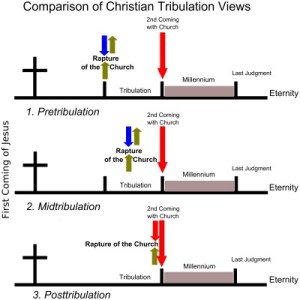
    According to Jesus Himself, “no one knows the day or the hour” in which He will return, so this event is always imminent. Yet if you study the various prophecies of Daniel and others, there is a definite timeline for the Messiah’s coming, even though Jesus appears to say the opposite. From Daniel and Revelation, His Appearing will occur exactly 1260 days after the not-yet-rebuilt Temple in Jerusalem is desecrated. Therefore the  simplest reconciliation between this disparity is that there are actually two Second Coming events just as with His First Coming and His Second Coming. Though most Christians believe in His imminent return and earthly reign, the views on the Rapture vary mostly in its timing, from before the Tribulation (Pretrib), during the Tribulation (Midtrib), to after the Tribulation (Posttrib).

    About fifteen years ago, I got onto this in-depth Bible-prophecy kick, especially concerning the Rapture and the various End Times scenarios related to Israel. Part of that was due to the popular Left Behind books, but also as a result of finally studying the Bible for myself and taking the Word seriously and literally instead of generalizing and spiritualizing it. Eventually, those studies became the basis for my first book called “The Time of Jacob’s Trouble” which portrayed an Israeli family going through the End Times and then into the Millennium (the 1000-year reign of Christ). Of all my books, it’s still my favorite because I poured my heart and soul into it, and even rewrote it into a trilogy after visiting Israel in 2010.

    Somewhere along the line (probably in the midst of writing that first book), my passion for the Rapture and End Times became skewed and turned into something almost on the order of apologetics, in that if teachers or churches didn’t hold to certain End Times notions, then in my mind they weren’t as “Christian” as they should be, or even on the order of being false-teachers. After all, wrong eschatology leads to Amillennialism and Replacement Theology (in which the Church has replaced Israel), and suddenly the Bible can say whatever you want it to, which has happened in numerous denominations over the years. Though now I recognize that as being rather foolish and hard-headed (and hard-hearted), at the time that reasoning made perfect sense because once someone starts spiritualizing Bible prophecy, they can spiritualize literally anything in the rest of it!

    Tribulation_viewsIn the grand scheme of things, one’s stance on Bible prophecy is of some importance, but is not critical to one’s theology as it is with repentance and salvation, the essential doctrines. John Piper and DesiringGod.org have been a tremendous encouragement to me over the last several years, but I missed out on those precious resources for most of my Christian life because I strongly disagreed with their stance on Israel and the Rapture. To quote a good friend from church, I was “majoring in the minors and minoring in the majors.”

    A big change in my thinking of the Rapture and its real importance occurred earlier this year as I was finishing the book “66 Love Letters: A Conversation with God That Invites You Into His Story“. In the End when it’s all said and done, what will the Rapture and all the various views on the End Times really matter? Before we know it, those events will be in the distant past and they won’t matter a bit in Eternity! Getting more personal for a moment, when things blew apart in my life awhile back, none of the prophetic stuff mattered or helped at all — it was completely meaningless. All that knowledge, time, energy, and passion I had poured into it didn’t matter. I had spent so much time learning about God and His prophetic plans that I didn’t get to know God Himself as closely as I should have. I almost wanted to go into the local Christian bookstores shouting, “Vanity, vanity, all is vanity!”

    Something that has always stuck with me since reading C.S. Lewis’s “The Screwtape Letters” (in addition to ‘My Dear Wormwood’) is the vice of distractions and how easy it is for the Enemy to bump us off-track. When he can’t do it with sin, he uses religion, eschatology, or anything else. Satan loves us to get distracted from furthering God’s Kingdom and helping others, especially if it’s done under guise of Christianity. Whatever distracts us and keeps us from reaching out to others is what the Enemy revels in. And if those distractions cause splits and disunity among believers, all the better! He loves dividing us and pitting us against one another, especially when it involves God’s Word. It’s so easy to differ over the Scriptures on even the most insignificant things; there are so many reasons to fall into disunity. It’s always so much easier to split over the Minors instead of uniting on the Majors. Division comes naturally, but real unity takes hard work!

    Along with pointless divisions, consider the simple dollars and cents of the End Times squabbles and how it affects living, breathing people. So much time, effort, and money is spent on rather insignificant things instead of helping others who genuinely need it. Millions upon millions of dollars (if not billions) have been spent on the “Left Behind” books, movies, and merchandise. Aside from the authors and those employed in publishing the books, did they meet anyone’s tangible physical needs? We American believers apparently have oodles of cash to spend on expensive Christian books, paraphernalia, and even glossy new Bibles but not on countless hurting people who struggle to live on less than $1 a day! We should be ashamed that the world often seems to have more compassion on real people and their physical needs than the Church as the Body of Christ. Instead of buying more Christian books and movies for ourselves, we could be financing micro-loans and donating to help others that will make a huge difference in their lives.

    Stepping back and examining how my priorities and view of Bible prophecy became so skewed, I think there were two primary elements that were involved: Pride and Fear. Pride in that I wanted to know more than everyone else when it came to the Bible and the End Times. How foolish of me! Imagine being prideful about the one Book in the world that disparages pride more than anything other character disease! And then there’s Fear – that very personal fear that I might have to go through the horrors of the Tribulation if the Rapture were somehow not true.

    But what does the Tribulation and the Rapture really even matter to me as a disciple of Jesus? My destination is assured — it’s been guaranteed by Christ Himself and God’s Holy Word! He knows exactly how and when I’ll take my last breath, and if my head happens to roll off my shoulders, so what? He’s going to give me an entirely new body anyway, regardless of how well (or how poorly!) I preserve this one! If the Rapture happens, great – by God’s grace I get to avoid death and the Tribulation. However, if we as believers happen to go through the Tribulation and are martyred, that’s great too because we’ll be given a “better” resurrection (Hebrews 11:35). To sum it up, either way we Christians can’t lose because Christ has already won!

    Another reason I believe I got off-track was because of where I live (North America) and the peculiar brand of materialistic, individual-centered Christianity that has flourished here in this Land of Liberty. In the United States, there seems to be this palpable fear of persecution and suffering in American Christendom, though as Christians that’s what we’re appointed to! As Dietrich Bonhoeffer said, “When Christ calls a man, He bids him to come and die.” We can try to sugar-coat it all we want, but Christ calls us to literally sacrifice our lives for others — believers and unbelievers alike.

    And what makes us modern American Christians think we’re somehow special compared to all the other Christians across the world? We have no say whatsoever in where we’re born! What makes us think that we should be exempt from what most Christians for the last two thousand years have had to endure, often gladly and boldly suffering for their faith? Is our present life here in America even remotely comparable to that in Eternity? Haven’t we been born into this Land of Blessings in order to be a blessing onto others? Jesus doesn’t call us to cling to our guns, religion, and antipathy towards others who are different from us – He calls us to follow Him wherever He may lead in order to reach the lost and to cling to Him and Him alone! Christ calls us to offer ourselves as living sacrifices much the way He did Himself.

    heavenNow, with all that said (whew!), I still personally believe that the Pre-Tribulation Rapture will occur for many Scripturally-sound reasons, but it doesn’t really matter in either the long or short term. Christ wants me to keep my eyes focused on Him and nothing else, not even interesting Scriptural trivia, nuances, and theories. Regardless of our eschatology, the fact remains that Jesus Christ is coming soon, and when He does, every eye shall see Him! Every. Single. Person. Today, I am almost ashamed of my various accomplishments because so many will be burned away when that wonderful Day comes, that I lost so many Major opportunities because I was so distracted by the Minors.

    Anything that distracts and hinders us from Christ should be considered rubbish (rotten, dung-filled garbage!) – it’s merely wood, hay, and stubble when compared to our works before Christ. But following Him, loving others, and ministering to their needs? Those acts of love and service are pure gold in God’s eyes and are ALL that will survive when our lives are examined by Him one day!

    “If I speak in the tongues of men and of angels, but have not love, I am a noisy gong or a clanging cymbal. And if I have prophetic powers, and understand all mysteries and all knowledge, and if I have all faith, so as to remove mountains, but have not love, I am nothing. If I give away all I have, and if I deliver up my body to be burned, but have not love, I gain nothing. — 1 Corinthians 13:1-3”

  • If You Were in the Bible…

    If You Were in the Bible…

    Have you ever wondered how your story would read if it was written into the Bible? How would it start? How would it end? What would be some of the highlights?

    openbibleWould your life-story be glossed-over like many in the early chapters of Genesis and Matthew/Luke, where only a “X begat Y and lived Z years and died” verse was written? Would you even want your story to be mentioned? Would you want others to just be given the highlights, or would you want your life to be described in glorious — or humiliating — detail?

    Would you want only the good parts of your life to be told, like when you were extra courageous, kind, generous, and sacrificial? Of course, all of us want to be known for those acts of nobility! But what about the bad, ugly stuff, like when you really screwed up and blew it? What about those moments that you don’t want ANYONE to know about, those moments that would ruin your entire reputation? We all have plenty of the good, the bad, and the ugly, and our life-story is comprised of a mixture of all three — hopefully more good than bad (and ugly)!

    For a moment, consider several of the people mentioned in the Bible, such as Noah, Abraham, Moses, and David. Billions of people across the world have heard of these individuals and their basic stories, but each one had their particular failings and stumblings. One unique characteristic of the Bible when compared to ancient literature (particularly mythology) is that it doesn’t whitewash it’s “heroes” of the faith — no one is perfect (except Jesus) and the Word of God makes sure that we don’t idolize them. God tells it like it is (and was) and portrays each character in all their humanity.

    Noah was the only one found to be faithful in the years leading up to the Flood among the millions of people living on the earth (some estimates indicate there may have been billions). Imagine that — he was the ONLY faithful person left in all the earth! And though he was God’s instrument in preserving a remnant of the animal kingdom and his family in the ark, his bout of drunkenness and rash curse (while nursing a hangover) upon his grandson Canaan has been meticulously recorded into the annals of Biblical history.

    Abraham, the “father of faith” and “friend of God”, struggled with fear and telling half-truths, “white-lies”. Though he is best remembered for leaving his homeland of Ur of the Chaldeans and nearly sacrificing his son Isaac at Mount Moriah, he lied several times to save his own skin — and at the expense of his beloved wife Sarah! Though he fully believed in the LORD of the universe, he still trembled before powerful men.

    Moses, the great liberator of the children of Israel, murdered an Egyptian and fled into hiding for forty years. When God finally called him to active service from the midst of the burning bush, he made excuses for why he wasn’t God’s “man of the hour” and tried to get himself excused from duty because of a speech impediment.

    davidAnd then there’s David, the “man after God’s own heart” who had a weakness for women and sex, the proverbial “chink in his armor.” Next to killing the giant Goliath with a stone, David is known for committing adultery with the wife of one of his most loyal mighty-men and then having him murdered in battle.  Though he was very decisive and won victory after victory on the battlefield, he proved to be passive and indecisive in his own household. Because of his sin (along with being polygamous), his daughter was raped by her half-brother who was then murdered by her brother, who then seized the kingdom from his father before being murdered by David’s chief of staff!

    Would any of these great men have stumbled as badly as they did if they would’ve thought for a moment that their failures were being “recorded” for their posterity, along with the rest of the world? Would they have sinned as they did if they would’ve known that their deeds would be read, studied, and taught to millions of people over thousands of years and written into the very Word of God? Knowing as much as we do about these people of faith, I believe they would’ve lived much more carefully!

    An interesting exercise is to sit down and write your own personal “Bible story” sometime, both what’s it been AND how you would like it to be. How would it begin? What would you want others to know about your life — and what would you want to have left out? More importantly, how would you want it to end? Would we really want it to say, “He worked hard and made a lot of money, retired early, and lived the rest of his life in ease, wealth and health?” While that may sound wonderful on the surface, doesn’t it seem rather selfish and shallow in comparison to the others?

    For me, I think I would want my story to be kept rather brief, though maybe a little bit more than “Chris begat … and then died.” If my story was written into the Bible, I would want it to read more or less like Enoch’s story, with one phrase in particular being mentioned: “And Enoch walked with God; and he was not, for God took him.” (Genesis 5:24). Of all the people mentioned in the Bible, only two are described as walking with God: Enoch and Noah, though I imagine that Daniel, Ezekiel, and several others could be as well.

    Next, how do you think the Author of the Bible would write your story? What do you think God would say about you? Would He describe you as a man or woman after His own heart? Would He say that you walked with Him and finished the marathon of faith well? Would He describe you was being kind, generous, compassionate, sacrificial, and loving? (Ouch — the shoe’s pinching a little tight for me right now!)

    One self-evaluation of faith and love we can (and probably should) do on a regular basis is to put ourselves in the middle of 1 Corinthians 13:4-7. When you substitute your own name in place of “love” how does it read? Here’s mine, and it doesn’t read nearly the way I wish it did! If it was on a report-card, I’d get a big red fat “F”!

    Chris suffers long and is kind. Chris does not envy. Chris does not parade himself. Chris is not puffed up. Chris does not behave rudely. Chris does not seek his own. Chris is not easily provoked. Chris thinks no evil. Chris does not rejoice in iniquity, but rejoices in the truth. Chris bears all things, believes all things, hopes all things, endures all things. Chris never fails.

    But the good news is that Jesus is ALL of those things and much, much more! Look at how His reads: Jesus suffers long and is kind. Jesus does not envy. Jesus does not parade himself. Jesus is not puffed up. Jesus does not behave rudely. Jesus does not seek his own. Jesus is not easily provoked. Jesus thinks no evil. Jesus does not rejoice in iniquity, but rejoices in the truth. Jesus bears all things, believes all things, hopes all things, endures all things. Jesus never fails.

    windingpathWhen we step onto the Road of Righteousness with Noah, Abraham, Moses, and David and follow after Christ, we start walking with Him as Enoch and Daniel did. Jesus is committed to conforming us to Himself and remaking us from the inside out after the Holy Spirit comes to indwell our hearts. As we yield to Him and adopt His ways, we become more like Him. As we walk with Him, our story with all its faults fades and His story shines through us.

    Yes, the road will be long, winding, and extremely difficult at times. The Savior we follow was known as a “man of sorrows” and “familiar with suffering”; if we are to become like him, shouldn’t we should expect likewise for ourselves? But regardless of what may befall us, He is committed to bringing us to our final destination: Home.

    Every one of us has a story that will be written in the Annals of History someday. Every one of us will either have our names found written in the Book of Life or we won’t. When my story is written, I want it to read like His. I want it to be brief yet profound like Enoch’s. I want to be known for one who walked with God and was found to be faithful and was taken into the Kingdom.

    “By faith Enoch was taken up so that he should not see death, and he was not found, because God had taken him. Now before he was taken he was commended as having pleased God. And without faith it is impossible to please him, for whoever would draw near to God must believe that he exists and that he rewards those who seek him.” — Hebrews 11:5-6

  • Softening the Soil and Pulling Weeds

    Softening the Soil and Pulling Weeds

    Weeds. The bane of every gardener, horticulturalist, and lawn aficionado. Every garden and lawn has them — even the most meticulously kept ones (though the weeds may be tiny!). I especially hate dandelions and field bindweed that seems to take over certain parts of the lawn. The front yard usually isn’t too bad, but the back yard is a different story… thank goodness hardly anyone sees that on a regular basis!

    bindweedThere are thousands upon thousands of different kinds of weeds. There are those that grow thin and tall with shallow roots, those that spread and grow rapidly (practically overnight), those that are thorny and prickly and even poisonous. There are those that look small and pretty but whose roots go deep and are tough to dig out. And then there are the ones that seem delicate and beautiful because they have small bright flowers, so you leave them alone until you realize they’ve taken over most of the lawn — like dandelions and bindweed. When I see bindweed, I’m often tempted to rip up the entire yard and replace every inch of grass with cement and rocks like they do in Arizona!

    I have a LOT of experience pulling weeds that goes all the way back to my childhood (shudder and mutter). Back home, we had a two-acre plot with all sorts of fruit trees and several large gardens where we grew strawberries, potatoes, and a variety of produce. If it could possibly be grown in Ohio, it could probably found somewhere on our property. When we weren’t slaving away weeding, roto-tilling, binding, weeding, planting, hoeing, weeding, pruning, picking, or weeding, we would be chopping, throwing, or stacking wood for the winter. Did I mention weeding? It was always my least favorite part of our chores…

    While some weeds  are relatively easy to pull and keep under control, what about the really tough ones? How do you get rid of those? Roundup doesn’t always work, either! What about the ones whose roots reach way down deep and spread out like tree roots? If you don’t tear out the root system, those weeds will practically grow right back before you’ve finished mowing the lawn! And since paving them over usually isn’t an option, where do you even start with those?

    dandelion-rootFirst, you need to soften the soil, either with water, air, or both (and sometimes earthworms). Back home as kids, we had a love/hate relationship with rain. We loved it because it cooled everything off and gave us a break from working outside. However, as soon as it was over, Mom or Dad would say “Looks like it’s a great time to pull weeds!” Why? Because the soil was finally soft, especially since we had a fair amount of clay in it that would harden into brown brick after a couple days of hot sunshine.

    Next, you have to get your hands dirty and dig deep. Grab them as close to the root as possible and start twisting, turning, wiggling, and even digging. The weeds have to be pulled up by the roots or they’ll just come back bigger, stronger, and deeper than ever! Sure, it’s much easier to just rip off the visible part, but then you’ll be right back where you were in a week or two dealing with the same weeds as if you never touched them in the first place.

    Whenever I’m outside pulling weeds (while muttering under my breath), I often think about the significance of weeds and what they really represent in spiritual terms. They quickly grow tall and wide seemingly without effort. No one plants them, yet they spring up out of the ground wherever you look. Useful plants and grasses have to be sowed, watered, and cared for, but not weeds! Weeds are hardy, relentless, and parasitic — leave any plot of ground unattended for a month or two and I can almost guarantee that it’ll be covered with weeds of every sort. While some animals like sheep and goats will eat the leafier varieties (though bitter), most weeds are useful for very little except destroying what is beautiful, edible, and pleasant. The thorny, bristly ones can be eaten by very few animals and insects, and are typically just parasitic; they steal moisture and sunlight from the useful plants and grasses and just invade the landscaping. They’re literally good for nothing except burning.

    Why do weeds even exist in the first place? I have yet to see a plausible evolutionist model for weeds and how they provide any benefit to the food-chain! However, the reason and purpose for weeds fits very nicely with the Bible and practical, biblical truths. Weeds are a direct result of the Curse that goes all the way back to the Fall in the Garden of Eden. Weeds are a perfect, ever-present reminder of the Curse upon this fallen world. Every time we look down and see a weed, we inherently know on some level that this world isn’t as it should be, that the Curse that God pronounced upon it in Genesis 3 is still in very-much in effect today:

    17 Then to Adam He said, “Because you have heeded the voice of your wife, and have eaten from the tree of which I commanded you, saying, ‘You shall not eat of it’:

    “Cursed is the ground for your sake;
    In toil you shall eat of it
    All the days of your life.
    18 Both thorns and thistles it shall bring forth for you,
    And you shall eat the herb of the field.
    19 In the sweat of your face you shall eat bread
    Till you return to the ground,
    For out of it you were taken;
    For dust you are,
    And to dust you shall return.”

    I believe that one of the reasons why God cursed the earth with weeds and thorns wasn’t merely to punish Adam and his descendants for our sins, but to regularly remind us of our fallen condition and that we’re in desperate need of the Savior, the One who will someday reverse the Curse and its effects on His creation. Pulling weeds is often mindless, toilsome work, and which happens to be the perfect time to think about “pulling the weeds” in our own lives. Just like every garden and lawn has those lurking weeds that need to be pulled, all our lives have those lurking sins that need to be dealt with.

    Sins are very much like weeds – they pop up overnight and in the strangest of places, and can be extremely destructive if not promptly and thoroughly taken care of. The longer we let our sins go, the deeper their roots will grow and the more they will enslave our heart and destroy our life. Some sins look pretty and pleasant like dandelions, bindweed, or kudzu, but before you know it, they’ve taken over everything and are choking the life from us. Seemingly without realizing it, we’re enslaved to our own personal weeds, and often those of others who are close to us.

    Another similarity between weeds and sin is that often both start out as small and relatively insignificant, but they never stay that way for long. No matter how much we try to ignore them and pretend that they’re really not that bad, the harder we’re making it on ourselves when the time finally comes to pull them. Every weed gets pulled sooner or later, but they’re much easier to deal with when they’re small and shallow. The same holds true in the spiritual realm — sins are much easier to deal with before they’ve grown too large and taken root, before they become addictions and are destroying our lives and those we love. I believe that we all have a choice: we can pull those weeds or eventually God will start pulling them for us whether we like it or not! He loves us too much to allow us remain in our sins and let them destroy us.

    perfectgardenGod wants us to have innocent, unhindered, beautiful relationships with Him and others, and that means keeping the “garden of our hearts” well-maintained and weed-free. Quite often our communication with God is blocked by sins that we’re hiding or simply not dealing with. Why does God seem silent towards us or distant at times? Why does it feel like our prayers keep bouncing off the ceiling? Is that His doing or could it be ours? Isaiah 59:1-2 declares “Behold, the Lord’s hand is not shortened, that it cannot save, or his ear dull, that it cannot hear; but your iniquities have made a separation between you and your God, and your sins have hidden his face from you so that he does not hear.” 

    Confessing our sins to Him and then repenting of them — turning away from them and not falling back into them — is the spiritual equivalent of pulling weeds from our heart-garden. However, just like weeds always seem to come back every spring and must be pulled again and again, we must be vigilant and maintain our heart-gardens on a frequent, regular basis so they don’t grow out of control again. When we let those little sins go, before we know it, they’re choking our spiritual lives and overtaking our garden!

    The good news is that it’s not just up to us in our own strength to keep our heart-gardens weed-free — the Holy Spirit continually helps us by bringing them to light and convicting us of our sins. God is committed to conforming us to Himself and helping us grow closer to Him, though it will take the rest of our lives and often involves trials, suffering, and patience. In Christ, we have the freedom and authority to determine what type of “garden” we want in our lives, whether it’s full of weeds or relatively weed-free.

    “Do not be deceived, God is not mocked; for whatever a man sows, that he will also reap. For he who sows to his flesh will of the flesh reap corruption, but he who sows to the Spirit will of the Spirit reap everlasting life. And let us not grow weary while doing good, for in due season we shall reap if we do not lose heart. Therefore, as we have opportunity, let us do good to all, especially to those who are of the household of faith.” — Galatians 6:7-10

  • The Ends and the Means

    The Ends and the Means

    “The ends justify the means.”

    Of all the philosophies in the world, I’ve come to believe that this one is among the most innocent, but also the most dangerous. It’s been used to justify anything from cutting corners on menial tasks like sweeping dirt under the rug to monstrous things like murder and genocide. Practically any “means” can be justified if the “ends” are important enough or desired enough. We have this uncanny ability to justify nearly any and every evil under the sun to achieve the desired outcome, i.e., “We’ll do whatever it takes to get whatever we want.”

    This philosophy that the outcome is far more important than the means — regardless of how that outcome is achieved — is almost always a deceptive, slippery slope that can often leave us completely shocked at we are capable of saying, doing, or justifying when we finally come to our senses. In examining my own life, heart, and philosophy over the years, I’ll freely admit that I tend to be an “ends justify the means” type more often than not, especially when my back is up against the wall with tight deadlines at work or sudden crises at home. Guilty, guilty, guilty!

    golgothaThe topic of last week’s Rooted class was about suffering, something that most people would prefer to avoid — even most Christians who worship a suffering Savior. That’s always been rather ironic to me because Jesus was known as a “man of sorrows” and “familiar with suffering” (Isaiah 53:3), yet so many of His followers try to avoid it like the Plague (myself included!). And since it’s Passover week on the Jewish calendar this week, I thought it rather fitting to write a little about the subject of suffering given that Jesus, the Lamb of God, suffered tremendously for us — like no one else ever has on earth. It wasn’t just that He was beaten, tortured, bled, and died to forgive our sins, it was that He became sin for us and endured the terrible wrath of His Father to pay our sin-debt. We cannot even begin to imagine the horrible suffering that He went through for us.

    Where I’m going with this short detour on suffering is that the God of the Bible is not an “ends-justify-the-means” type of God like those invented by men. God seems far more concerned about the means — namely obedience, attitude, and faithfulness — than He is about the ends or the results. After all, He already has those covered because He is sovereign, right? Throughout the Bible, God seems to use (or even orchestrate) rather absurd means to achieve His ends, and the most common one is suffering. The incredible suffering that Jesus endured to pay our sin-debt is the greatest demonstration of God’s character and love for us. The brutality of the cross didn’t take Him by surprise; He knew exactly what He would undergo and though He felt tremendous anguish and fear over it, He didn’t shrink back from it. Suffering was the means by which God achieved His ends: our redemption and salvation.

    Sometimes I think our Ends and God’s Ends are incredibly different, if not polar opposites. The usual Ends from our perspective is eternity in Heaven with Him, but what are the Ends for us from God’s perspective? Holiness. Perfection. Unity. Somehow making our wandering, distracted, fretful (and of course, sinful) hearts to be like His. Putting Him first, others next, and ourselves last. And while He gives us a new heart to replace our fallen, sinful ones, we still have enough indwelling sin in our flesh and other worldly distractions to make us stumble all too often. When thinking of God, how many of us think “Yes! I’m going to Heaven!” as opposed to “Yes! He’s going to make me holy!”?

    heavenAnd what of the other side of the equation, the Means? For us, the Means we typically hope for are peace, tranquility, rest, comfort, and security. Though we know we can’t earn our salvation, we still seem to think that the more we get it together, the better we’ll feel and the closer we’ll inch to Heaven, particularly as we grow older (and hopefully more wiser). We tend to believe or maybe just hope that the more faith we have, the better this life down here will become. Those Means sound pretty nice, right?

    However, I’m starting to understand that those notions couldn’t be more wrong — increasing our earthly comfort, peace, and security is NOT God’s Means of preparing us for His Kingdom and drawing us closer to Him. Does our faith and holiness increase the more comfortable our lives become or the more money that accumulates in our bank accounts? No, money and creature-comforts tend to increase our pride and false sense of security and self-reliance rather than faith, holiness, and dependence upon Him. Especially as I grow older and hopefully more observant, God’s preferred Means are the exact opposite of ours: suffering, instability, insecurity, brokenness, and often pain.

    Now, God is not a masochist nor is He cruel, to be certain (read Job!), but He uses everything for His purposes, always for the ultimate good for those who love Him (Romans 8:28). What are the ultimate “goods” in God’s eyes? Holiness. Sacrificial love. Unity. Suffering and pain in this world weren’t part of His original plan, those are a direct result of the Fall and our sin. Satan loves to use suffering too, but to hurt, confuse, and sow disbelief and more sin. But God uses suffering and pain to test us, to refine us, to make us as His growing children holy. And that really is a remarkable thing to consider: how can the unholy be made holy? The same question is asked in Job 14:4 — “Who can bring what is pure from the impure?”

    The Hall of Faith in Hebrews 11 is one of my favorite passages in the Bible, but the Rooted study pointed out something I had never noticed before, that the examples enumerated in the Hall of Faith are made up of both miracles AND suffering. Until halfway through v35, all the examples are rather positive and miraculous, but then they turn south into persecution and suffering. And while both groups are commended for their incredible faith, we tend to only remember the miracles and yearn to have those happen to us. However, more often than not, they don’t — and they won’t. I don’t mean to say that to be discouraging as much as to be realistic. Far more people suffer in this world than are miraculously healed, yet God is working just as much in one as the other.

    To put God’s “means and ends” together (suffering and holiness), in His Kingdom that He’s preparing us for, “Holiness is the ends, and suffering is the means.” In this world full of sin, pain, and suffering, it’s completely mind-blowing that God can use all these terrible things not only for our good, but to make us holy. Suffering and trials are the litmus tests of genuine faith in this fallen world (just ask His disciples!). Our true relationship with God is revealed when suffering enters our lives, whether we bow our heads or shake our fists. In John 16:33, Jesus promises that His followers will have tribulation in this world — not IF, but WILL. It’s practically a certainty for those who follow Him. Why? Because He uses suffering to make us holy, to make us just a little more like Him.

    I’ve been chewing on this C.S. Lewis quote from “A Grief Observed” for the last month or so, probably because of all the soul-searching and God-seeking over the last few years. It seems to perfectly fit with where I’m at with my faith at this time: “Not that I am (I think) in much danger of ceasing to believe in God. The real danger is of coming to believe such dreadful things about Him. The conclusion I dread is not ‘So there’s no God after all,’ but ‘So this is what God’s really like. Deceive yourself no longer.’” I don’t know about you, but I don’t like to be deceived — especially by myself!

    narrow-pathAs I’ve drawn closer to God over the last couple years, I’ve had to re-examine my thoughts, emotions, faith, philosophy, future, legacy, etc., and certainly my views about God. Practically every piece of my life has been torn apart, examined, and poured over. Where have I been, where am I now, where am I going, and what is my purpose? What would God have me do now? Over the course of this process, I’ve come to this uncomfortable realization that God is NOT who I want, imagine, or wish Him to be — He IS who He is! He’s the same God who allowed the Holocaust, who sent the Flood to destroy that world, and who even slew His only Son! Those just don’t jive with the popular, comfortable God of love that’s often preached today — that’s a holy, sovereign, sin-hating God! He doesn’t do things the way we do, He doesn’t think the way we think, and He doesn’t feel the way we feel about sin, love, and probably just about everything else! And whether or not I like that isn’t going to change anything, I just need to accept it. I need to accept Him and His ways if I’m going to continue walking down this narrow road with Him. And since He’s not going to change (Malachi 3:6), that means that I have to!

    Do I like this notion that God uses suffering to produce holiness in His children? Nope, not much at all. The only way I can make much sense of that “spiritual hypothesis” is because more than anything else, suffering forces us to realize our utter dependence upon Him. Suffering yanks off the blinders, blows away the fog, and drives us to our knees and our Bibles. I have yet to experience tremendous physical pain — yes, there’s been terrible emotional pain over the last couple years — but not physical, inescapable pain, and certainly not suffering or persecution. I must assume those will come sooner or later, because that’s just the way it is in this world. And I’m certain I won’t like it one bit!

    Perhaps this new understanding that all trials — even the seemingly pointless sufferings — have the underlying purpose of making us holy will help me keep the right attitude and perspective when they do come.

    “Therefore, since we have been justified by faith, we have peace with God through our Lord Jesus Christ. Through him we have also obtained access by faith into this grace in which we stand, and we rejoice in hope of the glory of God. Not only that, but we rejoice in our sufferings, knowing that suffering produces endurance, and endurance produces character, and character produces hope, and hope does not put us to shame, because God’s love has been poured into our hearts through the Holy Spirit who has been given to us.” — Romans 5:1-5

  • In the Fullness of Time

    In the Fullness of Time

    Have you ever tried to imagine winter without Christmas? When I do, the early scene of Narnia in C.S. Lewis’s “The Lion, Witch, and the Wardrobe” always come to mind where Lucy meets Mr. Tumnus. “Always winter, never Christmas” — what a dreadful season that would be!

    The Christmas season is the time for gathering with family and friends, overeating at big holiday dinners, decorating trees and windows, hanging lights, watching old Christmas movies, baking gingerbread and cookies, drinking eggnog, and holding various seinfeld-festivusjpgChristmas traditions. Every family celebrates the holidays differently, whether it’s the white-elephant exchanges, traveling to visit loved ones, or even escaping to the Caribbean. And of course, who could forget Festivus (for the rest of us!)?

    When most people look up the Christmas story in their Bibles, they usually turn to Matthew 1-2 or Luke 2, or even Isaiah 7:14 and Micah 5:2. We would always read from Isaiah and Luke on Christmas Eve before exchanging presents (and having knockdown dragout wrapping-paper fights). John 1:14 also contains another portrayal of the Incarnation and Birth of Christ when John declares that “the Word became flesh and dwelt among us, and we beheld His glory, the glory as of the only begotten of the Father, full of grace and truth.”

    But there’s another version of the Christmas story that’s seldom read at Christmas, even though it holds much greater significance for believers than the other accounts: “Christmas According to Paul.” While his version contains fewer details than the others, the purpose for Christ’s coming is much more clearly articulated: to free us from bondage to sin and death, to open the way for us to becomes heirs with Him.

    The backdrop of Paul’s telling of the Christmas story begins in Galatians 3 with his discussion of the purposes of the Law, which was intended to be our tutor which brings us to Christ. Though we are all slaves to sin, it is the Law which reveals our true helpless condition, our desperate need for the Savior who will set us free:

    21 Is the law then against the promises of God? Certainly not! For if there had been a law given which could have given life, truly righteousness would have been by the law. 22 But the Scripture has confined all under sin, that the promise by faith in Jesus Christ might be given to those who believe. 23 But before faith came, we were kept under guard by the law, kept for the faith which would afterward be revealed. 24 Therefore the law was our tutor to bring us to Christ, that we might be justified by faith. 25 But after faith has come, we are no longer under a tutor.

    Before Christ came, we were under the Law, the law of sin and death. Until faith came (v25) — until Christ came. In much of the Old Testament,  the Law (Torah) is the focus and defined how people interacted with God. Paul goes on in Galatians 4 to describe the profound significance of what Christ’s First Coming means, which not only redeems us and frees us from the Law (under which we are all guilty) but clears the way for us to be adopted into God’s Family, to make us heirs with His Son.

    4 Now I say that the heir, as long as he is a child, does not differ at all from a slave, though he is master of all, 2 but is under guardians and stewards until the time appointed by the father. 3 Even so we, when we were children, were in bondage under the elements of the world. 4 But when the fullness of the time had come, God sent forth His Son, born of a woman, born under the law, 5 to redeem those who were under the law, that we might receive the adoption as sons. 6 And because you are sons, God has sent forth the Spirit of His Son into your hearts, crying out, “Abba, Father!” 7 Therefore you are no longer a slave but a son, and if a son, then an heir of God through Christ.

    Like winter without Christmas, have you ever considered what Christmas would be like without Christ? It would be just another day on the calendar and given as much significance as the other non-religious special days of the year like the solstices. Consider how dreary, cold, and depressing the long winters would be if there was no holiday of lights, bluelightsgiving, and generally good cheer that splits the season nearly in half! And we can’t forget the plays, music, and hot drinks that make the atmosphere of December much different than January. Though there is compelling biblical and cultural evidence that Jesus was probably born in late September instead of the dead of winter, the observance of Christ’s birth is what makes the first half of winter so special, even to those who are not particularly religious.


    One of the key phrases in this passage is “But when the fullness of time had come, God sent forth His Son…” Why did He choose to wait thousands of years before introducing Him to the world? And what exactly does Paul mean by “the fullness of time”? As a student of the Bible, I’d like to offer a few suggestions:

    • Under the Babylonian, Greek, Persian, and Roman Empires, much of the ancient “civilized” world was unified by a relatively common religious system (pagan as it was), a “standard” language and system of laws, as well as a reliable system of roads, bridges, and ships. Pax Romana had brought stability to much of the Mediterranean.
    • The observance of the Law (Torah) had reached it’s zenith in Israel. The nation had swung from the one extreme of gross paganism of the Canaanites, Moabites, and Babylonians to the other extreme of hyper-legalism such that the Pharisee’s commandments were superseding the God-given commandments. Idol-worship had practically been replaced by law-worship.
    • The prophets of God had been silent for four hundred years, though the major events of those “silent years” had been detailed in the Book of Daniel, particularly the rise of the four great empires and their significant kings. God gave Daniel, Ezekiel, and several other prophets of the Babylonian Exile detailed visions and insights as to what would take place in the years between the Exile and the Coming of the Messiah.
    • God’s plan for history was rapidly approaching it’s next significant event, the greatest event in history as described in Daniel 9 (also known as Daniel’s Seventy Weeks). From the decree to rebuild Jerusalem to the Coming of the Messiah was to be 69 “weeks” of years, and only a handful of those “weeks” remained until the Messiah would visit the Temple. For both Jews and Christians, all history hinges on the Coming of the Messiah, in both this age and in the age to come!

    In the fullness of time, God sent forth His Son to fulfill the Law. In the fullness of time, God sent forth His Son to be sacrificed on the cross, to take all our sins upon Himself. In the fullness of time, God sent forth His Son to free us from the law of sin and death. In the fullness of time, God sent forth His Son to enable us to become sons and daughters of His Family, to become heirs with Him.

    This week as we observe and celebrate the birth of Christ, let’s take some time and give thanks for all He has done for us in His humble birth, sacrificial death, victorious resurrection, and the Comforter He sent to indwell us. Without Christ, we would be without hope and still enslaved to the law of sin and death. Without Christ, we would never be adopted into God’s family as sons and daughters.

    star

    “But when the fullness of time had come, God sent forth his Son, born of woman, born under the law, to redeem those who were under the law, so that we might receive adoption as sons.” — Galatians 4:4-5

  • My God, It’s Full of Stars!

    My God, It’s Full of Stars!

    One of the most memorable movie lines from my childhood that I’ll never forget is: “My God, it’s full of stars!” These were Dave Bowman’s finalmygod words as he entered the monolith in the movie “2001: A Space Odyssey”; what made them especially memorable is probably because most of the movie was silent. The other movie line that’s permanently stuck in my head is: “1.21 gigawatts!??!” from “Back to the Future”.
    I couldn’t help but have that same reaction when I saw the crystal-clear night sky from the middle of the Badlands back in September. Though I frequently walk the dogs and see the stars most evenings, it’s a completely different experience seeing the night sky in the middle of nowhere than in the suburbs. In fact, it was my first time seeing the Milky Way, though I have seen numerous pictures of it. On even a clear night in the suburbs or city, you’re lucky to see a quarter of the stars that are visible to the naked eye. But out in the middle of nowhere with no light pollution, you can see many, many more — and the Milky Way is the center-piece of the entire scene!

    Several years ago during one of my Bible studies, I stumbled upon the “Gospel in the Stars” theory from Joseph Seiss, which provides a good explanation as to how astrology likely originated at Babel and why the zodiac is so similar between many disparate cultures (Chinese, Chaldeans, Egyptians, Druids, Hebrews, etc.). Astrology appears to be even older than writing itself in the ancient world, at least how most historians date man’s history.

    The basic idea behind the “Gospel in the Stars” is that God revealed the names of the visible stars, constellations, and their meanings to Adam, Seth, or Enoch (or someone other ancient patriarch). From there, they devised a zodiacmodsystem of word-pictures to help them remember the names of the stars. The names of the stars in the constellations tell the story of God’s plan throughout all history: that mankind had been corrupted by sin, that man’s sin could only be atoned for by sacrifice, that God Himself would provide a Redeemer to restore the broken relationship between God and mankind, that this Redeemer would then destroy the wicked Serpent, and then He would finally restore peace and harmony to all Creation.

    In the Bible, the zodiac is known as the Mazzaroth and is mentioned several places, one of the foremost being in the Book of Job where God Himself mentions some of the details of the stars and constellations that could not have been known at the time. Genesis tells us that God created the stars and placed them in motion to serve as instruments for keeping time and also for revealing signs and wonders (such as the Bethlehem star). One of the brighter constellations visible only from the Southern Hemisphere today is the Southern Cross, which hasn’t been visible from our hemisphere for the last two thousand years. Before that, it could clearly be seen close to the horizon. A curious coincidence? Not in God’s creation! Why, it’s almost as if the Southern Cross was visible until the time of the Crucifixion, and when that event was completed and His work on the Cross was finished, the Southern Cross vanished below the horizon. Before then, it could be seen as far north as Jerusalem.

    One observation from the Bible is that Satan and his angels can only corrupt — they cannot create no matter how hard they want to. They can only corrupt, kill, and destroy; they cannot create. The ability to create only belong God and those He grants it to, namely mankind. With that general principle in mind, it’s likely that the original meaning of the Mazzaroth was corrupted by Nimrod at Babel, who built a tower unto — or for the worship of — the heavens). The builders at ancient Babel didn’t build a great tower to escape another flood as much as a profane center of worship that corrupted God’s “message” in the stars. When the 70 tribes/clans were scattered from Shinar, they each took the corrupted story of the stars with them, though many of the concepts, symbols, and structures remained similar. Notice what Psalm 19 says:

    The heavens declare the glory of God;
    And the firmament shows His handiwork.
    2 Day unto day utters speech,
    And night unto night reveals knowledge.
    3 There is no speech nor language
    Where their voice is not heard.
    4 Their line has gone out through all the earth,
    And their words to the end of the world.

    In them He has set a tabernacle for the sun,
    5 Which is like a bridegroom coming out of his chamber,
    And rejoices like a strong man to run its race.
    6 Its rising is from one end of heaven,
    And its circuit to the other end;
    And there is nothing hidden from its heat.

    It’s been said that of all the creatures on earth, man is the only one who is able to both look up to the heavens and down at the earth. Most creatures only look up if there’s danger above from birds of prey, but  most spend the vast majority of their time looking down at the earth. But man is different — we’re made to look at both the ground and the sky with the same ease, along with everything around us. It’s almost as if we were designed to observe all that surrounds us, whether it be in the heavens above or the earth below.

    ArcMW

    Have you ever considered why there are even stars in the first place? Really, stop and think about it for a moment. Unlike the sun, moon, and even a few of the planets, the trillions upon trillions of stars that exist all around us have very little influence upon this earth. They’re so far away and yet God painstakingly created — and went to the trouble of naming — every single one of them!

    All the planets, stars, galaxies, and everything else in this great big universe exist all for the glory of God. When we look up at the stars, He wants us to know Him and see how infinitely great He is. He wants us to ponder Him, to know Him, to give Him glory for His incredible handiwork which He spoke into existence. He wants to tell others His story, and what better place to start than in the stars? While no one can claim that the “Gospel in the Stars” is definitively true, from the best evidence we have (from the ancient names, pictures, and legends) that appears to be the case. If anything, it’s an interesting theory that should cause us to give God glory and draw us closer to that which we KNOW is His revealed truth: the Bible.

    So sometime when you’re feeling adventurous or maybe just want to get a bigger glimpse of God’s glory and His handiwork, take a long drive out to the middle of nowhere on a dark moonless night. Get away from the city, suburbs, and all those man-made lights until you can only see the lights that God created long ago. Pull off to the side of the road or hunker down at a makeshift campsite and then just look up and behold His awesome handiwork!

    For in six days the Lord made the heavens and the earth, the sea, and all that is in them, and rested the seventh day. — Exodus 20:11a