Tag: Job

  • David: The Unlikely King

    David: The Unlikely King

    My wife and I recently finished watching the first season of the new biblical series “House of David” on Amazon. The series was very well done, even though it doesn’t exactly follow the biblical narrative in places, along with some embellishments and liberties taken for dramatic effect. And while it only covers the beginning of David’s story, it was enough to get me thinking about him and his life in my morning devotional time.

    I’ve written before about David and about how his true focus was on God for all his life, and how his deepest desire was to simply be with Him and be in His presence in That One Thing (Psalm 27) and the series only reinforced that. While most seek after fame, fortune, and power (just spend 10 seconds on social-media!), David did not. It struck me that even though David obtained all of those things during his life, he never intentionally sought those things for himself or for his own glory. He sought after God and His name and he made himself available in whatever way God might use him. And in doing so, God provided those things to him much like He later would for his son Solomon after he had simply asked God for wisdom in governing His people.

    David was so focused on God and innately knew that his satisfaction would only be found in Him that he would’ve been happy regardless of whether he had become king or not. While few people like being shepherds back in those days (it was typically the lowest job given to the lowest of servants and children), David made the best of it. There’s no record of him complaining, and apparently he used those long, boring, solitary days and nights in the fields to grow closer with God. Then when the time came, he relied on his relationship, faith, and trust in God for God to guide and deliver him in whatever situation he found himself. And God richly rewarded that faith, loyalty, and trust.

    God even says as much in 2 Samuel 7:8-9 when David is wanting to build a Temple for Him: ‘This is what the Lord Almighty says: I took you from the pasture, from tending the flock, and appointed you ruler over my people Israel. I have been with you wherever you have gone, and I have cut off all your enemies from before you. Now I will make your name great, like the names of the greatest men on earth.”

    David’s focus was not on greatness, his own glory, or even himself — but on God. In reviewing the lives of Saul, Solomon, and most other kings in the Bible, that is by far the exception rather than the rule. David stands alone.

    David’s life-story also parallels that of Job in many ways, save for the boils and ashes and three accusing friends. For example, God provided the growth, wealth, reputation, and honor/glory for both. Both were regarded as very wealthy, faithful, wise, and of impeccable reputation. He provided wives and many children for both, and the very picture of an ideal household, in that both had ten children or more. But then at the height of their greatness, God allowed all those things to be stripped from them:  Job in his testing by Satan and David in his sin with Bathsheba that opened the pathway for Satan to destroy his household from the inside.

    In both cases of David and Job, God allowed nearly everything that mattered to be stripped from them so that they, He, and others (and us by their stories) could see what remained. And what was that? Their faith and desire to be with God. Despite all that had happened to them, both men clung to God with everything they had and refused to give up on their faith in Him and that He would ultimately deliver them. Somehow.

    In the case of Job, all that had been lost during his time of testing was later restored twofold, though with David, it wasn’t quite as dramatic — likely because of his sin. David’s kingdom and much of his household was restored, but his reputation never was. How differently David’s life would have turned out if he had not sinned with Bathsheba and then murdered her husband to cover it up — to save his reputation and hide his disloyalty and sin! All the family turmoil and tragedy that befell him would have likely been avoided, as well as his near-loss of the kingdom to his son Absalom and the heavy burdens of grief, loss, and regret that David then carried for the rest of his life. There was probably not an hour that passed that he didn’t think of one of those evils, and only God knows how much that interfered in their relationship and their intimacy/walk.

    Yet despite all the tragedy, loss, and grief, David still clung to God — even if it was by the very tips of his fingers at times — and God didn’t tear the kingdom away from him despite his sin. Remember, God removed the kingship from David’s predecessor Saul over his disobedience with the sacrifice and King Agag, and then God split the kingdom after David’s son Solomon fell into idolatry and lost faith with Him. But God continued to honor David because he continued to honor God and he returned to Him whenever he sinned and went off the rails. David continued to be humble before God and knew he was still “little” despite his greatness.

    Consider all the stories of the kings and rulers throughout history and even many of our leaders today. How many would actually humble themselves and confess their sins and wrongdoings when accused or exposed? How many would not merely call for a day of prayer but actively fast and participate in it? Yet David did all that in 2 Samuel 24 when he sinned and took an unlawful census of the people (relying upon the strength of the army/people rather than God).

    David’s life — through all the highs and lows — continued to reflect his desire to be close to God and his reliance upon Him, as well as his inner humility.
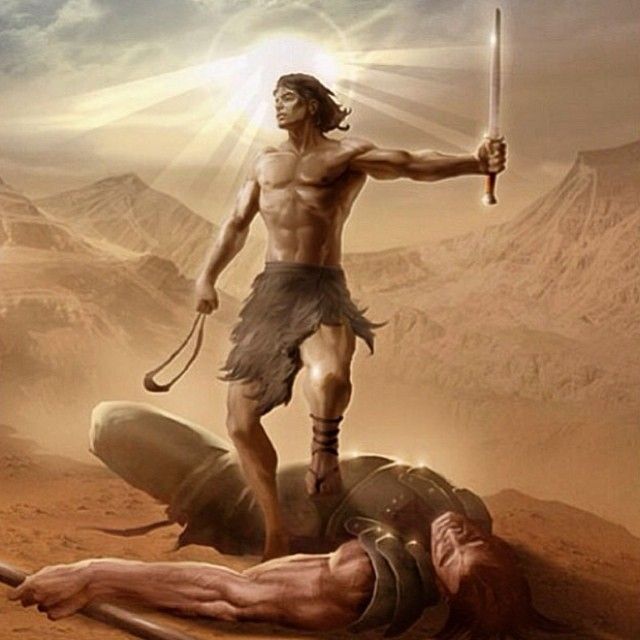
    While the “House of David” wasn’t preachy and didn’t delve too much into the spiritual side of David’s life, it was great to see the portrayal of him and the biblical characters we’re familiar with, and of course, all the action-scenes and being able to see what they might have looked like three thousand years ago.

    I’m already looking forward to seeing what Season 2 of “House of David” will bring and how his onscreen character will be developed!

  • It Wasn’t For Nothing

    It Wasn’t For Nothing

    This morning after I had finished my daily YouVersion readings, I was scrolling through Instagram a little and stumbled across a post that caught my attention.

    There on the screen was a middle-aged man in a gray tee-shirt lying on his back in his driveway, blankly staring up at the sky. He’s not hurt — at least not physically — but he appears to be all but spent. Worn out. Defeated. Exhausted. Overwhelmed by whatever was happening such that all he could do was lay down on the hard cement next to his car. The caption of the video read, “Imagine Jesus whispering this to you…”

    What made me really stop and watch — aside from the fact that 99.9% of all social-media posts are NOT of people laying on their driveways — was that it captured my mental picture of myself lately. My initial reaction was, “Oh my God, that’s me! How did they know? That’s exactly how I see my life right now! That’s exactly how I feel inside!”

    And then the man closes his tired eyes as a quiet voice begins whispering to him. He doesn’t sob or convulse in tears, he just lays there, listening silently.

    It wasn’t for nothing.
       Everything that you’ve been through,
    It wasn’t for nothing.

    I created you with purpose
       And even through the darkest valley,
    You continued to love Me and follow Me.

    And I will bless you.

    And then I began to sob, those big, ugly, heartfelt sobs that come from the pit of your soul. These beautiful words ministered directly to my heart this morning in a way that nothing else has been able to for quite some time. Again, how did they know? How could they have seen? After all, I hide my emotions pretty well to everyone at the gym, at church, and of course, everyone I work with. How could anyone know exactly what I’ve been feeling, and more importantly, what I’ve been needing to hear for so long?

    But He knew. And He cared enough to simply drop that into my feed this morning.

    He always knows. And He cares. Our Father sees us in our hardships, our sorrows, our pain, our messes — yes, even in the messes that we ourselves have made — and He cares. He loves us and He cares.

    The last seven years of my journey here have been one major upheaval after another, with some better and some worse (and some very worse!). There have been so many changes, transitions, and surprises (especially within the last year), that I almost don’t know where to begin. And while each setback or major life-change is understandable (or even sensible) within the context of the different situations and circumstances at the time, when stepping back and looking at the journey as a whole, it seems like nothing short of a train-wreck in which very little makes sense anymore. No train-wrecks ever make much sense.

    But when we go though these deep, dark valleys in which we can’t even begin to see the end, He sees and He knows. Sometimes we run, sometimes we walk, sometimes we crawl, and sometimes when its all just too much, we lay down and stare up at the endless sky above us, searching for a glimmer of light to give us just a little more hope to keep going.

    Our faith in Him, our trust in Him, our love for Him, and our dogged clinging to Him through it all — it matters. And it matters greatly to Him. As Job so aptly said during his own ordeal, “Though He slay me, I will trust in Him.” (Job 13:15)

    It wasn’t for nothing.
       Everything that you’ve been through,
    It wasn’t for nothing.

    I created you with purpose
       And even through the darkest valley,
    You continued to love Me and follow Me.

    And I will bless you.

    It isn’t for nothing. He sees and He knows.

    It’s my hope that others will see this and be ministered to just as I was today. Regardless of how we may be feeling or what’s overwhelming us, our Father knows. And He cares. And one day when we finally meet Him, He’ll wrap His strong, gentle, loving arms around us and whisper directly into our broken hearts:

    “It wasn’t for nothing…”

    @jesusthegreatlight
    https://www.instagram.com/reel/CX1LofUh2V7/

  • Revealing My Secret Identity

    Revealing My Secret Identity

    If you’re reading this, then you’ve proven one of my premises: anything with the words “secret” or “reveal” in a title or headline is just too enticing to pass up. There’s just something in us that wants to know secrets or revelations, particularly when it comes to other people. Though in fact I do not have any such secret identity, this post is about identity — and I think it’s worth reading.

    What Shapes Our Identity?

    A topic that’s been on my mind for a while is the matter of identity and how identity (and its confusion) plays into so many of the issues we’re encountering in our modern culture. One example is the transgender movement and the gender confusion that seems to be increasingly pervasive in our schools. I remember thinking several years ago that transgenderism would become the next big cultural topic, and sure enough, it’s here in full swing.

    At the core of these issues is a matter of identity, or rather, identity confusion or even dislike of your identity or perceived identity. It’s not uncommon for middle-schoolers or high-schoolers to want to change their names to something that’s more neutral rather than more masculine or feminine. A few steps beyond that is when they start wearing clothes or styling their hair in a way that is neutral or belongs to the opposite gender. And over the last several years, these topics have even found their way into elementary schools.

    As I’ve thought about these issues, I think it’s common for kids of any age to ask questions related to their identity, such as “Who do I want to be?”, “What do I want to be when I grow up?”, or “Who do I want to hang out with?” As kids get older, they typically ask deeper questions such as “Who am I?” or “Where am I going?” Such questions are all rooted in identity: how we are perceived by others, how we think we’re perceived by others, how we perceive ourselves, and how we want to be perceived.

    A blank name tag lying on an old wooden school desk

    Growing up in a small town in rural Ohio, I must confess that I wasn’t all that crazy about my own name (Chris), mostly because no one else had it except for a couple of girls (Christy, Christine, Christina). All the cool kids were named John, Kevin, Matt, or David. My last name didn’t make it any easier either (Hambleton), rather than Smith, Jones, Adams, or even Hamilton. There were many times I thought that my life would be so much better if my name was more common, like one of theirs, rather than something different.

    As we get older and go through more of life, our identity — who we are, who we’re perceived to be, and who we perceive ourselves to be — changes based upon the choices we make, the things we do, our gifts and talents, our jobs and careers, what we drive, what we wear, where we live, our friends and relatives, and a myriad of other identity-determining factors. When we get married, our identity inherently changes because we’re now joined to another person and their family, especially for women if and when they take their husband’s surname.

    When people divorce, one of the first things that is changed is their name (again, mostly for women). Why? It’s not the name itself that’s the issue; it’s the inherent association with their former spouse and, on a greater level, their own identity. (I wrestled with some of this myself in Single, Divorced, or Other?) It’s not very common for children to have their last names changed after their parents divorce, though it does occur sometimes. And some divorced women do choose to keep their married name for several reasons, but the main one is likely for the sake of their children or for simplicity.

    When Everything Is Taken: Lessons from Job

    Since our identity is so often shaped by others or defined by things external to ourselves, what if those things which define us were taken away? Who would we be? What would we be known for if our house, job, wealth, car, spouse, children, location, name, etc. just disappeared one day? Would our personality, our character, or our soul and spirit — who we actually are as people — be enough to help us maintain our identity to both ourselves and those around us, particularly our friends and family?

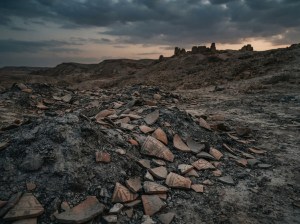
    A desolate ash heap with broken pottery shards in an ancient landscape at dusk

    Consider the story of Job in the Bible: along with losing everything that was near and dear to him (along with his health), he suffered the loss of identity which came with the loss of those things (Job 29–30). Whereas once he was respected and revered by everyone, after losing everything he was scorned and mocked by even the worst of the people:

    “But now they mock at me, men younger than I, whose fathers I disdained to put with the dogs of my flock.”

    Job 30:1 (NKJV)

    Whereas before many sought him for benefits and honor, after his great losses everyone abandoned him except his three best tormenters (er, friends). In Job’s mind, even God Himself had abandoned him and cursed him, though he had no idea why.

    Known Before We Were Born

    Since all things outside ourselves can indeed be taken away (and sometimes are), shouldn’t we anchor our identity in something (or to Someone) that cannot? While the world perceives and defines our identity based on worldly, external things, how does God define our identity? Indeed, God our Father knows us before we know ourselves — before we were even born. Our Maker knows us because He made us.

    “Before I formed you in the womb I knew you; before you were born I sanctified you.”

    Jeremiah 1:5 (NKJV)

    “For You formed my inward parts; You covered me in my mother’s womb.”

    Psalm 139:13 (NKJV)

    “Your eyes saw my substance, being yet unformed. And in Your book they all were written, the days fashioned for me, when as yet there were none of them.”

    Psalm 139:16 (NKJV)

    Our Father knows us. Our Father sees us. Our Father hears us. And not only does He see and hear us, He knows us on levels we don’t even know ourselves. He knows us as we truly are, which no one else possibly can. He knows our thoughts and even the intentions of those thoughts. He knows us and gives no mind to all the external things we put on to present our identity to others, or even to ourselves.

    A New Name on a White Stone

    Another passage that comes to mind that’s related to identity is Revelation 2:17, in which Jesus promises to give those who belong to Him a new name:

    “To him who overcomes I will give some of the hidden manna to eat. And I will give him a white stone, and on the stone a new name written which no one knows except him who receives it.”

    Revelation 2:17 (NKJV)

    For years I never quite understood why that verse was included in the Bible. Why would He even want or need to give us new names? But after thinking about it some, our names are intended to convey something about us, a piece of our identity — which is rather ironic, because we’re named at birth before we can do anything but cry and wriggle. And that’s why God found it fitting to change the names of several of His people in His Book after they came to faith or had a life-changing encounter with Him, such as Abraham and Sarah, Jacob (Israel), and Peter.

    A change in name signifies a change in identity, and vice versa. In the Bible, the change in identity occurs first, and then God changes their names to signify and cement it. The new identity has come, and the old has passed away — just as with us when we become believers and are brought into His Family and His Kingdom.

    “Therefore, if anyone is in Christ, he is a new creation; old things have passed away; behold, all things have become new.”

    2 Corinthians 5:17 (NKJV)

    Who We Are in Christ

    As believers in Christ, we’re no longer who we were, or defined by what we’ve done or what we have, where we work, what we drive, or anything else. After we come to faith, we’re someone completely new — refactored, if you will — and are defined solely by who we are in Him, and nothing else. Like Job, we can lose everything we can possibly lose in this life, and it no longer matters, because those things no longer define us or give us our identity. Only He does. As Paul says in Philippians:

    “Yet indeed I also count all things loss for the excellence of the knowledge of Christ Jesus my Lord, for whom I have suffered the loss of all things, and count them as rubbish, that I may gain Christ.”

    Philippians 3:8 (NKJV)

    Perhaps the new name that He gives us will be according to who we are or what we’ve done in this life. Or perhaps His new names for each of us will come from something else entirely that only He knows.

    Which brings me back to that title. I don’t have a secret identity — at least not one I know about yet. But if Revelation 2:17 is true (and it is), every one of us who belongs to Him does have one: a name written on a white stone, known only to Him and to the one who receives it. It’s not the name our parents gave us, or the one we built for ourselves with our jobs, our marriages, or our reputations. It’s the name He gives us, and no one can ever take it away.

    So whether you’re a kid wondering who you are, a newly divorced adult wondering who you are now, or someone like Job who has lost everything that used to define you — your identity is safe with Him. He knew you before you were born, and He already knows the name He’s going to call you.

  • My God, It’s Full of Stars!

    My God, It’s Full of Stars!

    One of the most memorable movie lines from my childhood that I’ll never forget is: “My God, it’s full of stars!” These were Dave Bowman’s finalmygod words as he entered the monolith in the movie “2001: A Space Odyssey”; what made them especially memorable is probably because most of the movie was silent. The other movie line that’s permanently stuck in my head is: “1.21 gigawatts!??!” from “Back to the Future”.
    I couldn’t help but have that same reaction when I saw the crystal-clear night sky from the middle of the Badlands back in September. Though I frequently walk the dogs and see the stars most evenings, it’s a completely different experience seeing the night sky in the middle of nowhere than in the suburbs. In fact, it was my first time seeing the Milky Way, though I have seen numerous pictures of it. On even a clear night in the suburbs or city, you’re lucky to see a quarter of the stars that are visible to the naked eye. But out in the middle of nowhere with no light pollution, you can see many, many more — and the Milky Way is the center-piece of the entire scene!

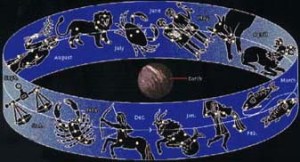
    Several years ago during one of my Bible studies, I stumbled upon the “Gospel in the Stars” theory from Joseph Seiss, which provides a good explanation as to how astrology likely originated at Babel and why the zodiac is so similar between many disparate cultures (Chinese, Chaldeans, Egyptians, Druids, Hebrews, etc.). Astrology appears to be even older than writing itself in the ancient world, at least how most historians date man’s history.

    The basic idea behind the “Gospel in the Stars” is that God revealed the names of the visible stars, constellations, and their meanings to Adam, Seth, or Enoch (or someone other ancient patriarch). From there, they devised a zodiacmodsystem of word-pictures to help them remember the names of the stars. The names of the stars in the constellations tell the story of God’s plan throughout all history: that mankind had been corrupted by sin, that man’s sin could only be atoned for by sacrifice, that God Himself would provide a Redeemer to restore the broken relationship between God and mankind, that this Redeemer would then destroy the wicked Serpent, and then He would finally restore peace and harmony to all Creation.


    In the Bible, the zodiac is known as the Mazzaroth and is mentioned several places, one of the foremost being in the Book of Job where God Himself mentions some of the details of the stars and constellations that could not have been known at the time. Genesis tells us that God created the stars and placed them in motion to serve as instruments for keeping time and also for revealing signs and wonders (such as the Bethlehem star). One of the brighter constellations visible only from the Southern Hemisphere today is the Southern Cross, which hasn’t been visible from our hemisphere for the last two thousand years. Before that, it could clearly be seen close to the horizon. A curious coincidence? Not in God’s creation! Why, it’s almost as if the Southern Cross was visible until the time of the Crucifixion, and when that event was completed and His work on the Cross was finished, the Southern Cross vanished below the horizon. Before then, it could be seen as far north as Jerusalem.

    One observation from the Bible is that Satan and his angels can only corrupt — they cannot create no matter how hard they want to. They can only corrupt, kill, and destroy; they cannot create. The ability to create only belong God and those He grants it to, namely mankind. With that general principle in mind, it’s likely that the original meaning of the Mazzaroth was corrupted by Nimrod at Babel, who built a tower unto — or for the worship of — the heavens). The builders at ancient Babel didn’t build a great tower to escape another flood as much as a profane center of worship that corrupted God’s “message” in the stars. When the 70 tribes/clans were scattered from Shinar, they each took the corrupted story of the stars with them, though many of the concepts, symbols, and structures remained similar. Notice what Psalm 19 says:

    The heavens declare the glory of God;
    And the firmament shows His handiwork.
    2 Day unto day utters speech,
    And night unto night reveals knowledge.
    3 There is no speech nor language
    Where their voice is not heard.
    4 Their line has gone out through all the earth,
    And their words to the end of the world.

    In them He has set a tabernacle for the sun,
    5 Which is like a bridegroom coming out of his chamber,
    And rejoices like a strong man to run its race.
    6 Its rising is from one end of heaven,
    And its circuit to the other end;
    And there is nothing hidden from its heat.

    It’s been said that of all the creatures on earth, man is the only one who is able to both look up to the heavens and down at the earth. Most creatures only look up if there’s danger above from birds of prey, but  most spend the vast majority of their time looking down at the earth. But man is different — we’re made to look at both the ground and the sky with the same ease, along with everything around us. It’s almost as if we were designed to observe all that surrounds us, whether it be in the heavens above or the earth below.

    ArcMW

    Have you ever considered why there are even stars in the first place? Really, stop and think about it for a moment. Unlike the sun, moon, and even a few of the planets, the trillions upon trillions of stars that exist all around us have very little influence upon this earth. They’re so far away and yet God painstakingly created — and went to the trouble of naming — every single one of them!

    All the planets, stars, galaxies, and everything else in this great big universe exist all for the glory of God. When we look up at the stars, He wants us to know Him and see how infinitely great He is. He wants us to ponder Him, to know Him, to give Him glory for His incredible handiwork which He spoke into existence. He wants to tell others His story, and what better place to start than in the stars? While no one can claim that the “Gospel in the Stars” is definitively true, from the best evidence we have (from the ancient names, pictures, and legends) that appears to be the case. If anything, it’s an interesting theory that should cause us to give God glory and draw us closer to that which we KNOW is His revealed truth: the Bible.

    So sometime when you’re feeling adventurous or maybe just want to get a bigger glimpse of God’s glory and His handiwork, take a long drive out to the middle of nowhere on a dark moonless night. Get away from the city, suburbs, and all those man-made lights until you can only see the lights that God created long ago. Pull off to the side of the road or hunker down at a makeshift campsite and then just look up and behold His awesome handiwork!

    For in six days the Lord made the heavens and the earth, the sea, and all that is in them, and rested the seventh day. — Exodus 20:11a

  • “Out of the Whirlwind” is now available!

    “Out of the Whirlwind” is now available!

    Out of the Whirlwind
    Out of the Whirlwind

    Now available on the Kindle!

    My latest novel is ready for download! The book is called “Out of the Whirlwind”, an expanded account of the story of Job.

    The synopsis for the book is:

    History demonstrates that man learns nothing from history. The Flood has ended and has left behind an empty, new world eager to be replenished. After the Great Scattering at Babel, the tribes of Noah’s three sons have been forced to migrate to every corner of the earth. Yet the old struggles, the old disputes, and the old questions remain.

    Fifty years after Babel, the fledgling clan of Joktan has settled in the fertile grasslands of Uz to the west of Shinar and slowly begins to take root, but some of his sons are impatient to acquire honor, and lands of their own – and gold. With endless fields and pastures to fill their days, their future looks rather bleak. And then they meet a trader who tells of mines and rivers glittering with gold.

    After learning that two of his brothers have forsaken their clan for the fabled mines of the South, a young boy named Job chases after them in what will begin the greatest adventure of his life. And during his adventures and trials, Job will discover the answer to the question that has plagued mankind since the Beginning.

    The book will be released to the Nook and in paperback format later this Spring.