
This week in Israel, the nation observed “Yom HaShoah” (Holocaust Remembrance Day) to remember the 6+ million Jews (as well as the 6+ million others) who were murdered in the Holocaust. On Yom HaShoah, loud sirens ring out throughout the nation and everyone immediately stops whatever they’re doing (driving, walking, shopping, praying – everything), rises to their feet, and stands perfectly still until the sirens cease (about one minute). Except for the wind, birds, and dogs, the entire land falls silent.
 Next week, Israel will observe “Yom HaZikaron” (Memorial Day) and then the following day, “Yom HaAtzmaut” (Independence Day). They intentionally link the two holidays together because without the sacrifices of their countrymen, they would have no independence. When Israel first became a nation again in 1948, they were immediately attacked by their five Arab neighbors, as well as those from within their own country – yet they not only survived, but thrived despite the overwhelming odds against them. In fact, one of best proofs that the God of the Bible is real and sovereign is in the survival of the Jewish people throughout countless waves of persecution over the millennia.
If any group of people in the world could be justified in being bitter towards others (particularly their neighbors), it should be the Jews – yet curiously they as a whole are not, or at least it’s not typically reflected in their temperament and policies. Of course, there is still some racism, but it’s incomparable to what’s around them. Arabs are granted full citizenship rights in Israel, full representation, and their holidays are respected despite dwelling in a predominantly Jewish state. In contrast, most of their Arab neighbors treat Jews as second-class citizens, do not recognize their holidays, and even refuse to recognize Israel as an official nation.
The difference in attitudes between Israel and their neighbors – if not much of the world – is rather remarkable, both at the national level and the individual level. Though the Arab nations are blessed with an abundance of oil resources and great wealth, much of their land remains undeveloped, their education system is severely lacking, and their people remain in poverty. In contrast, Israel has few natural resources yet their education system is excellent, their economy is vibrant, and their welfare system is generous – especially towards immigrants and refugees.
 Why the stark difference between the two ancient peoples? For the Jews, it goes back to their roots and their character as a people and what they’ve endured over the last 2,700 years. It goes back to them frequently being persecuted, losing everything, and having to start over from scratch when the odds are stacked against them. When a people is forced to endure the unimaginable, they learn how to survive and find creative ways to cope and even thrive.
In Israel, the unofficial philosophy is “tikkun olam”, which means “to repair what is broken” and in a more practical sense, “repairing the world”. During the Diaspora when Jewish settlers began to return to the land, they found arid deserts, malaria-filled swamps, and little freshwater. The Promised Land was anything but – yet they believed it still was, particularly given their faith in the Book. With those promises and that dream in mind, they set out to heal the land and restore what had been destroyed and neglected, and the idea of “tikkun olam” took root in their new culture.
What does tikkun olam look like in practical terms? In Israel, it means planting hundreds of thousands of trees to reforest a barren land. It means draining swamps and providing clean water and irrigation. It means devising innovative solutions to solve real-world problems. It means turning arid deserts into land that can be used to grow agricultural products from figs to wheat to flowers to citrus. It even means raising fish in the desert! It means providing food, medicine, and education to those in need. It means assimilating millions of refugees and immigrants from all over the world. It means doing something good and useful with what little you have.
Is tikkun olam confined only to Israel for their own benefit? Hardly — Israeli companies and entrepreneurs frequently reach far outside their borders to spread their technology and innovation abroad. In the past, they were forced to do so because of the Arab embargo placed upon Israeli goods by their immediate neighbors, so in order to survive and grow, Israeli companies had to market their goods to Europe, America, and Asia. But as a result of those obstacles and challenges, this tiny nation became a global exporter of technology, clean-water solutions, and agricultural products.
Yet while tikkun olam may seem relatively new, it’s a concept woven throughout the Bible, from the first page to the last. However, we typically know it by a different term: redemption. From before the Fall in the Garden of Eden, God’s plan of redemption was in mind: to repair all that was broken in humanity and Creation. Ultimately, He will restore the relationship between us and Himself that we as a race chose to break long ago.
One of the passages in the Bible that bolstered the early settlers of Israel comes from a Messianic prophecy tucked away in Isaiah 35:
“The wilderness and the dry land shall be glad;
the desert shall rejoice and blossom like the crocus;
It shall blossom abundantly
and rejoice with joy and singing.
The glory of Lebanon shall be given to it,
the majesty of Carmel and Sharon.
They shall see the glory of the Lord,
the majesty of our God.”
 From this 2,700 year-old passage, the settlers and founders of Israel set out to literally make the “desert bloom” despite its absurdity. And while the passage predominantly speaks of the incredible changes that the Messiah will bring to the land when He comes, the settlers didn’t sit back and wait for that to happen – they rolled up their sleeves and set to turn that dream into a reality. And through their hard work and sacrifice, Israel is being a blessing to the rest of the world (Genesis 12:3, 22:16-18), even though they didn’t consciously set out to accomplish that. They simply set out to restore a small piece of land, got to work, and God has done the rest, multiplying their efforts in ways they could not imagine.
Isn’t that the way with how God often works in us? Though He could instantly change the world or empower us to change it, He doesn’t (at least not yet). He plants a dream in us and assures us of His promises through His Word, yet leaves much of the hard work up to us. It’s up to us to roll up our sleeves, get our hands dirty, and drain those swamps, plant those trees, and build those houses. It’s up to us to work hard, use the resources He’s given us, and find creative ways to solve real problems. Glory and honor always follow hardship or even suffering, and rest always follows labor.
Another passage that spoke to the settlers and those who followed was from Isaiah 61:4:
“They shall build up the ancient ruins;
they shall raise up the former devastations;
they shall repair the ruined cities,
the devastations of many generations.”
 How has Israel repaired their land? Day by day, bit by bit, and little by little but being persistent over time. By a handful of people believing in something and setting out to accomplish it – and mobilizing others to do likewise – they are rebuilding their land. By believing and not losing heart, by persisting even though they keep getting knocked down, by pressing on and sacrificing their immediate comforts for their children and grandchildren. In only a handful of decades, the ancient ruins have rebuilt, the deserts are blooming, and Israel has become a blessing to the rest of the world.
Like Israel, we were blessed to be a blessing, a light to shine in the darkness. How can we use the gifts that God has given us? What can we do today to help repair our world and the world of those around us?
How can we make those dreams He has planted in us become real – even as absurd as some of them may seem? How can we use the time He has given us, even if it seems rather short or insignificant?
“By myself I have sworn, declares the Lord, because you have done this and have not withheld your son, your only son, I will surely bless you, and I will surely multiply your offspring as the stars of heaven and as the sand that is on the seashore. And your offspring shall possess the gate of his enemies, and in your offspring shall all the nations of the earth be blessed, because you have obeyed my voice.” — Genesis 22:16-18


 Being faithful, believing the best in others, holding fast to what I know to be true, and refusing to fear when things seem to be spiraling downward — those are the things I should be doing rather than making bad assumptions and then acting on them as if I know more than I actually do. I should be patient, kind, gentle, or even long-suffering regardless of how I may be feeling.

 We are loved because He loves us with this furious, raging, unfathomable, almost-insane love — and He has proven it over and over throughout history, but most of all by sending His Son to take our punishment for our sins upon Himself. He loves us so much that He joyfully humbled Himself and took on human flesh, walked among us, and then suffered a horrible sacrificial death for us. We are loved fully, deeply, and completely because of Who HE is, not who we are or what we’ve done… The entire Story of Creation and Redemption is about Him, NOT us. We are loved because He is love and aside from His Son, we are the ultimate objects and reflections of that love. Our self-worth is completely wrapped up in and derived from His accomplishments, not ours.
 The highlight was getting into an accident on an icy hill that put my car into the shop, and then learning the damage would be far too costly to fix. At home this week, we’re dealing with friend issues, piles of homework, sleepless nights, a house that’s still being put back together after a painting marathon, fighting colds, a long bout of anxiety, a big software release at work, and two broken hearts (and a partridge in a pair-tree). I don’t often feel overwhelmed, but I certainly have this week.
 Something else I’m finding is that in helping another with their broken heart, you can help your own. As I’m comforting and counseling my youngest daughter in her broken relationship, I’m hearing many of the same words being spoken to me in the night that I have spoken to her. Words like, “Time and God will heal this”, “I’m here for you and am right by your side”, “I’m not going anywhere”, “I am for you and we’ll get through this together”, and this week, “Do the next thing.”
 It’s not in normalcy that we are usually tested and the true nature of our hearts are really exposed (both good and bad), but in the crises. How does our actual response to a crisis match up with how we want to respond or how we should respond? God can certainly handle our embittered and accusatory questions (thanks for taking those arrows, Job!) but in the end it’s we and our attitudes and perspectives that need to change, not Him and His. He’s working on US in this life, not vice-versa.
 With such a question in mind, the Bible quickly comes to the rescue. In fact, the very first question asked just happens to be the most important one that we can ask: “Did God really say?” All other questions we might come up with in this world are secondary to that primary question.
 Sometimes it’s almost a 50-50 toss-up when everything is considered, yet even if ALL evidence would point to evolution, the same question would still remain: “Did God really say?” And that question must be answered by each one of us someday. Did God really say that we are a fallen race in need of a Savior? (Ephesians 2) Did God really say that Jesus is the (only) Way, the (only) Truth, and the (only) Life, and that no one can come to the Father except through Him? (John 14:6) Did God really say there’s a literal hell for all who do not accept His provision for them? (Matt 25:46) Did God really say that He will literally come to earth some day and rule the nations with a rod of iron? (Psalm 2)
 As Christmas rapidly approaches and we jump into the New Year, let us seek to keep those two questions at the forefront as we live and respond accordingly: “Did God really say?” and “Where are you?” When we’re tempted to compromise or surrender or hang it up, let us remember that His is for us and helps us in our struggles (Romans 8:31-39).
 A couple months ago, I read an interesting article about how recent discoveries of dinosaurs bones (not merely dinosaur fossils, but bones) have been confirming the literal Biblical account in Genesis. No, not the old Day-Age model that theologians, pastors, and believers try to twist and contort to make Genesis fit with evolution and archaeology, but the literal, ~6000 year-old, Six-Day Creation model. According to the
 This passage predicts two of the pillars of evolution: uniformitarianism (“all things continue as they were”) and the blatant denial of the Flood and a literal Creation (being “willfully ignorant”). The debate between creationists and evolutionists isn’t a matter of science or the evidence but the interpretation of both as based upon their personal biases and worldviews. Though the evidence is the same, one looks at the majesty of the Grand Canyon and sees billions of years while the other sees the sudden, pervasive destruction of the Flood. There are over 200 cultural accounts of a massive Flood, yet evolutionists continually deny that any such event ever occurred. They postulate that the dinosaurs gassed themselves to death (dino-farts) or were struck by a huge meteor (which should’ve destroyed ALL life on earth), but never, ever by water (much less a global Flood), which is the only reasonable explanation for creating so many fossils in the first place (rapid burial by mud/sediments). As with the destruction of Sodom and Gomorrah and the formation of the Dead Sea in Genesis 19, it doesn’t matter if there were eye-witnesses who described the events as they occurred — according to modern archaeology, it all happened millions of years ago instead of under 6,000.





 When I consider the word “epiphany”, I tend to imagine a bright light-bulb lighting up right over my head and suddenly, everything becomes clear. However, there’s another kind of epiphany that isn’t nearly as comforting, the kind in which you suddenly see things for the way they actually are, not how you believe or imagine or even wish them to be. It almost feels like that light-bulb overhead is actually turning off, leaving you in darkness. I think I had one of those last weekend, and I didn’t like it very much!
 To add to the mix, the holidays are coming soon, which are much different for me now after the divorce too. Holidays are tough enough for singles, but especially divorcees and widows/widowers because they remember all the times-past, what was and can no longer be. Christmas Eve used to always be spent with my in-laws and the grandparents, but last year I ended up in an expensive restaurant downtown. This year? Who knows — I might just have a tall glass of egg-nog and go to bed early! I used to look forward to the holiday season every year, but now it’s mixed with all these other negative emotions, and I find myself almost looking forward to them being over with so I don’t have to deal with those negative feelings. I didn’t just lose a spouse in the divorce, I lost nearly everyone I had built relationships with over the last twenty years, an entire family of parents, grandparents, uncles, aunts, and cousins. Especially after divorce, people lose many of their social connections because so many are made with other married couples. Though I’m still living in the same home and have the same routines, I may as well have moved to the other side of the world.
 In some ways — perhaps many, MANY ways — being a single-parent with no immediate family around after divorce feels like being a lone-soldier, especially when the kids are at their other parent’s place for the weekends or the holidays. I find life going from being very hectic when they’re around to very quiet (or even very boring) when they’re not. When an emergency occurs (which can be frequently with kids!), what’s a single parent with no real family available or support system supposed to do? Who can you trust to pick them up from school if you have to work late if there’s no one around? And what about birthdays and holidays, especially if their friends aren’t available?
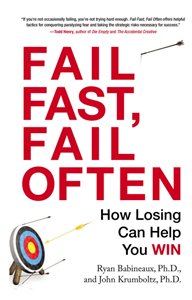
 Imagine having to write a term-paper about a subject you’re not completely familiar with. As if that isn’t enough of a challenge, throw in the fact that this paper needs to be written in a different language, must be peer-reviewed, and written as a team effort with several different people who are just as bewildered and bumbling as you are! Not only that, but imagine that your grade (if not your entire academic future) hinges on getting an “A” on that paper!
 Being Refactored