
The 2020 US election is over – and has been for several weeks now, despite all the lawsuits, court-rulings, petitions, investigations, accusations, etc. As with most of our elections for the past 30+ years, one-third of the country is happy (or relieved), one-third is disappointed (or furious), while the other third is rather apathetic.

As a more-conservative American, I’ve had mixed feelings about President Trump since he announced his candidacy in 2016, liking many of his policies for promoting and protecting American interests yet being rather embarrassed by his abrasive personality and polarizing behavior. He may have a commendable work-ethic, great policies for America and Israel, and be able to get many things done, but he was far too polarizing, uncharismatic, and even rude and immature at times.
One thing that every viable candidate needs to win and hold democratic office is to be gracious, likable, and not too polarizing. One can differ with others (especially their enemies) and still not be antagonistic towards them. Ronald Reagan was fiercely opposed by his political rivals and the media, yet was still a likable person, which was reflected in his two landslide elections. The same can be said of George W. Bush, who was also continually opposed and maligned while in office but was not overtly antagonistic towards the press. Not so with Donald Trump.
Something that deeply grieves me about modern America is how we’ve lost so much of our “Americanism”, our reverence for God (if not the simple respect for Him and His basic laws like the Ten Commandments), our love of country, our common values, and our ability to be polite, kind, and even civil towards our fellow countrymen while greatly differing with them on various issues. Our history as a country and a culture has been mistaught (if not perverted) for several decades, and we’ve become more and more divided in the midst of this culture-war that began in the 1960s. The media, our culture, and our politicians are responsible for much of the divide, but in the end it comes down to us, our choices, and our values as individual Americans.
If I can be a bit personal for a moment, I had been hoping that the Biblical promise in Genesis 12 that states, “Those who bless Israel will be blessed, and those who curse Israel will be cursed” that is often cited would apply to this election, particularly after all that President Trump has done for our Jewish friends in the Middle East. There has been no other American president who has so staunchly defended Israel and her interests as President Trump, and it’s unlikely there will be another like him anytime soon. During his short term in office, he moved the US embassy to Jerusalem and encouraged many other countries to do so (which several did), along with fostering numerous peace-deals and normalizing relations between the Arabs and Israel, while not pressuring the Israelis to exchange land for peace (which only emboldens their enemies).
The result of this election (along with others in the past), usually makes me consider where God stands when it comes to nations, rulers, and politics in general. I often don’t understand why He allows things to go certain ways that seem to break His promises to reward those who follow Him and His laws. And it’s not merely that way in modern times, but over the long course of history, particularly Israel’s history. Some of the best kings’ reigns were cut short, while some of the worst kings ruled for far longer than they should have. Why? Why wouldn’t He reward good kings with long, prosperous reigns and the bad ones with curtailed reigns? Sometimes it simply doesn’t make sense!

For example, the last good king in Judah/Israel, King Josiah, was an excellent ruler who completely cleaned up the nation after decades of Baal-worship, debauchery, and idolatry. He re-instituted the Passover, the reading (and following) of the Law, the Temple sacrifices, and led the way in trying to draw the nation back to God. Yet look what happened to him: he went out to battle (though he’d been warned he shouldn’t!) and was slain by an errant arrow. Consequently, King Josiah’s death led to the Babylonian Captivity and the destruction of the entire nation – her people suffered like no others have in the history of the world (just read Lamentations).
So why did God allow King Josiah to die? After all, God could have protected him and saved the nation – but He didn’t. Of course, God has His reasons and is completely sovereign, and since He knew the peoples’ hearts, He knew they were merely going through the motions and still secretly worshiping idols. Though Josiah had purged all the idols from the land, the people were completely hardened against God; they had turned to Him in pretense to obey their king, not genuinely in faith in keeping with true repentance. Jeremiah’s early ministry while Josiah was still alive exposed the true condition of the hearts of his countrymen, particularly those within his own family.
Throughout history, there has continually been a struggle between individual freedom/liberty and political power. A king, military, or party rises and gains power, abuses that power, the people or their opposition revolts, and the cycle continues. In American history, the transfer of political power has usually been very peaceful, with little bloodshed when a new Congress or President takes office. That hasn’t been the case for most of human history – America has been the exception rather than the rule.
Our unique Constitution divides political power among three branches of government, espouses individual liberty, limited government, and federalism, and its system of checks and balances has consistently slowed the encroachment of our liberties by our own government. However, the further we get away from the Bible and the Rule of Law it promotes, the more liberty we individuals lose to our governing authorities. If we’re increasingly immoral, divided, and lawless as individuals and as a culture, the more immoral, divided, and lawless our government will become. And it certainly has.
Like ancient Israel/Judah, the demise of our chief executive shouldn’t trigger the demise of the nation IF (and that’s a big “IF”) the people of that country are civil towards one another, living morally and uprightly, following the Rule of Law, and “doing justly, loving mercy, and walking humbly with God” (Micah 6:8). But as I observe American culture, politics, social-media, attitudes, and civility (and lack thereof), like ancient Israel/Judah, I cannot say we are – much at all in fact. It’s increasingly difficult to discern the truth on any significant issue because truth has become so relative in our society.

So then what are we do to as Americans in our deeply divided nation and culture? It’s really quite simple, and it’s the same message that God has proclaimed all throughout history: repent and seek His face.
Do justly, love mercy, and walk humbly with God. Love one another and treat your neighbor as yourself.
If we really do love our nation and want to see it preserved, we must learn to love one another – regardless of our opinions and politics.











 Not only do writers have to communicate with the voice they wish, they also need to pay attention to the tone with which their content is consumed by their target audience. With tone, emotion to the voice is communicated, along with style, rhythm, and meter. Writers are responsible for not only communicating their thoughts, but the mood and tone with which they want those thoughts to be heard. Writers must do all they can to ensure that their audience receives those thoughts, ideas, and moods accurately and as intended.
 When it comes to the Bible, how our current mood shapes our interpretation of what’s written is no different, except often more profound and pronounced. Also, how we hear the Scriptures largely depends on how well we know God and how we feel about Him — our personal relationship with the Author. If we feel that God is an angry, stern Judge Who’s quick-tempered and wrathful, we’ll hear the Scriptures completely differently than someone who views God as the perfect embodiment of patience, mercy, and love. Same God and same Book, but completely different to the hearer.
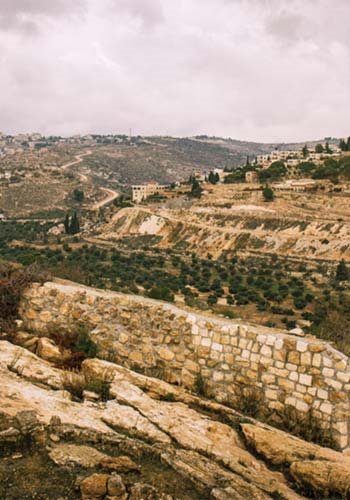
 Next week, Israel will observe “Yom HaZikaron” (Memorial Day) and then the following day, “Yom HaAtzmaut” (Independence Day). They intentionally link the two holidays together because without the sacrifices of their countrymen, they would have no independence. When Israel first became a nation again in 1948, they were immediately attacked by their five Arab neighbors, as well as those from within their own country – yet they not only survived, but thrived despite the overwhelming odds against them. In fact, one of best proofs that the God of the Bible is real and sovereign is in the survival of the Jewish people throughout countless waves of persecution over the millennia.
 Why the stark difference between the two ancient peoples? For the Jews, it goes back to their roots and their character as a people and what they’ve endured over the last 2,700 years. It goes back to them frequently being persecuted, losing everything, and having to start over from scratch when the odds are stacked against them. When a people is forced to endure the unimaginable, they learn how to survive and find creative ways to cope and even thrive.
 From this 2,700 year-old passage, the settlers and founders of Israel set out to literally make the “desert bloom” despite its absurdity. And while the passage predominantly speaks of the incredible changes that the Messiah will bring to the land when He comes, the settlers didn’t sit back and wait for that to happen – they rolled up their sleeves and set to turn that dream into a reality. And through their hard work and sacrifice, Israel is being a blessing to the rest of the world (Genesis 12:3, 22:16-18), even though they didn’t consciously set out to accomplish that. They simply set out to restore a small piece of land, got to work, and God has done the rest, multiplying their efforts in ways they could not imagine.
 How has Israel repaired their land? Day by day, bit by bit, and little by little but being persistent over time. By a handful of people believing in something and setting out to accomplish it – and mobilizing others to do likewise – they are rebuilding their land. By believing and not losing heart, by persisting even though they keep getting knocked down, by pressing on and sacrificing their immediate comforts for their children and grandchildren. In only a handful of decades, the ancient ruins have rebuilt, the deserts are blooming, and Israel has become a blessing to the rest of the world.
 Being Refactored