The Curious Case of the Missing Creativity

Over the last couple years, I’ve noticed that something has been dwindling: my sense of creativity. The thing is, I don’t know whether it’s dying, taking an extended vacation, or just out for a very long lunch! And if I am indeed losing my creativity, how can I get it back?

It’s a rather curious problem to consider. Creativity has never struck me as something that I need to consciously cultivate — it’s just there, or in this case, it isn’t. I’d be walking or driving or even mowing the lawn and I’d come up with all these different things to write about, code up, or products to research. Sometimes I would even look forward to mowing the lawn or doing some other activity that didn’t require much brain-power because I knew I’d come up with some new scenes for whatever book I was working on.

writersblockI first noticed that this creative sense was starting to ebb a few years ago while writing “The Seed of Haman”, but chalked it up to having too much going on at the same time. I was on a long rotation in Production Support at work which just drains motivation after awhile. Also, I figured that juggling family, work, writing, and not getting enough sleep was finally catching up with me. Too many irons, not enough fire! But being both stubborn and motivated (or maybe just prideful!), I pressed on and kept at it.

Since then I’ve written several more books, but few of them have felt very “creative,” if that makes sense. Though others have told me they’re great, I haven’t really felt that way. There were creative and memorable scenes and everything, but they just sort of felt like they were “there” and not something I was really ecstatic about. Writers inherently KNOW when they’ve written something awesome and inspiring, like when the words literally flow like a river from the writer onto the page. The last book that felt like that was “Walks With Rich”, though that was more personal rather than creative. But recently, even that feels like it’s dwindling too, and I’m not quite sure how to get it back. Sometimes I’m not even sure I WANT it back. I started my twentieth book about six months ago (“Fountains of the Deep”) but set it aside after a couple chapters and haven’t quite picked it back up yet.

For as long as I can remember, I’ve been a creative person, whether it’s coding, writing, or tinkering with something. If I remember correctly, it began with an old Erector set, Lego’s sharper and more bendable grandfather. There was always something to be built, improved, or another problem to be solved. I could usually figure out a way to do it better, faster, or at least easier. As for writing, I was initially motivated by telling stories in a way that no one had ever told before. However, now that writing eBooks and self-publishing is so cheap and easy, it appears that thousands of others have the same thoughts, and often on the same topics!

Maybe my motivations have changed, which probably drove a significant chunk of my creativity more than I realize. A major driving force for writing my first book, “The Time of Jacob’s Trouble” was to see my name in print and to be able to tell a story that no one had really told before (at least not to my satisfaction). The same held true with the second, “Endeavor in Time”, and then third, “The Cell”. However, after the tenth book or so, that motivating factor began shrinking. Somewhere around that time, the eBook market exploded, which may have been another motivating factor: extra income and revenue streams. Needless to say, with more millions more books and more authors in the market, competition greatly increased and sales began decreasing.

algebraAnother factor is the huge change in my personal life (divorce), which may be sapping much of my creativity. The year leading up to the divorce and the several months since have been just emotionally draining. Though it could have been much (much!) worse, it was still exhausting. It’s one thing to feel like a single parent but quite another to actually BE a single parent. And now that my youngest is in public school and has homework most nights, her “agonies in algebra” usually drain whatever I have left after an already-long day. And the weekends? Those are usually spent going through the house and getting everything boxed up to be sold, donated, or thrown out later this spring. Cleaning out twenty years of junk is no small task!

To further add to the mix, right when things blew apart in my marriage eighteen months ago, we started ramping up on these new open-source technologies in preparation for a big software release that’s being released next month. Usually, we only have to learn one or two new pieces of technology and can then settle in for awhile, but not with this stuff. In Open-Source Land, “embracing change” isn’t merely a nice axiom, it’s a necessity! Literally everything has been in constant motion and there hasn’t felt like there’s really a firm foundation to build upon, at least until recently. The last eighteen months have been full of upheavals both personally and professionally, and somehow it feels like they’re linked together. Even professionally, I don’t feel all that creative or motivated like I used to, though others around me are (thank goodness!).

Perhaps I’m somehow associating this new product with all the drama in my personal life, and one has just sapped my interest and motivation in the other. One of the more frustrating things is when others at work come up with clever, elegant ideas to solve various problems, yet sometimes I don’t even seem to see what those problems are! Maybe I’ve been in the industry too long (~20 years) and ridden in too many of these rodeos known as software releases. It’s almost that feeling like I’ve already climbed that mountain several times and the fulfillment I was anticipating just wasn’t there — so how can I get all that excited about climbing yet another one? Same story, different mountain, even if it’s Mount Everest! 

Maybe this drought of personal creativity is nothing to really worry about, but the reason I mention it is because in the Information Age, creativity is vitally important in so many areas. Many of us who work with technology aren’t paid for our strength, stamina, or cleverness as much as for our creativity! As time goes on, more and more non-creative positions and jobs will be automated and be replaced by technology that is developed by people who are…creative! What’s a developer good for if they can no longer “develop”?

garden_of_eden

Maybe the source of my creativity — and everyone else’s — is my Creator. One of the many gifts He gives us is the gift of creativity. He gives but He also takes away for His purposes and His glory. Could it be that all these personal upheavals, this unsettledness, and this diminishing satisfaction from writing and such is God’s gentle way of nudging me to move in a different direction? Could it be that He has pruned a branch of my creativity so that other branches can be strengthened and nourished?

Ironically, even Solomon says in Ecclesiastes 12:12 that “Of the writing of books, there is no end… and much study is wearisome.” I couldn’t have said it better myself! A good observation about Solomon (the Preacher) in Ecclesiastes is that in pursuing all his own interests and “whatever his heart desired”, he became a very weary man. Solomon ended up hating life because all his work became grievous to him (Ecclesiastes 2:17), and I really don’t want that to happen to me.

Maybe it’s time for me to shift from working on mostly fiction to other subjects that are more applicable and beneficial to others, which was one of the reasons I began blogging more seriously last year. Maybe it’s time for me to break out of my comfort-zone a bit more (or perhaps even a lot more!) and try different things that are not all that abstract or comfortable. Perhaps it’s time for me to journey down other roads I haven’t really traveled down yet. I hadn’t really expected this multi-part “The Days of Noah Series” to turn into a one-hit wonder, but maybe that’s just how it goes.

Meanwhile, if anyone has some ideas or suggestions to how to get motivated with writing again, I’d love to hear them. And if you happen to have a little extra dose of that missing creativity to spare, please consider sending some my way!

“Whatever you do, work heartily, as for the Lord and not for men, knowing that from the Lord you will receive the inheritance as your reward. You are serving the Lord Christ.” — Colossians 3:23-24

Posted in Books, God, Personal, transitions, Trust, Work, Writing | Tagged , , , , , , | Leave a comment

Dangerous Prayers and Killing the Weed

A couple weeks ago, I posted an entry called “Dangerous Prayers and a Sloppy Wet Kiss” that I’ve been doing more than my share of soul-searching about. Usually after I write about a subject, I tend not to revisit it for awhile. But this one’s different — this one’s more important. This one’s more foundational.

Soon after I returned from Israel a couple years ago (early 2013), something in me changed and I began seeking a deeper, more personal — and frankly more honest — relationship with God. In short, I began praying dangerous prayers, those “Whatever it takes, Lord” types of prayers. However, instead of directing those prayers outwards toward others or whatever was happening around me, I directed most of those prayers toward myself. Instead of praying “Lord, please fix this!” or “Lord, please change them!”, my prayers became “Lord, please fix ME!” and “Lord, please change MY heart!” Before that, had my heart-attitude been really examined at its core, it would’ve been something like “Hey, I know I’m not perfect, but I’m not nearly as bad as I used to be before I was saved. And I’m certainly not as bad as other people, right?”

Wrong. The dirty little secret is that the same core problem exists to the same degree in all of us; it’s just that some of us are better at hiding or masking it than others. That core fault in all of us is the disease of Me-First. Self-interest. When the chips are down, we naturally put ourselves first. It’s usually not our circumstances or those around us that need to change, but ourselves — our own selfish attitudes and self-centeredness. Our own innate desire to protect our self-interests at the expense of just about everything else — usually others, and especially God. Our own self-centered expectations about how our life should be going and turning out, even when it comes to our spiritual progress.

woody-vinesThough we may gain ground in certain areas and win victories over parts of our flesh, there’s always more to conquer. No matter how many battles we may win in this life, the war never really ends because it’s against our own hearts and selves — our very own fallen nature. That seed of self-interest was planted the moment we were conceived and instantly became a weed that grew bigger and bigger without restraint until we’re saved. Only then do we start to understand that the weed of self-interest is in direct conflict with God, who we’ve just given our lives to. Then He sets out to start pulling it, cutting up the roots, chopping it down, and hacking it up. But that massive, deep-rooted weed-tree of self-interest will always be with us until our very last heartbeat — and then it dies with our flesh.

While God often uses, allows, or even sends people, trials, and even suffering into our lives to hack away at that weed-tree, the only way it will really start to wither is through prayer — particularly dangerous prayers. Praying dangerous prayers is like spraying Roundup on our great weed-tree of self-interest. But it’s not just praying those types of prayers that keeps that weed-killer working, it’s yielding to His will and denying ourselves. It’s putting His interests (often through the needs of others) ahead of our own. When Jesus said, “If anyone would come after me, let him take up his cross daily and follow Me,” He wasn’t being dramatic — He was being brutally honest and real. If we want to be more like Christ, we have to be much less like our own selfish selves and deny our self-interests.

What were some of those dangerous prayers I began praying? Several that immediately
come to mind are that He would give me an undivided heart towards Him; that He would remove anything from my life that hinders our relationship; that He would cut out the sin, pride, and selfishness that so easily erupt from inside me; that He would help me love those around me more genuinely and more fully; that He would give me a tender, broken heart for others and be able to empathize better with those who are suffering; that He would help me love my wife the way she needed to be loved rather than how I wanted to love her. A related request was for Him to help me to not only learn to dance, but to enjoy it because it was very special to her. And honestly, I would rather do just about anything else other than that because it felt so unnatural to me — but I did it, and did enjoy it for awhile. Needless to say, soon after I began praying those prayers, things began changing inside me — and then around me.

Has He really been answering those dangerous prayers? Yes, indeed He has — though they were seldom answered how I expected them to be. I’ve often found myself shaking my head in both gratitude and frustration saying, “Thank you, Lord, but that wasn’t what I meant!” I suppose that’s the way it is with God much of the time: He does things in His own way that never seem all that sensible to us. Often He allows things that might seem even worse that what we were praying about, such as more intense suffering. We naturally want our suffering to decrease, not increase! However before I began praying dangerously, my prayers were rarely answered, or at least not in any tangible way worth remembering. It’s almost as if God had been waiting for me to start praying those dangerous prayers and said, “Now you’re ready — now it’s time for you to finally start walking with Me down this narrow, difficult road which I called you to twenty years ago.” Since I began praying those dangerous prayers, my youngest daughter became seriously ill and spent nearly a week in the hospital, my marriage ended, and my family/home has broken apart. Everything I thought was safe and secure has been exposed for what it really was: fragile and built on sand.

stock-photo-8203837-man-prayingI’ve often asked  myself over the last year whether I would have prayed those dangerous prayers had I known how He would answer them. I was pretty certain that He would answer them because He promises to do so, but He never really says how — that’s where faith comes in, I suppose. Would I have prayed to really know my ex-wife on a deeper level had I known that our marriage would end soon-after? Would I have prayed to love her more sacrificially had I know all the pain and hurt that would entail? Would I have prayed to fall in love with her again had I known how much more it would compound my heartbreak? Would I have prayed to grow closer to God and have an undivided heart towards Him had I known He would use brokenness, suffering, and loneliness to accomplish that? Would I have prayed for Him to make me more humble, to cut away my pride and selfishness had I known He would use rejection, heartache, loneliness, and humiliation to do it?

Yes. I can say without reservation (okay, mostly!) that I would pray those same dangerous prayers again — and more. You see, over the last several years, I have come to know God as not merely my Lord and Savior, but as my Father. While I’ve always known He was my Heavenly Father, I would rarely call upon Him as such when I prayed. I always referred to Him as “God” or “Lord” which aren’t anywhere nearly as intimate as “Father”… those terms of reverence are rather abstract, removed, and well, safe. It’s one thing to refer to Him as “Father” as His title but quite another to cry out to Him as YOUR Father when you’re curled up on the carpet drenching it with tears. I would go through a dozen divorces if it meant having the relationship with my Heavenly Father that I do now.

If you’ve been wanting to pray more “dangerous prayers” and really draw closer to God, I must caution you — He WILL answer them but not how or when you expect Him to. Dig into the Bible (particularly the Gospels) and take Him at His Word. In hindsight, before I began praying dangerous prayers, I should have taken Him much more seriously when He speaks of suffering and dying to one’s self, of taking up your cross daily and following Him. Jesus means what He says and says what He means. Again, when He beckons us to take up our cross and follow Him, He’s not just being dramatic, much less flippant. When He says that anyone who doesn’t leave their parents, spouse, children, their riches, or anything else for His sake is not worthy of Him, He actually means it! If He suffered in this life and we are called to follow after Him, shouldn’t we expect to suffer too?

dangerous-prayers-sermon-artBefore uttering a dangerous prayer, first count the cost and decide if you really want Him to answer it, because He will — but in His own way and in His own time, not yours! God does answer prayers because He promised to (1 John 5:14-15, John 15:7,16). You’re engaging the Holy God of the universe, not the comfortable grandfather god of the health, wealth, and happiness gospel that is focused on you, not Him. In the Bible, when did God ever give triumph without first sending trial, glory without first allowing suffering, and holiness without first requiring sacrifice? Even in Genesis 1, darkness came before light — He’s not being cruel, that’s just the way He does things.

After you get to the place where you feel compelled to pray a dangerous prayer (and really mean it), know that you can trust God with it. Really trusting Him with our prayers isn’t as much IF He will answer them as much as HOW He will answer them. But He is faithful, merciful, and full of loving-kindness. He has promised to not give you anything more than you can bear, even though you may often feel like it is. He has promised to carry you through the storms He sends. He has promised to conform you to Himself and make you holy.

Though the dark night may be long and difficult, it will only be for a moment in the ravishing light of eternity. When that time of trial comes (and it will), it’ll be Him who sustains you, not yourself. You can trust Him with your most dangerous prayers, no matter what they are. If you’re going to pray, pray dangerously!

“Behold what manner of love the Father has bestowed on us, that we should be called children of God!” — 1 John 3:1

Posted in Character, Christian-life, God, Personal, Prayer, Trust | Tagged , , , , , , , , | Leave a comment

Single, Divorced, or Other?

Yesterday was Valentine’s Day — another weird “first” for me in this new phase of life. For the first time in twenty years, I haven’t had to even think about what to buy, where to go to dinner, or any of the other romantic planning that goes into Valentine’s Day. It was both a little sad and honestly a bit of relief at the same time. Yesterday’s highlights were church, taking one daughter to a cos-play con, and then listening to the other play the offertory at the evening service at our old church.

checkboxesThen today, another weird “first” for me came this morning when I was signing up for the Rooted program at church to get more connected. Halfway down the page were the dreaded “Single”, “Married”, or “Divorced” checkboxes that I’ve been able to avoid so far. Ugh — is it really necessary to pick one? But sure enough, it was required. (Ugh #2 — web-developers!) Though I’ve been attending Crossroads for most of the past year, I haven’t quite felt in a place to put down new roots until the last couple weeks. Ironically, last year the church had a group/ministry called “Singles 2.0” which was geared towards older singles and those who are divorced…I don’t really want to think of myself as a 2.0 anything!

Along with the changing of marital status comes a changing of identity, which is rather poignant on those forms. But really, what am I now, and more importantly, what (or who) do I want to be? After thinking about it for awhile, I ended up choosing “Divorced”, mostly because it was the most honest of the available choices and I had to pick one to submit the form. However, I was sorely tempted to add my own: “Unmarried”. If our culture can somehow come up with 50+ gender possibilities, then surely we can have a few more marital statuses! Only in a morally ambiguous culture can we turn simple yes-no, true-false questions into more than four dozen choices that are all equally “valid”.

Personally, I’ve never liked the term “Single” because of the stereotypes (particularly in Western culture): being alone, unencumbered, and having many fleeting, tumultuous, and uncommitted relationships, etc. One of the most painful perceptions of Singles (and Single 2.0’s) is that they’re either unwilling or unable to find a suitable partner, or that they’re too picky, too immature, or too selfish and self-absorbed to settle down. These may not be very accurate representations, but to many people, perception is reality — especially in larger groups (and in many churches as well).

I don’t like the term “Divorced” either because of all the negativity it represents — which it should. It’s good that much of our culture still frowns upon divorce to some extent whether we’ll admit it or not. Though divorce has become much more accepted in the West than it used to be, it’s still not perceived in a good light. I have yet to hear someone say “Congratulations!” in a non-sarcastic tone upon hearing of another’s divorce, though I’m sure it happens. Divorce-parties and now divorce-selfies are completely tactless and mock the tragedy of what has really transpired.

Divorce signifies the severing of the greatest commitment, the destruction of a lifelong promise of intimacy, security, and trust — and if you’re religious, a broken covenant. Divorce represents a failure for one or both people to love, forgive, compromise, and sacrifice, to put someone else ahead of yourself, to put their needs and desires ahead of your own. Divorce is destruction, a complete ripping, tearing, and severing of hearts, souls, and lives. Divorce is giving up, surrendering, and quitting. Divorce is nothing less than the death of the most sacred and most beautiful of human relationships. It grieved me to have to choose “Divorced” because it might as well have read “Failed” or “Rejected”.

With all that said, the term I think I prefer in this recent change in identity and marital status is simply “Unmarried”. Why? Mostly because it doesn’t have all the perceptions and stereotypes associated with it that “Single” or “Divorced” have. As one who is “Unmarried” I am decidedly not alone though I have no partner or companion. I was married but am no longer. I have committed relationships with my children, family, and friends and am actively strengthening those ties. I do not have fleeting, tumultuous, superficial relationships and am careful about who I spend time with. I am decidedly not unencumbered and not too immature to settle down. And while I may be companionless now, that doesn’t mean I couldn’t find a suitable companion if I earnestly sought one. The world is a pretty big place — I’m pretty sure there’s at least one among the tens of millions of eligible women I could settle down with!

But my identity is not defined by whether I am married or not, it’s by who I am in Christ — that I am a part of His Body. It doesn’t matter whether I’m married or divorced, single or widowed, black or white, rich or poor, free or enslaved; all that matters is who I am in Him.

In 1 Corinthians 7, Paul makes a pretty good case for remaining unmarried (or single), which was frowned upon back then even more than it is today, especially in religious circles:

25 Now concerning virgins: I have no commandment from the Lord; yet I give judgment as one whom the Lord in His mercy has made trustworthy. 26 I suppose therefore that this is good because of the present distress—that it is good for a man to remain as he is: 27 Are you bound to a wife? Do not seek to be loosed. Are you loosed from a wife? Do not seek a wife. 28 But even if you do marry, you have not sinned; and if a virgin marries, she has not sinned. Nevertheless such will have trouble in the flesh, but I would spare you.

2But this I say, brethren, the time is short, so that from now on even those who have wives should be as though they had none, 30 those who weep as though they did not weep, those who rejoice as though they did not rejoice, those who buy as though they did not possess, 31 and those who use this world as not misusing it. For the form of this world is passing away.

32 But I want you to be without care. He who is unmarried cares for the things of the Lord—how he may please the Lord. 33 But he who is married cares about the things of the world—how he may please his wife. 34 There is[a] a difference between a wife and a virgin. The unmarried woman cares about the things of the Lord, that she may be holy both in body and in spirit. But she who is married cares about the things of the world—how she may please her husband.35 And this I say for your own profit, not that I may put a leash on you, but for what is proper, and that you may serve the Lord without distraction.

Something I’ve been rather disappointed in is the strong perception in most churches that being single is bad, selfish, or immature, that being married is THE preferred marital status to have. I think many singles — especially those of us who are unmarried — in many churches are perceived as second-class citizens, though maybe we just perceive ourselves that way. I think I can safely make that claim after experiencing it from all three perspectives: single, married, and now divorced. If you’re single, the perception is that you should be married (the sooner, the better!); if you’re married, you’ve “arrived” and now it’s happily ever after; and if you’re divorced…well, to be blunt the perception too often is: “What did you do to cause it? Why did you fail?

Notice in the passage above that Paul not only affirms the status of being single (ahem –unmarried), he practically elevates it above being married. Why? Because of the dramatic difference in focus and cares of those who are unmarried versus those who are married. Those who are unmarried are more able to focus on the Lord and seek to please Him with their lives, while those who are married are divided between the Lord and their spouse. Remember that verse about not being unable to serve two masters? Though it was focused on money, the principle of being torn between serving two masters can easily be applied to marriage: serving God and serving your spouse, which often may not be in agreement. And that inherent conflict occurs in even the best and most godliest of marriages.

For all its up’s and down’s and even the way it ended, I liked being married. I’ve never been very comfortable being single. Marriage (and fatherhood) helped me grow up and made me a better man. The older I get, the more selfish I realize that I was — and still very often am. Marriage is that unavoidable mirror that shows us for who we really are, not for who we imagine ourselves to be. Marriage helped me to learn to put others ahead of myself and take responsibility even when I didn’t want to. Marriage taught me to say “I’m sorry” and “Please forgive me” more often than I care to admit. Marriage helped me relate to much more of the Bible and God in a much deeper, more complete way than I would’ve been able to had I remained single two decades ago.

manaloneWith that said, being unmarried has its benefits too. I no longer have the divided focus and can seek after God more fully than I could before. I feel much more dependent upon Him for meeting my daily needs and longings than I did while I was married. I am able to travel, volunteer, write, and pursue other interests that I simply couldn’t before. I feel much less pressure to maintain a certain level of income because I no longer have to provide for someone else for the rest of my/their life. I never felt as available to serve as I do now. I am much more free to manage “my” time, finances, and energy than I did when I was married, though working full-time and raising two daughters consumes most of that (and then some)!

Sooner or later, I’ll need to settle for myself whether I should remain unmarried or seek to be married again. Both avenues have their pros and cons, delights and drawbacks. Of course, God has this wonderful way of upsetting whatever plans I usually try to make, especially the ones that are carefully laid. I figure that as soon as I think I have the matter thoroughly settled in my head and heart and will have made peace with everything, He’ll toss a curve-ball and throw me off again. It’s not that He’s malicious or anything, it’s just that He wants us to understand that we’re not in charge of much of anything — He is, and we’re to rely upon Him for everything and be thankful for it all…including all those pesky little checkboxes.

“There is neither Jew nor Greek, there is neither slave nor free, there is no male and female, for you are all one in Christ Jesus. And if you are Christ’s, then you are Abraham’s offspring, heirs according to the promise.” — Galatians 3:28-29

Posted in Character, Christian-life, Family, God, New Beginnings, Prayer, Refactoring, transitions, Trust | Tagged , , , , , , , , , , , | Leave a comment

Rebuilding an Airplane…While it’s Flying!

Aviation systems are some of the most complicated engineering wonders of the modern world. The dozens of buttons, switches, lights, and other controls in the cockpit alone boggle the mind, especially in the larger aircraft like 747’s. But behind all those controls and gauges are even more complicated, precisely-tuned instruments, systems, and subsystems that monitor and control everything from lift and thrust to temperature, air-quality, and cabin-pressure, not to mention the in-flight movies and WiFi.

Early_747_cockpit_with_engineer_station

So imagine our dismay about two years ago when the executive-team at the office began comparing our heavy equipment monitoring system to a 747 — and then declared that we would begin building an entirely new system from the ground up, completely from scratch. There would be no more legacy-code lurking around to bite us years later because it was too critical to fail yet too complicated to tear apart and rebuild. In basic terms, the system gathers and processes utilization data from heavy machinery all over the world and renders it to a website. Sounds simple, right? Not so much. Imagine a system that can gather, digest, and process a never-ending avalanche and render intricate ice-sculptures on the other end — in real-time and without losing any snow in the process.

To make it even more interesting, the executive-team informed us that we would be rewriting everything while the existing system was still in place — and working without interruption. They likened it to redesigning, rebuilding, and retesting that 747 while it was still flying at 30,000 feet in the air. They didn’t say much about nose-dives or the very-real threat of crashing, and they certainly didn’t mention anything about parachutes!

Needless to say, shortly after that announcement several of those executives left the company, but their deadlines and goals remained in place. And though we are currently rebuilding the system, at least we have the slight luxury of constructing the new system in the hangar while keeping the existing one in the air for another year or two. Along with redesigning the system to handle hundreds of thousands of users and millions of devices (it’s lucky to handle a fraction of that today), we’re moving from quarterly releases to a deploy-on-demand model. Not only is our technology-stack completely different, but our engineering processes have been flipped upside-down to meet the new demands.

The team I’m on has had both the privilege and responsibility of exploring new technologies, developing the strategies, and laying the groundwork for the rest of the organization. We were the first to construct the prototypes that have been tossed around, beaten up, and reworked over the last eighteen months. About a year ago, the look-and-feel of the application was finally agreed upon and the “real work” began. And since we’re a pioneering sort of team, we’ve taken many arrows over the last year.

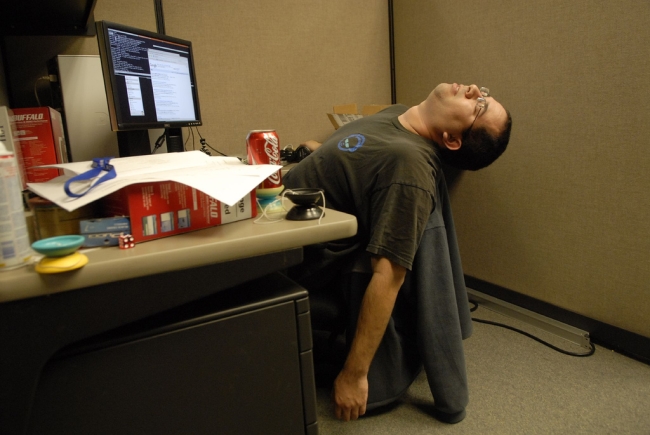
sleep-desk

For the last twelve months, we’ve been looking at the same basic pages with the same data-elements day after day, week after week. Compared to how we used to write software in the old system, the new methodologies of ATDD (automated test-driven development) seem very inefficient, overly-complicated, and rather pointless at times. We fix the same failing tests on the same pages over and over on code we know will be thrown away in a couple months. We fail fast and fix often. There’s endless refactoring on the inside with very little visible improvements on the outside. It’s been rather discouraging at times because nothing substantial appears to be happening, and compared to the current website, the new one looks like a prototype. An award-winning enterprise workhorse is going to be replaced by this…caricature?

Until last week. Last week, the “little prototype that could” got a face-lift and was demo’d to the Board — and they loved it. Over the last couple weeks, the site has been coming together and is actually becoming something worthwhile. More teams have come on-board and are making tangible contributions. All the foundation-laying we’ve been doing for the last year has made it much easier to spin up new teams with fewer problems. And with the face-lift, the new application looks to surpass the current one, making the old look as slow, fragile, and clunky as it really is.

For a long time, very little appeared to be happening and no substantial progress was being made in the new application. On the surface, the same handful of pages didn’t look much different than they did a year ago. But what was going on behind the scenes? What was happening inside and beneath the surface? Inside, everything has been completely changed; it has an entirely new architecture and is rock-solid. It’s been ripped apart, rewritten, refactored, and tweaked at least half a dozen times. It’s fully-automated so bad-code will never seeing the light of day. Soon we’ll be able to release features whenever we want — weekly, daily, or even hourly — instead of every couple of months that require hundreds of hours of testing.

Consider how similar this is with us after Christ calls us to Him and unveils a new plan for us. His plans are audacious and rather absurd: He’s going to rebuild us from the inside out and still expects us to function well while being reconstructed (if not better!). He’s going to make us holy even though we’re mired in this fallen, sinful, depraved world. He going to do all this intricate, painstaking work on these clunky, fleshly prototypes of ours which will soon be discarded into the grave. All too often it’s a wonder that He doesn’t step back and honestly ask Himself if it’s worth all the trouble with us!

The Bible says that immediately after we accept Him into our hearts, the Holy Spirit sets about working in us, reshaping us for eternity, conforming us to Himself. Yet for months and usually years, we appear much the same on the outside with few visible improvements (or sometimes even worse for the wear). It’s hard to see that He’s actually doing much of anything. His work in conforming us to Himself seems to be a very long, slow, and rather agonizingly inefficient process. We seem more like clumsy caricatures than disciples of Christ.

So if He’s busy working in us, why do we keep failing the same tests over and over? Why can’t we ever seem to get it right the first time, the second time, or even the thousandth time? Why do we keep failing regardless of how hard we try? And even after we “get it” and walk that narrow path for awhile, we’re prone to get smug and prideful about our success only to fall right back into the gutter! How many times do we have to put our hand on that stove before we realize we’re gonna get burned? If we trip over and over on the same stumbling stones, how do we know He’s even walking alongside us, much less living inside us?

matrix

Perhaps it’s because so much of His work, the really hard (if not impossible) work of making the unholy holy, is occurring where only He can see. Not even we ourselves know what’s really going on deep down in our hearts. He’s dredging up all the errors, bugs, and hacks within our clumsy, mangled code and perfectly rewriting it one character at a time. He’s pouring over every single line in our lives and testing it, watching it break, fixing it, and then proving it. He’s taking us from limping along in this fallen world that’s passing away and refactoring us for eternity. He’s busy throwing away our pseudo holiness (self-righteousness) and false love (selfishness) and transforming them into real holiness in Him and true, sacrificial love for others that will last forever.

While we think He’s nowhere to be found and doing next to nothing in our lives, He’s still there, busily rewriting all the code of our hearts, running us through endless tests that we fail at over and over, until that refactoring is complete. Then He keeps running us through those same tests day after day in this fallen world, purifying us, purging us of the dead-code of the old men and women we once were. Whenever change of any sort comes into our lives, we stumble and fall and He fixes us up again over and over, seventy times seventy to the nth degree.

Yes, His refactoring of us is a long, slow, and agonizing process — but this is His process, His design, and His timeline, not ours. He has His own schedule for each of us, and it’s seldom what we think it is, much less what we think it should be. And when it feels like He’s practically absent from our lives, could that be because that’s when He’s doing the most work inside us? While we’re flying through this crazy life 40,000 feet in the air at 500 miles per hour, He’s busy rebuilding us from the inside-out.

And while we don’t even know what He might be shaping us into, He certainly does. In fact, He’s known exactly what He wants us to be since before time began.

His plans for us are perfect. His plans for us are eternal. His plans are to make us like Himself.

“Count it all joy, my brothers, when you meet trials of various kinds, for you know that the testing of your faith produces steadfastness. And let steadfastness have its full effect, that you may be perfect and complete, lacking in nothing.” — James 1:2-4

Posted in Character, Christian-life, God, Personal, Refactoring, Software, Trust, Work | Tagged , , , , , , | Leave a comment

Dangerous Prayers and a Sloppy Wet Kiss

Have you ever prayed a dangerous prayer? Not merely a brave or even a sacrificial type of prayer, but a truly dangerous prayer? Have you ever prayed something you’re a little squeamish about, even though you know it’s the right thing to pray? To take that a few steps further, have you ever prayed a prayer that you’re terrified of God actually answering? Those prayers can be very dangerous indeed.

Crossroads Church has been doing a series this month (January) entitled “Dangerous Prayers” given by Pastor Matt Manning. dangerous-prayers-sermon-artA brief summary of this series is that it’s an indepth presentation of “The Lord’s Prayer” given in Matthew 6:9-13 and what it entails. The Lord’s Prayer is one of those passages that just about everyone  has heard at one time or another, and it sometimes loses its significance from familiarity.

Our Father in heaven,
  Hallowed be Your name.
Your kingdom come.
   Your will be done
On earth as it is in heaven.
   Give us this day our daily bread.
And forgive us our debts,
   As we forgive our debtors.
And do not lead us into temptation,
   But deliver us from the evil one.
For Yours is the kingdom and the power and the glory forever. Amen.

Near the center of the Lord’s Prayer is where it gets “dangerous”, in which it says “Your will be done, on earth as it is in heaven…” Stop and consider that for a moment — a long, somber moment. When we pray “Your will be done” do we really want God’s will to be done, or do we merely want what we think His will is? Or worse, do we deceive ourselves into thinking that our will is His will? One is the will of the sovereign, holy God of the universe while the other is a selfish god of our own making.

The manner in which we pray is often quite indicative of who God is to us. Are our prayers focused on us and our needs or God and His will? If we only offer up petitions and items on our prayer-list, it’s rather one-sided and God becomes merely a provider, a divinity to serve us rather than us serving Him. While prayer may take many forms, the biblical definition of prayer is conversation with God in which there is an exchange between His heart and yours. Prayer consists of ACTS, the acronym for Adoration, Confession, Thanksgiving, and Supplication. Prayer is aligning our hearts and will to His, not the other way around.

How often are we really brave enough to pray a dangerous prayer? Do we truly mean it when we say, “Whatever it takes, Lord” and take that leap of faith? When we’re praying for those we deeply care about — or even ourselves — and those four tiny but very dangerous words slip out of our mouths, are we willing to pay the price for “Whatever it takes, Lord” may entail? What if God takes us at our word and answers that dangerous prayer? What if God chooses to use terrible personal suffering in order to answer it? With that in mind, do we love Him enough and trust Him enough to still pray those dangerous prayers and really mean them?

“Whatever it takes, Lord” can (and often does) entail an entire universe of possibilities we usually dare not dream of. A very uncomfortable truth about God is that waiting, suffering, and brokenness are usually His chosen instruments that He uses to answer our prayers. The majority of answered prayers in the Bible always involved waiting and suffering. What if we pray for someone to be freed from one habit, only to see them fall into another that could be much worse? What if we pray for our children to come to faith, only to see them abandon our church or even our family? What if we pray to love our spouse more genuinely and sacrificially, only to have our marriage end in divorce? What if we pray to grow closer to God, only to be answered with painful silence, loneliness, and depression? What if we pray to impact our community for Christ, only to have that prayer answered by a terrible tragedy?

A song that I’ve been listening frequently to over the last few months is “How He Loves” by John Mark McMillan. It’s one of those songs that has been medicine for my soul this winter, especially with the holidays coming and going. You never realize how much family and traditions mean until they’re no longer available. The other day on Facebook, Focus on the Family posted a meme that contained a portion of the lyrics to this song that’s been playing endlessly in my head and attributed it to McMillan (“If grace is an ocean, we’re all sinking”). Since I had only heard the version performed by David Crowder, I began digging into the song’s backstory and was astounded at how the song came into being.

“How He Loves” wasn’t the result of McMillan musing one day and jotting down a praise song for his next album. These lyrics were born out of a brutally honest conversation between a loving God and a very confused, angry, and heartbroken man who had just lost his best friend in a terribly tragic way. This song and the hundreds of thousands (if not millions) of lives it has touched are the direct result of a dangerous prayer — a very dangerous prayer uttered by his best friend Stephen Coffey. The ultimate dangerous prayer that God chose to answer later that very same day. It was his “Whatever it takes, Lord” prayer that inspired “How He Love Us”, this beautiful, heart-gripping song that could not have been written any other way except from the agony of a best friend’s grief.


The full lyrics to “How He Loves” (including the closing verse about Stephen) are:

He is jealous for me
Love’s like a hurricane, I am a tree
Bending beneath the weight of His wind and mercy

When all of a sudden I am unaware of these afflictions eclipsed by glory
And I realize just how beautiful You are
And how great your affections are for me

Chorus:
Oh, how He loves us so
Oh, how He loves us
How He loves us so

Yeah, He loves us
Woah, how He loves us
Woah, how He loves!

Bridge:
And we are His portion
And He is our prize
Drawn to redemption
By the grace in His eyes

If grace is an ocean we’re all sinking
So heaven meets earth like a sloppy wet kiss
And my heart turns violently inside of my chest
I don’t have time to maintain these regrets
When I think about the way that He loves us

Repeat Chorus

Well, I thought about You the day Stephen died
And You met me b
etween my breaking
I know that I still love You God, despite the agony

They want to tell me You’re cruel but if Stephen could sing
He’d say it’s not true, ’cause — ’cause He loves us

Repeat Chorus

I particularly love the opening verse that says, “He is jealous for me…” I think I treasure those words even more than “God loves me” at this time in my life. It’s just one of those things I need to hear and know right now (and repeat to myself often), because divorce has left me feeling very unloved and undesired. Unwanted. To know that God not only loves me, but is jealous for me like a zealous lover makes me feel treasured and precious again. Wanted. Listening to this song is like a sloppy wet kiss to my soul.

Would Stephen Coffey have prayed that dangerous prayer had he known it would lead to his death later that same day? Yes, I believe he would have. In fact, I believe that he would have prayed it long before had he caught just a glimpse of what God would do with the life he offered up to Him. Some songs really do have wings, and “How He Loves” not only soars, but has touched and impacted more lives than either Stephen or John Mark could have ever imagined. Multitudes have been ministered to as a result of this song born out of a tragedy, a tragedy that God has rewoven into triumph.

The question that remains for us is whether we love God enough to pray those same types of dangerous prayers that Stephen did. Do we trust our Heavenly Father to say those “Whatever it takes, Lord” prayers and offer up ourselves as living sacrifices to Him, even if it costs us far more than we can imagine?

Are we willing today to declare, “Not my will Lord, but Yours!” and die to our own self-centeredness, self-interests, and selfishness?

Are we willing to take our eyes off our temporary earthly afflictions and focus on His incredible beauty and breathtaking glory?

Are we willing to stop and contemplate just a portion of the astounding, furious, jealous, unfathomable love that He has for us?

“Most assuredly, I say to you, unless a grain of wheat falls into the ground and dies, it remains alone; but if it dies, it produces much grain. He who loves his life will lose it, and he who hates his life in this world will keep it for eternal life.” — John 12:24-25

“Dangerous Prayers” image/content by Crossroads Church

Posted in Character, Christian-life, God, New Beginnings, Personal, Prayer, Refactoring, Trust | Tagged , , , , , , , , , , | 1 Comment

While in those Waiting Rooms

Waiting rooms. Special, dreary places that serve only one purpose: to wait in. I don’t like waiting rooms — never have, never will! Who does? In waiting rooms, there isn’t much else you can do except…wait. Particularly when you’re in a waiting room to see a doctor or dentist. While it’s bad enough to have to wait to be seen when it’s for yourself, it can be much worse when you’re there for someone you love, like your kids or your spouse.

waiting-room1

As an adult, I’ve been in the waiting room several times before with my kids, but only once or twice for myself. The most recent experience in a waiting room was in early June of this year when I had my appendix removed. There’s nothing like being stuck in a waiting room when you’re in a lot of pain and just sitting there, waiting to be seen by someone (or even anyone!). Thankfully, that waiting didn’t last long and before I knew it, I was waking up in the post-op room.

The worst part about waiting rooms is — well, the waiting part. Growing up, I remember spending a lot of time in waiting rooms when we were little because my mother has had epilepsy for most of her life. She’s been to countless doctors, had her medication and diet tweaked and changed and everything else over the years. My brothers and I read a lot of those Highlights magazines when we were wee lads and played those cheap pocket-games she would carry in her purse to keep us busy, or at least from getting too bored which would inevitably lead to trouble.

Though the last year has been full of upheavals for me both personally and professionally, one of the most challenging aspects of it was all the waiting that couldn’t be avoided or diminished. While I tend to shy away from leadership positions, I usually have a no-holds barred attitude about most things. In my mind, once a decision has been made, it’s time to execute on that decision, not wait around. When we decide to start a new project or take a new user-story at work, it’s time to jump on it and git ‘er done! In my mind, waiting after a decision has been made and there’s work to be done is about the same as just wasting time — because it is!

Yet that’s been what much of the last year has been about — waiting. The big decisions have been made but we had wait to act on those decisions. Hurry up and wait, hurry up and wait. Oops! Change of plans! Then back to hurry up and wait, hurry up and wait. At work, many of our tasks are dependent on other teams, so it’s often felt like I’ve been living in one of life’s waiting rooms for the last year or so.

Several months ago I read an interesting book about surviving life’s trials by Max Lucado called “You’ll Get Through This: Hope and Help for Your Turbulent Times”. Along with having faith and trusting God to get through our various trials, another aspect of life that was addressed in the book was about waiting. Long waiting. Sometimes very long, painful, humiliating periods of waiting.

The book focuses on the life of Joseph, the 11th son of Jacob in the latter portion oCapturef Genesis. The coat-of-many-colors Joseph, the boy who dreamed dreams that got him into a lot of trouble, the boy who was thrown into a pit by his brothers and then sold into slavery, the young man who resisted his master’s lusting wife and then was unjustly imprisoned for fleeing her aggressive embraces. The man who was forgotten and left to rot in a dungeon in Egypt. Joseph spent at least five years in that prison until he was released because he was able to interpret Pharaoh’s dream about the seven years of plenty and the seven years of famine. If there was ever a character in the Bible who should have lost faith after all that had happened to him, surely it was Joseph — but he never did!

At any point in his life, Joseph could have accused God of impropriety. He had been hated, persecuted, betrayed, abandoned, sold, enslaved, falsely accused, imprisoned, and forgotten. Don’t forget that he didn’t know how his story was going to end! Everything had been taken from him — everything except his faith in God. And then one day in that dungeon which began like every other, his waiting ended. In that one day, he was lifted out of that dungeon, exalted, crowned, and honored more than he could’ve ever dreamed. His entire life turned around in the course of about 24 hours, from the prison to the palace. His time in that waiting room in the dungeon — probably the worst type of waiting room imaginable — was finally over.

Yet Joseph’s story doesn’t end there; the real climax is still about ten years away after the Seven Years of Plenty have ended and the Seven Years of Famine are stalking the land. More waiting, waiting to see what God was going to do next. And then on another day that began like every other, he looked up and saw his ten brothers, the same rascals that stole his life away when they sold him into slavery more than twenty years before. He could’ve held quite a grudge against them after all they put him through, but he didn’t — though he did make sport of them. He could’ve become bitter and had them all tortured for the rest of their lives, but he didn’t.

Next to his faith, the most astonishing part of Joseph’s story isn’t his instant rise from prison to palace, but the absence of bitterness in his heart towards his brothers. If anyone had the right to hold a grudge, it was Joseph! But when he saw them, his heart broke and he yearned to be reconciled to them, to forgive them. To make things right between them, even though he had been terribly wronged. Remember what he said after they were reconciled? He told them, “What you intended for evil, God used for good, to save many lives.”

The Hebrew word rendered “intended” in the verse above has a deeper meaning than is communicated in the English. One of the ways the Hebrew word chasab (intended/used) is used is to describe the action of “skilled or cunning work.” Several places in the Bible, chasab describes the long, painstaking, skilled work of weaving or fashioning, as in the context of making the beautiful coverings for the Tabernacle, the intricate metal-work, and also the high-priest’s breastplate. Such work is often long, slow, and tedious, requiring patience, skill, attention to detail, and the end-result constantly in mind as the maker continues working until the “skilled or cunning work” is finished.

Consider another rendering of the verse above (Genesis 50:20): “What you had woven for evil, God has rewoven for good, to save many lives.” Lucado makes much of this idea of God weaving this tapestry of our lives in his book. No one is more skillful, patient, or loving than God. He does not devise evil, but He does often devise how to use evil for good. That unexpected job-loss? He will reweave it for good one day. That nasty divorce? He’ll reweave it for good someday. The terrible loss of a child? Yes, He can even reweave that for good somehow. That’s what the Master Weaver does: He reweaves evil for good.

images

Like Joseph, we may not be able to see — even for many, many years — the result of God’s reweaving evil for good in our lives. But be assured that He’s not only hard at work
weaving and reweaving evil for good, but also weaving and reweaving the fabric of our lives, our hearts, our character. He not only reweaves the evil that happens to us, but the evil that’s IN us. He constantly has the end-product of us in mind — He sees what He’s remaking us into, even though we can’t. He reweaves us to make us holy, to make us love others much better and deeper than we could ever think possible, and to conform us to Himself.

Whatever you’re going through, hold fast to God — have faith and trust that He is busy working inside you, weaving and reweaving you, refashioning you, refactoring you. Even when it feels like you’ve practically made that waiting room your home, know that God is at work — especially deep inside. Learn to use life’s waiting rooms for your benefit, such as praying more deeply, learning more about God, and drawing closer to Him. Rather than dwelling on all that painful languishing and waiting, let’s learn to trust the Master Weaver like Joseph and look forward to that masterpiece He is reweaving in us.

“Therefore, having been justified by faith, we have peace with God through our Lord Jesus Christ, through whom also we have access by faith into this grace in which we stand, and rejoice in hope of the glory of God. And not only that, but we also glory in tribulations, knowing that tribulation produces perseverance; and perseverance, character; and character, hope. 5 Now hope does not disappoint, because the love of God has been poured out in our hearts by the Holy Spirit who was given to us.” — Romans 5:1-5

Posted in Character, Christian-life, New Beginnings, Personal, Refactoring | Tagged , , , , | Leave a comment

My Summer Adventure – Israel!

Summer-break. Sleeping in as late as you want. Having no job stress or deadlines for a change. Even the word “work” is rarely uttered or barely given a second thought. Sun, sand, cold drinks, and usually surf are what makes for a fantastic summer-break (at least in my book!).

Why am I already thinking about summer-break? Because our winter-break just ended and it’s a very long wait until the next one! The company I work for has a policy of shutting down for an entire week during the July Fourth holiday and then again over Christmas (and sometimes the week of Thanksgiving). While I’ve never been thrilled about having vacation-dates preordained for me, I end up taking them about those times anyway. Needless to say, the company-closures usually take a good chunk out of my vacation time and I spend the next several months saving up for the next holiday/closure.

I’ve always been a big fan of summer-breaks…who isn’t? I’m the type that leaves work at work even over the weekend, so when summer-break hits, I don’t think about work AT ALL until that dreadful Monday morning drive into the office. But last summer, I didn’t have any of those typical summer-break “breaks” that involved nothing but surf, sand and sun. I didn’t sleep in, I worked hard every SunriseatMasadaday, the cold drinks were few, and I sweated relentlessly — and I was miles away from the nearest beach. But I must say that it was completely worth it! I spent two weeks last summer volunteering on an IDF base in northern Israel!


About a year ago when the proverbial “writing on the wall” occurred in my marriage, I began looking for opportunities to volunteer and also do some travelling over the upcoming summer-break. Within a few seconds of Googling, I began finding number of foreign volunteer opportunities, and several of them were in Israel. At first, I wasn’t very keen on returning to Israel since I had already been there in 2010 with Koinonia House and again in 2013 with my church. I had promised myself that I wouldn’t go back until I could speak/read Hebrew, but when the opportunity to volunteer on an IDF base popped up in the Google search results, I figured I could cut myself some slack. Besides, instant immersion is the best way to learn a language, right?

Upon filling out an application for “Volunteers for Israel” (http://vfi-usa.org) and going through the basic “sanity-check” interview (mostly to make sure the volunteers are not insane and have an idea what they’re really committing to), I was ready to go! The program covers room and board, so the only real expense is the airfare, along with spending money on the weekends. My volunteer slot began the last week in June and went through the first week in July. Packing for the trip was pretty basic: clothes and toiletries for two weeks, along with comfortable shoes, a hat, and other hot-weather necessities (flip-flops, swimsuit, sun-block, etc).

Before I knew it, the departure date had arrived and I was flying out of JFK. We weren’t told much else other than to be in Ben-Gurion International Airport by 5 pm that Sunday and the VFI coordinators would do the rest. After arriving in Tel Aviv and finding the VFI group in the airport, the several dozen volunteers were split into 2-3 groups and then whisked away to the bases. I ended up on a medical-supply base in northern Israel, and the rest of that first day was spent settling into the volunteer barracks, talking to other volunteers, and finding out more about what would be expected of us during the week. We were soon given the standard olive-green IDF uniforms, our daily schedules, and the rules of our base.

The first day was the roughest, with us newcomers trying to figure out where everything was and what we were supposed to do. Breakfast, lunch, and dinner were in a mess hall with better-than-average IDF army food. Each meal had the infamous Israeli salad (diced cucumber, tomato, and vinegar salad), chocolate milk-in-a-bag, and usually pita-bread with hummus. Breakfast consisted of cereal, eggs of some sort, fruit, and yogurt. Lunch was the big meal of the day with rice, pasta, and meat, while dinner was somewhat similar to breakfast, except with more vegetables.

2

As for the actual volunteer-work itself, we were “on duty” from 8:30-11:30 am (after flag-raising at 8:00 sharp) and then from 1-4 pm, though some days ended earlier if we finished with the day’s work early or if they were waiting on more supplies. It was very hot and humid, and some of the warehouses were air-conditioned but about half weren’t (though there was shade!).

Since we were on a medical-supply base, most of our work involved sorting, packaging, moving, and checking medical packs and various items like saline bags, IV’s, and first-aid kits. Most of the work wasn’t too strenuous, but between the heat, the constant moving, bending, and lifting, most of us were beat by the end of the day. I must have made at least 500 cardboard boxes, sorted/tossed/lifted thousands of saline bags, and sweated pints of water! When I came home and weighed myself after the trip, I had lost 6 lbs!

Most days after lunch and our afternoon shift had ended, we would nap or just hang out in the barracks with the air-conditioning cranked all the way up. When it’s hot, the first rule is to find shade (or even better, air-conditioning!) and the second is to stop moving! After dinner every night, we had a hour-long meeting with the madrichot, the two IDF soldiers (aka “den-mothers”) assigned to the volunteers. The meetings were geared towards teaching us more about the IDF, the various brigades/divisions, Israeli history, culture, and a little Hebrew.

The weekend began on Thursday afternoon when the bus took us from the base to the hostel or the train station in Tel Aviv (our choice!). The only requirement was that we had to be back at the train station by Sunday morning — or else! Since I hadn’t really made plans and didn’t know any other volunteers, I ended up staying at Beit Oded, the volunteer hostel just south of the beach (close to Jaffa) and exploring Tel Aviv. What a beautiful city! I love the ocean/sea and the beach, and the hostel was only half a mile from the boardwalk, so just about every evening was spent walking the beach.

The second work-week went by very quickly, and by then we first-timers were settled in and accustomed to the routine. The heat was frequently complained about, friendships were made, and most evenings were spent around the picnic tables in the volunteers’ area. Most times we were talking, messing around on our phones, reading, or playing cards. Though I didn’t learn much Hebrew, I did learn to count to ten pretty well (ehad-1, shtaim-2, shalosh-3, arba-4, hamesh-5, shesh-6, sheva-7, shmone-8, tesha-9, eser-10), along with “please” (bevakasha), “thank you” (toda), “good morning” (boker tov), “good evening” (erev tov), “good night” (layla tov), and of course, “hello/goodbye” (shalom!). I figure that in two weeks, my Hebrew went from that of a 15-month old to an 18-month old (maybe)!

852633475_5935df0da4

The last weekend I was there, I took the train up to Haifa and toured the B’hai Gardens and then explored the eastern part of the city along the port. Since my flight left late the next day and it was Shabbat (when all public transportation shuts down), I went back to Tel Aviv and found a couple of quiet cafes to kill time in, experienced the Shuk HaCarmel market just before Shabbat, and then walked the beach again, of course!

Volunteering on an IDF base was a wonderful experience, and it was great to help Israel a little through our service. Mostly it was doing rather menial work that the IDF didn’t want to delegate to the regular soldiers, yet it was work that needed to be done nevertheless. The land of Israel is very beautiful, the weather is great (sunny and hot!), the people are friendly (though a little brusque at first!), and the food is terrific — even most of the army grub! There’s a lot of heart, energy, and vibrancy packed into that tiny nation, and it’s full of life, people, and culture from all over the world.

I am planning on going back in a year or two and volunteering with VFI again, though maybe in the winter when it’s cooler. Next time, I’ll pack less clothes (you really just need t-shirts for the work-days) and will team up with some other volunteers and go to Jerusalem or other places. Also, I’ll be more diligent about trying to speak Hebrew more often (and less English) while I can! Instant immersion works best when you get out of your comfort-zone and force yourself not to speak your native language.

It was wonderful being a blessing the people that God has blessed, who have preserved His Word for thousands of years and have shown His faithfulness over and over in their long history. It was incredible working side-by-side His people which are being regathered to His land, who have been “brought back from the sword.” It was wonderful being in the place where so much of the Bible took place and where the King Himself will dwell one day.

“I will bless those who bless you, and I curse those who curse you, and in you all the families of the earth shall be blessed.” — Genesis 12:3

Posted in Israel, Rest, Volunteering, Work | Tagged , , , | Leave a comment

In the Fullness of Time

Have you ever tried to imagine winter without Christmas? When I do, the early scene of Narnia in C.S. Lewis’s “The Lion, Witch, and the Wardrobe” always come to mind where Lucy meets Mr. Tumnus. “Always winter, never Christmas” — what a dreadful season that would be!

The Christmas season is the time for gathering with family and friends, overeating at big holiday dinners, decorating trees and windows, hanging lights, watching old Christmas movies, baking gingerbread and cookies, drinking eggnog, and holding various seinfeld-festivusjpgChristmas traditions. Every family celebrates the holidays differently, whether it’s the white-elephant exchanges, traveling to visit loved ones, or even escaping to the Caribbean. And of course, who could forget Festivus (for the rest of us!)?

When most people look up the Christmas story in their Bibles, they usually turn to Matthew 1-2 or Luke 2, or even Isaiah 7:14 and Micah 5:2. We would always read from Isaiah and Luke on Christmas Eve before exchanging presents (and having knockdown dragout wrapping-paper fights). John 1:14 also contains another portrayal of the Incarnation and Birth of Christ when John declares that “the Word became flesh and dwelt among us, and we beheld His glory, the glory as of the only begotten of the Father, full of grace and truth.”

But there’s another version of the Christmas story that’s seldom read at Christmas, even though it holds much greater significance for believers than the other accounts: “Christmas According to Paul.” While his version contains fewer details than the others, the purpose for Christ’s coming is much more clearly articulated: to free us from bondage to sin and death, to open the way for us to becomes heirs with Him.

The backdrop of Paul’s telling of the Christmas story begins in Galatians 3 with his discussion of the purposes of the Law, which was intended to be our tutor which brings us to Christ. Though we are all slaves to sin, it is the Law which reveals our true helpless condition, our desperate need for the Savior who will set us free:

21 Is the law then against the promises of God? Certainly not! For if there had been a law given which could have given life, truly righteousness would have been by the law. 22 But the Scripture has confined all under sin, that the promise by faith in Jesus Christ might be given to those who believe. 23 But before faith came, we were kept under guard by the law, kept for the faith which would afterward be revealed. 24 Therefore the law was our tutor to bring us to Christ, that we might be justified by faith. 25 But after faith has come, we are no longer under a tutor.

Before Christ came, we were under the Law, the law of sin and death. Until faith came (v25) — until Christ came. In much of the Old Testament,  the Law (Torah) is the focus and defined how people interacted with God. Paul goes on in Galatians 4 to describe the profound significance of what Christ’s First Coming means, which not only redeems us and frees us from the Law (under which we are all guilty) but clears the way for us to be adopted into God’s Family, to make us heirs with His Son.

4 Now I say that the heir, as long as he is a child, does not differ at all from a slave, though he is master of all, 2 but is under guardians and stewards until the time appointed by the father. 3 Even so we, when we were children, were in bondage under the elements of the world. 4 But when the fullness of the time had come, God sent forth His Son, born of a woman, born under the law, 5 to redeem those who were under the law, that we might receive the adoption as sons. 6 And because you are sons, God has sent forth the Spirit of His Son into your hearts, crying out, “Abba, Father!” 7 Therefore you are no longer a slave but a son, and if a son, then an heir of God through Christ.

Like winter without Christmas, have you ever considered what Christmas would be like without Christ? It would be just another day on the calendar and given as much significance as the other non-religious special days of the year like the solstices. Consider how dreary, cold, and depressing the long winters would be if there was no holiday of lights, bluelightsgiving, and generally good cheer that splits the season nearly in half! And we can’t forget the plays, music, and hot drinks that make the atmosphere of December much different than January. Though there is compelling biblical and cultural evidence that Jesus was probably born in late September instead of the dead of winter, the observance of Christ’s birth is what makes the first half of winter so special, even to those who are not particularly religious.


One of the key phrases in this passage is “But when the fullness of time had come, God sent forth His Son…” Why did He choose to wait thousands of years before introducing Him to the world? And what exactly does Paul mean by “the fullness of time”? As a student of the Bible, I’d like to offer a few suggestions:

  • Under the Babylonian, Greek, Persian, and Roman Empires, much of the ancient “civilized” world was unified by a relatively common religious system (pagan as it was), a “standard” language and system of laws, as well as a reliable system of roads, bridges, and ships. Pax Romana had brought stability to much of the Mediterranean.
  • The observance of the Law (Torah) had reached it’s zenith in Israel. The nation had swung from the one extreme of gross paganism of the Canaanites, Moabites, and Babylonians to the other extreme of hyper-legalism such that the Pharisee’s commandments were superseding the God-given commandments. Idol-worship had practically been replaced by law-worship.
  • The prophets of God had been silent for four hundred years, though the major events of those “silent years” had been detailed in the Book of Daniel, particularly the rise of the four great empires and their significant kings. God gave Daniel, Ezekiel, and several other prophets of the Babylonian Exile detailed visions and insights as to what would take place in the years between the Exile and the Coming of the Messiah.
  • God’s plan for history was rapidly approaching it’s next significant event, the greatest event in history as described in Daniel 9 (also known as Daniel’s Seventy Weeks). From the decree to rebuild Jerusalem to the Coming of the Messiah was to be 69 “weeks” of years, and only a handful of those “weeks” remained until the Messiah would visit the Temple. For both Jews and Christians, all history hinges on the Coming of the Messiah, in both this age and in the age to come!

In the fullness of time, God sent forth His Son to fulfill the Law. In the fullness of time, God sent forth His Son to be sacrificed on the cross, to take all our sins upon Himself. In the fullness of time, God sent forth His Son to free us from the law of sin and death. In the fullness of time, God sent forth His Son to enable us to become sons and daughters of His Family, to become heirs with Him.

This week as we observe and celebrate the birth of Christ, let’s take some time and give thanks for all He has done for us in His humble birth, sacrificial death, victorious resurrection, and the Comforter He sent to indwell us. Without Christ, we would be without hope and still enslaved to the law of sin and death. Without Christ, we would never be adopted into God’s family as sons and daughters.

star

“But when the fullness of time had come, God sent forth his Son, born of woman, born under the law, to redeem those who were under the law, so that we might receive adoption as sons.” — Galatians 4:4-5

Posted in Christian-life, God, Israel, New Beginnings, Personal, Uncategorized | Tagged , , , | Leave a comment

Life After Divorce: No Dating Allowed

Dating. For recently divorced people, it’s often the proverbial elephant in the room. The subject of dating usually comes up right after the uncomfortable admission of divorce is uttered. Along with deciding to stay put in Colorado until my youngest daughter graduates from high school, another decision I made awhile back is to not really date for at least a year, which sailingspouseshasn’t been easy at times!

While I’ve read (and agree with) that it’s always good to take some time off between relationships to restore yourself, build other friendships, and pursue other interests, the main motivating factor for me was to prove to myself — possibly for the first time in my life — that I didn’t need anyone special in my life for me to feel loved and content. Now, there are some extenuating circumstances that have helped make this decision somewhat easier (or at least clearer), such as my oldest daughter finishing homeschooling this spring, having to sort through all the clutter and junk that’s accumulated over the past twenty years, and the fact that my ex-wife is staying in the house with us for the next six months.

The main component to this decision was a very strong sense that God wants me to set aside a portion of my life in which my heart is devoted solely to Him and no one else,  outside of friends and family. I don’t like to think of it as a vow, because Jesus said you shouldn’t make them and that they usually end badly (see Matthew 5:33-37). It was another one of those moments of “Really, God? Are you sure about this?” at first and then my somewhat reluctant acceptance of “Okay, so exactly how long are we talking about here, Lord?” What I’ve settled on is to wait one month for every year I was married, which comes out to about year and a half. Something I started a couple years ago was setting aside the first portion of my day to spend with Him, to place Him first and foremost before I get too tired or too busy. So this commitment is sort of like that but on a much larger/longer scale. Unfortunately, I’m not getting any younger and my hair certainly isn’t getting any thicker!

Now that I’m several months into this new life as an unmarried parent (i.e., divorcee), I’m noticing some interesting things, especially as I’m moving out of the Five Stages of Grief with regards to the divorce (Denial, Anger, Bargaining, Depression, Acceptance). The overall experience felt like one long grief cycle that lasted about a year but overlapped with many smaller versions of the same cycle being repeated monthly, weekly, and sometimes even daily (or hourly!) that gradually decreased. At times, it was hard to even see straight from all the different emotions, but not getting involved in any new relationships has definitely been beneficial in several tangible ways.

First, I’m growing closer to God and looking to Him more throughout the day, particularly the evenings and weekends when I feel lonely. After being in a serious relationship for almost twenty years (married for 18+), it’s not easy to eschew companionship after having that friendship and intimacy for so long. It’s not easy sleeping alone night after night holding a pillow instead of someone warm and soft. However, I am starting to understand 1 Corinthians 7:32-35 better, in that now my concerns are no longer divided between someone else (such as my former spouse) and the Lord. Now I seek Him first — which I should’ve done all along — instead of anyone else for comfort and solace. Also, I really only have to seek to please Him with my attitudes, actions, and conscience and no one else. While I would like to say that it’s easier now, it’s really not; I would say that it’s different, but not easier. But at least I’m not divided against myself and no longer have to “serve two masters” who were sometimes at odds.

Costanza

Second, this commitment has forced me to keep busy and active. Instead of focusing on dating and all that goes with it, I have been devoting more time to writing, volunteering, reading tons of books (150 this year!), learning Hebrew and AngularJS, my lengthy bucket-list, and of course, spending time with my kids and friends. In those endeavors, I’m regularly pushed out of my comfort-zone and am meeting new people. Often, it feels much like that Seinfeld episode when George gave up dating and suddenly became more intelligent, friendly, and less self-involved, though I won’t be breaking my commitment for some cute Portuguese waitress!

Third, I feel much more stable emotionally and relationally, which is just what the Doctor ordered after going through a divorce. No divorce is easy, no matter how cordial both parties may have been during the process. There is a definite grieving period in divorce which cannot be short-circuited or sped up. For some people it’s a few months while others it can continue for years. The grieving process after a divorce feels very much like mourning a loved one, because it is! Divorce is the death of a marriage, the most important relationship in your life (aside from the Lord, of course), along with all the hopes, dreams, and memories it once held. Grieving the death of a marriage is difficult, ugly, and downright painful — yet it must be allowed to occur.

I believe that the primary reason that most second marriages also end in divorce is because divorce is treated more like a dating breakup than a death, and that the divorcee(s) haven’t finished going through the grieving process before they begin dating again (or even get remarried!). In the past when I’ve been interested in someone, I would go on this emotional roller-coaster of highs and lows, and it’s been a welcome relief not to feel all those twists and turns (and loop-d-loops!) while I’m adjusting to my new circumstances. I don’t want to feel desperate on any level to regain the intimacy and companionship that was lost. I can’t imagine experiencing the thrill of a new relationship and then the crash of a breakup soon after a divorce. Besides, what would it say to my daughters to watch me pursuing a new relationship after being married for so long, especially while they are still adjusting to this new life too?

When I step back and consider dating again, the idea of getting to know someone new at this time can be rather scary, because I can’t quite imagine the “good times” yet. It’s been so long since I’ve dated that I almost don’t remember how it’s supposed to go! Dating and new relationships are supposed to be filled with fun, friendship, and hope, but right now I don’t picture much of that, at least not yet. Sometimes I wish I sunrise2nov72011did, but mostly I’m rather glad I don’t so it doesn’t tempt me to waffle on my commitment or fret too much about the future. For the most part, I just remember the end of that last serious relationship and don’t particularly want to go through any more emotional drama (or trauma) for awhile. To me, by giving God the first portion of my new single life, I’m demonstrating my commitment to put Him first above all else AND all others.
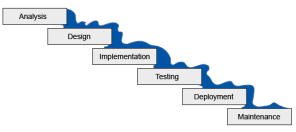
As I continue to heal from the events of the last year, the Lord has been filling in many of the emotional gaps that were once filled by my companion. In particular, the Psalms and the latter half of Isaiah have taken on much deeper, more personal meanings to me. The love, affection, and emotional attention that I once gave to my wife is now given to Him, and as a result I am growing much closer to Him. God most certainly is “enough” (what an understatement!) and is able to heal any wound you may have and make you feel completely “complete” regardless of how lost, empty, and hopeless you may feel.

While there are many verses I could list that have grown near and dear to me during this time, the one I’d like to close with is from Romans 15:13:

“Now may the God of hope fill you with all joy and peace in believing, that you may abound in hope by the power of the Holy Spirit.”

Posted in Character, Christian-life, New Beginnings, Personal, Refactoring, transitions, Trust | Tagged , , , , , , , , , | Leave a comment

Being Fleshed Out – Emergent Design

In our latest adventure at work, we’re racing headlong and headfirst down the road of “emergent design” in Agile software development. We’re learning how to “fail fast and fail often” the hard way, and it’s been a challenge to determine whether we’re failing “correctly” — if there really is such a thing!

Traditionally, software was developed in some form of “waterfall process” in which a relatively firm set of requirements were defined by sales or marketing, which then flowed down to engineering who then designed, developed, and tested the product. The product was usually well-defined, designed, developed, waterfalland tested with long-term considerations in mind, and wasn’t released (usually) until sales/marketing had received the product or feature they wanted. Then the entire process would start over with the next set of marketing requirements flowing down from on “high” again.

Unfortunately, the problem with the waterfall process is that it’s often slow, cumbersome, filled with latency/bottlenecks, and the products can become quickly outdated and often difficult to maintain over time. Sometimes the market is simply changing faster than the company can keep up with, and the product has become irrelevant before it’s even released. In certain markets, the product has become outdated even before the requirements are finished being written! Most software products are like any other perishable product: they have a certain shelf-life of a few years (or months!) and then they’ve lost their usefulness. In the worst cases, it’s like trying to bake a batch of cookies in which the ingredients expire before they’re done being mixed!

One of the more popular alternatives to the waterfall process is emergent design, in which the software development life-cycle is greatly shortened but sped up, and the product rapidly “emerges” in a series of small steps instead of one big release. In the end, the same product may be made available, but the user-base sees the product or feature evolve in a series of frequent steps with more functionality being added every few weeks instead of several months — or longer.

From Wikipedia (the final authority of all that is known on the Internet), “With emergent design, a development organization starts delivering functionality and lets the design emerge. Development will take a piece of functionality A and implement it using best practices and proper test coverage and then move on to delivering functionality B. Once B is built, or while it is being built, the organization will look at what A and B have in common and refactor out the commonality, allowing the design to emerge. This process continues as the organization continually delivers functionality. At the end of an agile release cycle, development is left with the smallest set of the design needed, as opposed to the design that could have been anticipated in advance. The end result is a simpler design with a smaller code base, which is more easily understood and maintained and naturally has less room for defects.”

While I’m still getting used to working in the emergent design world, I can see its benefits — and it’s drawbacks. The product/features receive frequent feedback from the user-base and the software changes to meet their needs and/or demands accordingly. Emergent design gets a larger user-base involved in shaping the product earlier and more often rather than at the beginning and end of the process. However, while emergent design does solve some problems, it also causes some that could be avoided with the moreRaw-cookie-dough traditional waterfall process, namely in the design phase. Going back to the cookies example, sometimes emergent design feels like you’re trying to bake a batch of cookies in which there’s no written recipe (just general guidelines) and the batter is being mixed by trial and error! Not only that, but the recipe is being continually refined based upon your kids’ taste-buds at any given moment!

I hate having to do a job twice – especially jobs that I’ve put a lot of time and effort and heart into. I was taught that if you have to do something twice, then you didn’t do it right the first time. I dislike writing “disposable” code, functionality that I know will likely be thrown away in a few months or even weeks! It’s one thing to write code in such a way as to prepare for new features you know will be coming soon, but quite another to write code that you know will be deleted or never even seen by the users!

Needless to say, that’s become a big part of my job over the last year or so – continually reworking and refactoring roughly the same code over and over again. A tweak here, a tweak there, with sometimes an ugly gutting of all the innards and practically starting over. While I understand and mostly agree with the new process, sometimes emergent design goes against every common-sense software-development bone in my body! Before we code up something, how about we slow down for a minute and make a good design that will last longer? Instead of swinging from one extreme (waterfall) to the other (emergent), can’t we come up with a happy medium somewhere in between?

In both worlds, the user-stories/requirements change and the software has to be modified accordingly. Customer A likes this feature but Customer B doesn’t, so we try to find a way to make both happy. In emergent design, the process is sped up and both customers end up getting a portion of what they really want. They may want a Cadillac, but they have to settle for a 10-speed, then a Kia, and then a Lexus (if they’re lucky). The software doesn’t necessarily become better and better as much as different and more inline with what the customers want (or can somewhat agree to), though that often changes over time too. I’ve been working on this project from Line 1 on Day One and while it’s continually changing, it’s not always evolving in a certain defined direction as much as being more “fleshed out” as time goes on.

Maybe that’s the way it is with us – maybe we’re not always improving in any tangible, particular ways as much as being stretched, deepened, thickened, and being more fleshed out. Circumstances outside our control change and we have to respond accordingly. People are constantly coming and going, feeling, responding, changing, and affecting us (for good or bad). Maybe we who are being molded and shaped by the Divine Potter don’t always become better and better in the way we think we should be as much as different and more inline with what He requires of us at that particular point in time, though that often changes too.

Maybe it’s more important to be walking with God along this long, winding, and bumpy road — wherever He may be leading us — than it is to get to what we think should be our position or destination as quickly and directly as we can. We like all those shortcuts to make things faster and easier on ourselves more than how the long, difficult journey will prove our character and faith — but He doesn’t. I think He is much more concerned with how we’re responding to Him and those around us at any given moment and seeing us draw closer to Him with every step along the way. I think He’s more concerned with how we emerge from our circumstances and how we conform to Him than anything else.

windingpath

Maybe God is more concerned with our character and how it’s being shaped day-in and day-out than how quickly and easily we get Home, because that’s already been assured once we become part of His Family. He expects us to get battered, bruised, and calloused along the way, doesn’t He? After all, those blisters prove we’ve been walking a long way for a long time, don’t they? He expects us to live fully and take risks just like the men the shrewd master entrusted his talents to (Matthew 25:14-30). He’s already promised to bring us Home and be with us all along the way on this Journey, but He hasn’t said much about the ardors of the Journey itself!

Though our lives and our walk may indeed resemble software being written by “emergent design”, we can trust that the Potter knows exactly what He’s doing and that He’s shaping all of us precisely how He wants us to be not only at any given moment, but the final product of our lives.

Now to Him who is able to keep you from stumbling, and to present you faultless before the presence of His glory with exceeding joy, to God our Savior, Who alone is wise, be glory and majesty, dominion and power, both now and forever. Amen. — Jude 24-25

Posted in Character, Personal, Refactoring, Software, transitions, Trust, Work | Tagged , , , , | 2 Comments