Introducing… Audiobooks!

Now available everywhere audiobooks are sold!

With the growing popularity of audiobooks, I recently decided to wade into those waters and had “The Author of Life” made into an audiobook by the great people at Findaway Voices!

After researching several options for how to create and publish audiobooks, I decided to use Findaway’s “Voices Share” program, which halves the production costs of the audiobook for which the narrator(s) are compensated by receiving half the audiobook royalties, though the author has the option to “buy them out” later. As with all forms of publishing, authors’ rights are critical when choosing a publisher, and Findaway presented the best options for authors, narrators, and other content-creators (in my opinion!). Being able to control pricing, content/changes, discounts, and distribution also played into the decision, as Audible/ACX has a policy of exclusivity for the audiobooks they publish. Also, Findaway’s recent distribution agreement with Spotify made the choice all that much easier!

“The Author of Life” audiobook is available at ChirpBooks, Spotify, Audible, and most other retailers.

The synopsis is:

When you think about God, what’s the first image that pops into your mind? Even when you hear the word “God”, what feelings arise? Are those thoughts and feelings of a loving, forgiving Father or a harsh, distant Judge or Someone in between two – or perhaps even something else entirely?

Could it be that because of our preconceptions, culture, and own personal history, the very word “God” itself colors our views and perceptions of Him at a fundamental level? What if our biases have actually blinded us to Him, His Word, and His heart?

What if we were able to reset those preconceptions and free ourselves from the baggage of our biases, perceptions, and our past experiences with God and those who claim to know Him?

What if we could start over from the beginning and learn about God without all our preconceived notions getting in the way and just learn about Him as He is, or rather, who He’s revealed Himself to be in His Word and throughout His Creation?

What if we could re-learn and re-think what we each individually believe about God and honestly get to know Him not as this distant, abstract religious entity but as something of an Author – the Author of Authors – who has a grand story to tell that He wants to share with each and every one of us?

In addition to “The Author of Life”, I had another audiobook created and published as well (“The Seed of Haman”). I’ve recently started writing the second book of the series (with plans for a third!), so the first book seemed to be the next best choice, particularly since it has a wider audience and is fiction rather than non-fiction. The narrator did a fantastic job!

This audiobook can also be found at ChirpBooks, Spotify, Audible, and many other retailers.

The synopsis for the book is:

In the heart of Iran, a dark family secret has been passed from father to son, mother to daughter, generation to generation — a line unbroken by time. And Dr. Shahzad Yavari, the professor of geopolitics at Tehran University, is destined to become the next recipient of this legacy.

After the sudden death of his father, Dr. Yavari learns of the most closely-guarded secret of his family: an astonishing lineage the stretches back more than three thousand years, and the inheritance of not only a kingdom lost, but a kingdom stolen from them. With this revelation, an ancient vendetta is reawakened and Yavari quickly begins rising to power in the Islamic Republic of Iran.

Deep inside the Quds Uranium Enrichment Facility near Qom, the scientists and technicians are under constant surveillance by the ever-watchful eye of the Iranian Republican Guard as the newest, fastest centrifuges are brought online. Within months, Iran’s nuclear program at Quds will be producing several warheads per year.

To counter the growing threat of a nuclearized Iran, a team of Israeli agents has been dispatched to Qom with the sole objective of stopping the enrichment program at Quds by any means necessary.

Posted in Books, Christian-life, God | Tagged , , , , | Leave a comment

Watching and Waiting

Like many other men, I like to build things, fix things, tinker with things, make things better (insert Tim Allen grunting sounds here!). I suppose it’s part of our male-nature such that when there’s a problem, we men feel compelled to fix it. In my long career as a software developer, there’s seldom a problem that cannot be fixed in one way or another, even if that means throwing all the code out the window and starting from scratch. In fact, sometimes that’s the best solution: take the lessons learned and start over from Line 1. Same with writing: you can always Shift-Delete that entire chapter (or manuscript!) and start over from scratch.

But in life, it’s not that simple — nor easy or painless. We usually can’t just click “New Life” and start fresh. Our baggage sticks with us, even if it’s only just inside. That means our life — our heart, mind, and soul — needs to be fixed; we can’t just start over and pretend that the bad stuff never happened.

For a long time, my wife and I have had conflict and tension in our marriage that we can’t seem to find any real resolution to. We’ve tried many different things to try to fix it, but the tension is still there. Earlier this afternoon when I was praying about everything, I heard God gently speaking to me about the situation and our marriage, but this time was different. This time, I felt Him clearly telling me that He doesn’t want me to try to fix it; maybe He hasn’t all this time and I just haven’t been listening. In fact, I think He wants me to stop  “doing” and focus on “being” and to simply trust Him. Listen to Him. Obey Him. He wants me to simply wait on Him and (gasp! anything but this!) be patient.

As I thought on His words for awhile, I came to the conclusion that He’s probably right — okay, He’s 10000000% right. (He IS God, after all!) Perhaps a solution or even a resolution is not what He’s after in all this (or at least not at this time). Maybe — just maybe, He wants my obedience rather than my results. Maybe there are other lessons that He’s teaching that I need to learn first.

Like Phil and all he went through at Big Idea, maybe this conflict is really about me and my wife (and us) learning some lessons that cannot be learned in any other way — deep, hard lessons that involve both our persons at the lowest, deepest levels. In His great providence, our love and commitment to one another has remained strong, even through these deep hurts and upheavals. Yes, there are terribly hard questions that have been asked and left unanswered, yet would those questions have been asked under any other circumstances? Not likely. Would many of the great works of art, books, or plays/movies have ever been written under any other circumstances that didn’t involve tremendous pain, tension, or conflict? Definitely not.

In the Christian walk, there are times of pruning from our Gardener. That’s what He does: a clip here and a snip there, and sometimes even a saw is laid against one of our wayward branches. All pruning is for our ultimate benefit, our ultimate good, and He knows what He’s doing. To the tree, pruning is never pleasant — it’s downright painful and seems cruel and heartless. How the tree must despise the gardener at times! But God is our Divine Gardener, and He knows what He’s making of us and what’s best for us — even when we don’t.

Especially when we don’t.

So what’s the Gardener up to in this time of trial and pruning? In looking at myself and my own heart, selfishness in one form or another has always been there deep inside, no matter how selfless, helpful, and giving I may happen to be. My objects of selfishness have changed over the years, from toys to cars to money to hobbies to free-time to control to you-name-it. The thing is, I know that I tend towards selfishness and that it’s not good, so I purposely do things to counter it, but that selfishness is still there lurking around the corner.

Now, I’m not only speaking of the selfishness that we typically think of when we hear/use the word, such as greed or materialism or lack of sharing. When we think of the word “selfish” we tend to think of a child refusing to share their toys with others, a miser like Scrooge who refuses to give a penny to someone in need, or Gordon Gekko pronouncing “Greed is good! Greed is right!” But that’s too basic and rudimentary.

There’s a deep selfishness in each of us that runs to our very core that began with Adam and Eve that makes us want to put ourselves, our desires, and our will ahead of anything and everything. When it came to their choice of whether to eat the forbidden-fruit or not, it was their self-ish-ness — their decision to but their own “self” and their will over God and His — that at their core drove them to disobey Him. They wanted their “eyes to be opened” so they could “be like God” and put themselves first above all others (including God Himself).

When it comes to marriage — ALL marriages — there’s inherent conflict because there are two self-ish people who desire their own way and will which usually comes at the expense of the other person or the marriage itself. Marriage was the first human institution designed — and blessed — by God back in the Garden of Eden and can bring both the greatest of joys in life or the worst of pains, a paradise or a prison. And what determines each comes down to the degree of self-ish-ness of the couple in that marriage.

On a spiritual and practical level, marriage is a perfectly polished self-ish-ness mirror; it forces us to look at ourselves, particularly as we are seen through the eyes of our spouses. In fact, most people don’t really realize how self-ish they really are until after they get married or have children, when they’re no longer able to put themselves above everyone else. Marriage and parenting forces people to step off their own pedestal and put someone above themselves. Marriage only works when both people are putting the other ahead of themselves — when both are practicing self-less-ness rather than our built-in self-ish-ness.

God wants to remake, remold, and reshape us in His image, but our inherent self-ish-ness resists Him at every step of the way. So what’s He to do in order to teach us about real patience, true self-less-ness, and genuine sacrificial love? Just offhand, He allows (or even puts) us into positions that we cannot easily get out of, sometimes in which we cannot “do” much of anything but learn to wait, trust, hope, and love even when it hurts — especially when it terribly hurts.

When God wants us to learn how to trust Him, He allows us to be put into situations in which we have no other choice BUT to trust Him.

When God wants us to learn patience, He allows us to be put into situations where being patient and waiting on Him is all we can do. He often makes us wait and wait and wait until it’s absurd. And then wait some more.

When God wants us to learn to stop trying to control things, He allows us to be put into situations in which we have zero control over much of anything. In those times of helplessness and being out of control, we can’t even control what we think about!

When God wants us to learn to be less selfish (and less self-ish!) and hold things more loosely, He takes them from our hands or waits for us to let them go before He can give us what really matters.

Posted in Uncategorized | Leave a comment

Lessons from Bob and Larry – Part 2

This is Part 2 of Lessons from Bob and Larry

A funny thing happens when some people become Christians. We get all “on fire for God” and begin dreaming up all these great things we want to do for Him and His Kingdom. After all, the world is lost and He commands us to go reach them, right? That means we’re to go out and do something and do it NOW. For some that means door-to-door preaching, teaching, bake-sales, volunteering, missions-work, and on and on.

In church, we’re often taught about spiritual gifts and how we are to find the ones that God has given us, and then go out and use them to the best of our ability; we are to get out there and “do something!” For Phil Vischer (see Part 1), that meant making funny animated videos with Bible lessons using talking vegetables. (I’ve always imagined God pointing out a couple of the episodes to some of His children up there and seeing what they thought of them, you know, like asking David his opinion of “Dave and Giant Pickle!).

For myself, that “doing something” meant writing some Bible software and then later Christian-oriented book after book. I suppose it’s a natural response (especially as Americans!) to want to “do something — anything!” for God and find your divine purpose in it. And if those things line up with your personal skills or even dreams, then it’s all that much better, right?

Wrong. Or at least not necessarily fully “right” — particularly in His eyes and His plans for us.

When we become born-again and set out to start walking with God — really, truly walking with God — a curious thing happens which many of us either miss or we’re forced to learn the hard way later on. And that truth is that God is far, FAR more concerned with who we’re becoming rather than what we’re doing for Him. (Read that again!).

You see, God — in His infinite wisdom and innate understanding of us and our inborn pride, arrogance, and even our lofty dreams (or are they really idols?) — He’s willing to put us through just about anything to help us to become the people He intends for us to be. Anything. And very often, the more dramatic (or harrowing), the better. Sadly, that’s often how we have to really learn those lessons for ourselves: by touching that hot stove that our mother repeatedly warned us not to. We don’t really “get it” until we feel that pain and experience it firsthand for ourselves.

In His infinitely love and wisdom, God’s priority for us as His adopted sons and daughters is to remake us in His image, to refine us, to cut out the sin, pride, and selfish/self-centered elements of our character and our flesh/sin-nature. Unfortunately, those usually aren’t our priorities — which is where disappointments, discouragements, and even suffering enters into the picture. We’re often too busy “doing something” to consider what He really wants with us.

The deepest, hardest lessons can only really be learned through deep hardships.

Now, don’t get me wrong about the “doing something” aspect of our walk with Him. Jesus Himself told us to “occupy until He returns” (i.e. don’t just sit around waiting for Him to return). God knows and even cares about our dreams — but NOT at the expense of His relationship with us or our relationships with others. There’s a point in which dreams become idols, and He knows that point in each of us far better than we ourselves do.

Though I’ve written this before (several times in fact!), God is far more concerned with our obedience rather the results of our efforts for Him. And that’s not merely for the sake of mere obedience as much as the refinement of ourselves and our will. Though He told us to spread the Gospel to all the world, He doesn’t really “need” us to do that (He can use a Divine Billboard, right?). But He indeed wants us to participate in His plan to redeem the world and bring others into the Kingdom — and shaping, refining, and remaking us in the process. However, in the process of our sanctification, He desires obedience more than results, or more Biblically, He desires obedience rather than sacrifice (1 Samuel 15:22).

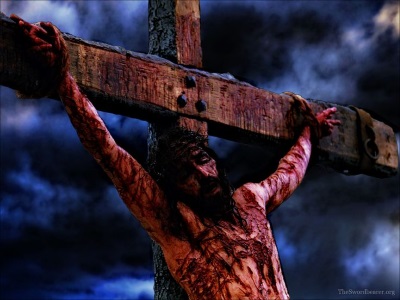
For us humans, we’re much more concerned with the destination rather than the journey — but not so with God. He has a knack for doing things the odd way to us anyway, right? Just open the Bible and pick a story, like Moses and his staff, Gideon and his lamps, David and his slingshot, Jonah and the fish (not a whale!), and of course, the multitude of animal sacrifices which culminated in His Son on a cross to redeem us. The incalculable amount of pain, anguish, and suffering that Christ endured just to redeem us!

In our lives, we’re much more concerned with what we’re “doing” and how we’re going to solve a problem or get through a tough spot to get back on Easy Street — but not Him. He’s much more focused on what we’re “being” and “becoming” rather than where we’re “going”. Since the destination is certain after we’re saved — Heaven with Him — that matter has already been settled; now it’s just a matter of getting there in the way He wants us to go.

God is far more concerned with our thoughts, prayers, attitudes, hearts, and our obedience rather than our comforts and accomplishments. Most of us just want to get on with life and get to the good parts, but not Him. He wants US to become the good parts and be the salt and light in this world. He’s content to let us suffer in the stew and marinade in the mess because He knows that that’s the only way to teach us the lessons He wants us to learn.

Perhaps it’s time for less “doing” on our part and more “being”…

Posted in Uncategorized | Leave a comment

Lessons from Bob and Larry

Have you stopped and asked yourself — really asked yourself — what in the world is God up to when everything is going off the rails? Where is He? Why is He silent? Why doesn’t He intervene?

Though this post has been in my backlog for six months (incessantly nagging at me!), it’s even more important and relatable now with the ongoing war in Ukraine. Where is God? He sees exactly what’s happening there and yet He doesn’t seem to be all that concerned.

Biblically, we know He does indeed care for the plight of the innocent and loves peace and absolutely hates unjust wars such as this Russian invasion. Yet He doesn’t seem to be responding to the prayers of literally millions of people lifting up their desperate voices to Him. Millions of innocent men, women, children are suffering and crying out to Him and yet there seems to be little more than…silence.

What is He up to? Where is God when we need Him the most? As CS Lewis once wrote,

“When you are happy, so happy you have no sense of needing Him, so happy that you are tempted to feel His claims upon you as an interruption, if you remember yourself and turn to Him with gratitude and praise, you will be — or so it feels— welcomed with open arms. But go to Him when your need is desperate, when all other help is vain, and what do you find? A door slammed in your face, and a sound of bolting and double bolting on the inside. After that, silence.”

Yet He is there. He’s always there — even when it seems like He isn’t. And He’s working — yes, He is working even in His apparent silence in this terrible war.

On the weekend after my grandfather died sixteen years ago (this month, in fact), I was in Chicago and spied a familiar face in the airport terminal; I knew for certain that I had seen this man before, but I couldn’t place him. Since the airline let us choose our own seats, I ended up sitting next to him and introduced myself shortly before take-off. It was Phil Vischer, the creator of “Veggie Tales” and the voice of Bob the Tomato, Mr. Lundt, and several others! We chatted for a short time and I asked for his autograph, as he was (and still is!) the most famous celebrity I’ve met in person (with the exception of Dennis Prager). And while he was polite enough (and even friendly), he seemed tired or even sad and didn’t seem like he was up for much conversation. He ended up sleeping (or reading) most of the way to Denver and then we went separate ways.

A few years later, I read that his company, Big Idea Productions, had been sold about that same time, but it wasn’t until I read Phil’s book last year “Me, Myself and Bob: A True Story About Dreams, God, and Talking Vegetables” did I understand why he seemed like he was exhausted or even discouraged — because he was. His book is about how he had all these big dreams for God and His Kingdom inspired by Walt Disney, and that he wanted to create an animation studio (and even a theme-park) to rival Disneyland/World. The technology had come along at just the right time, God had provided the financing and the right people at the right moment several times, and it seemed like it was His Will to make Big Idea the “Christian Disney” for kids, families, and the country, to help shape our culture and even maybe turn it back to God in some ways.

But then Phil’s dream with Big Idea died — or rather, his dream was killed both by forces outside his control and his own missteps at times. The storm clouds rolled in and didn’t depart. Soon the dominoes quickly began to fall and the company fell apart and was eventually sold off. Big Idea and Veggie Tales went from having incredible, exponential revenue to bankruptcy in a few short years. The Christian Disney was no more. God could have easily intervened many times, but He didn’t.

Much of the book is about Phil Vischer telling the story of Big Idea, its rise and fall, and also even apologizing to his former employees, investors, fanbase, and others. The last few chapters are about his personal “lessons learned”, why Disney worked and Big Idea didn’t, and those other hard lessons that are only learned by failure. That in itself bears repeating: Some lessons are only learned by failure (or at least by hardships and struggles).

In the end, Phil realized that God had allowed that struggle and failure to reach deep into something that was much bigger and much more important to God than Big Idea: his heart and relationship with Him. Was Phil’s dream more important to him than God and his relationship with Him? How could God (and Phil) really know? Easy — by taking that dream away and seeing what remained.

That is the sort of God that our God is: one who would allow the failure of a Christian media company that was impacting millions of lives (especially children!) to reach one man who needed to be reached the most (as well as others). Is the “message” and its distribution as important as the hearts of those who are spreading it? That’s a good question. It seems to me that God is more concerned about our hearts and day-to-day lives than the means and methods and channels of spreading His message.

With that in mind, what else might God be willing to allow to fail — or bring to the verge of failure — in order to reach someone? What extreme, almost-absurd lengths is He willing to go to in order to redirect someone back onto His path for them? You might be surprised. We ALL might be surprised.

Stay tuned for Part 2…

Posted in Uncategorized | 1 Comment

It Wasn’t For Nothing

This morning after I had finished my daily YouVersion readings, I was scrolling through Instagram a little and stumbled across a post that caught my attention.

There on the screen was a middle-aged man in a gray tee-shirt lying on his back in his driveway, blankly staring up at the sky. He’s not hurt — at least not physically — but he appears to be all but spent. Worn out. Defeated. Exhausted. Overwhelmed by whatever was happening such that all he could do was lay down on the hard cement next to his car. The caption of the video read, “Imagine Jesus whispering this to you…”

What made me really stop and watch — aside from the fact that 99.9% of all social-media posts are NOT of people laying on their driveways — was that it captured my mental picture of myself lately. My initial reaction was, “Oh my God, that’s me! How did they know? That’s exactly how I see my life right now! That’s exactly how I feel inside!”

And then the man closes his tired eyes as a quiet voice begins whispering to him. He doesn’t sob or convulse in tears, he just lays there, listening silently.

It wasn’t for nothing.
   Everything that you’ve been through,
It wasn’t for nothing.

I created you with purpose
   And even through the darkest valley,
You continued to love Me and follow Me.

And I will bless you.

And then I began to sob, those big, ugly, heartfelt sobs that come from the pit of your soul. These beautiful words ministered directly to my heart this morning in a way that nothing else has been able to for quite some time. Again, how did they know? How could they have seen? After all, I hide my emotions pretty well to everyone at the gym, at church, and of course, everyone I work with. How could anyone know exactly what I’ve been feeling, and more importantly, what I’ve been needing to hear for so long?

But He knew. And He cared enough to simply drop that into my feed this morning.

He always knows. And He cares. Our Father sees us in our hardships, our sorrows, our pain, our messes — yes, even in the messes that we ourselves have made — and He cares. He loves us and He cares.

The last seven years of my journey here have been one major upheaval after another, with some better and some worse (and some very worse!). There have been so many changes, transitions, and surprises (especially within the last year), that I almost don’t know where to begin. And while each setback or major life-change is understandable (or even sensible) within the context of the different situations and circumstances at the time, when stepping back and looking at the journey as a whole, it seems like nothing short of a train-wreck in which very little makes sense anymore. No train-wrecks ever make much sense.

But when we go though these deep, dark valleys in which we can’t even begin to see the end, He sees and He knows. Sometimes we run, sometimes we walk, sometimes we crawl, and sometimes when its all just too much, we lay down and stare up at the endless sky above us, searching for a glimmer of light to give us just a little more hope to keep going.

Our faith in Him, our trust in Him, our love for Him, and our dogged clinging to Him through it all — it matters. And it matters greatly to Him. As Job so aptly said during his own ordeal, “Though He slay me, I will trust in Him.” (Job 13:15)

It wasn’t for nothing.
   Everything that you’ve been through,
It wasn’t for nothing.

I created you with purpose
   And even through the darkest valley,
You continued to love Me and follow Me.

And I will bless you.

It isn’t for nothing. He sees and He knows.

It’s my hope that others will see this and be ministered to just as I was today. Regardless of how we may be feeling or what’s overwhelming us, our Father knows. And He cares. And one day when we finally meet Him, He’ll wrap His strong, gentle, loving arms around us and whisper directly into our broken hearts:

“It wasn’t for nothing…”

@jesusthegreatlight
https://www.instagram.com/reel/CX1LofUh2V7/

Posted in Christian-life, God, New Beginnings, Personal, Prayer, Refactoring | Tagged , , , , , , , , , | Leave a comment

The Saint, the Surfer, and the CEO

After not blogging for months (or longer!), this will be the second post within the last few days! I suppose that’s what happens when juggling work, writing, and just life-in-general. I’ve found that reading a couple of books outside of whatever topic I’m entrenched in between writing projects (and just along the way) is a good way to refocus, re-energize, and of course, relax. “The Saint, the Surfer, and the CEO” is a book I stumbled across several months ago, likely because it had “surfer” in the title — and “saint” — which is rather rare in itself (the “CEO” part wasn’t quite as appealing to me, to be honest). And I don’t usually go back and re-read very many books, but this one was an exception because of some of its insights and perspectives into inner heart-work, failures, human-nature, wisdom, and just life in general. So last week before the holidays, I began to re-read it to see what more I could glean from it. The book is mostly written from a First Person point of view around a character named “Jack” who was recently in a bad car accident that put him in the hospital for several days. The day after he wakes up, an older man (“Cal”) with terminal cancer is wheeled into his room and they strike up a conversation. Cal begins to tell him about his life, his family, his successes and failures, his regrets, and the wisdom about life he’s acquired along the way. During their exchange and long discussion, Cal tells him about the Final Questions when we get to our life’s end (according to the book) and how he learned to answer them:

1. Did I live wisely? 2. Did I love well? 3. Did I serve greatly?

They continue their discussion long into the night and Cal tells him about the three mentors that helped him answer those Final Questions for himself. When Jack wakes up the next morning, Cal has died in his sleep from the cancer. Upon his discharge from the hospital, Jack is given a package at the checkout desk — a letter revealing that Cal was actually Jack’s father who left when he was little, along with three first-class airline tickets to introduce him to his three life-mentors: the Saint (a priest in Rome), the Surfer (an ex-marketing guru in Hawaii), and the CEO (a finance executive in New York). Each mentor has agreed to spend one month with Jack, teaching, guiding, and sharing life with him in order to help him begin to answer those three Final Questions for himself — something that had taken Cal most of his life to do. So off Jack goes, first to the Saint to learn how to live wisely, then to the Surfer to learn about loving well, and lastly to the CEO, who taught him how to serve others. In the end, he is transformed from the inside-out and his life-perspective and philosophy becomes radically different as he is taught to embrace all of life, not merely the good times/events, along with him learning how to answer those Final Questions for himself. The book contains a great deal of wisdom about living day by day, about learning from our big failures and disappointments in life, about dreams and goals, about relating to others, and about being thankful or even joyful about the many “gifts” that come into our lives each day. While much of the book is good in that regard, as a Christian I tend to disagree with several of the underlying premises in the book, such as “looking within yourself for the answers” and “recovering your true self that was diminished as you were socialized”. The Bible makes it abundantly clear that we don’t have all the answers and that our hearts are easily deceived, so we need God and His Word/Presence to give us true wisdom, self-control, and to remake us from the inside out (Romans 12:2) and continually transform us. As with many other self-help and philosophy books, using the “Eat the meat, Spit out the bones” methodology still results in gleaning a good amount of wisdom and perspective from the book. All in all, “The Saint, the Surfer, and the CEO” is a great read for anyone starting out, getting a new start, or just going though their adult years (especially their middle-age years!). In the end, we’ll all have to answer those Final Questions for ourselves: “Did I live wisely?”, “Did I love well?”, and “Did I serve greatly?”.
Posted in Uncategorized | Leave a comment

Chains of Darkness … Released!

Now available on the Kindle and in paperback!

My latest novel (“Chains of Darkness”) is ready for Kindle download at Amazon.com! The book is also available in paperback format.

“Chains of Darkness” is the third book in “The Days of Noah Series.” The series consists of three books so far (in order): “Rise of the Anshar“, “Fountains of the Deep“, and “Chains of Darkness“.

The synopsis for the book is:

The Great Flood has begun, and every living creature which had the breath of life has died. All have been destroyed, mankind and beast and bird alike, everything and everyone – all except for those with Noah in the Ark. Outside its walls, they can hear the storms raging and the destruction continuing to sweep over the earth.

But among the dead and the dying, the spirits of the giant Yarim, the Anshar, the Nephilim, and the other unnatural offspring of the fallen angelic Watchers awaken to find that they are neither living nor dead yet doomed to roam the earth. Meanwhile their fathers, the fallen Watchers, have been sentenced to the gloomy dungeons of Sheol, awaiting their final judgment at the end of time.

This is their story, how the once-mighty Watchers fell from grace and then corrupted the entire world. This is the story of the great giants who once roamed the earth, defeating dragons and conquering kingdoms. This is the story of the First Ones and the world that they built, and how their people spread over the earth before the Flood.

This is a story of the First Age, when dragons and giants freely roamed the earth and mankind lived for hundreds of years. Paradise was fresh in our memories and still sought by those who yearned for it. The earth was young, unmarred, and bountiful — and ripe for subjugation by men, giants, and demons.

“Chains of Darkness” is the third volume of “The Days of Noah Series”, a collection of novels which are set in the age before the Flood of Noah that chronicle the events of the First Age and then the replenishing of the world after the Flood until the time of Abraham.

Posted in Books, Creation, God | Tagged , , , , | Leave a comment

Two New Books for 2021!

Now available on the Kindle and in paperback!

My latest non-fiction work (“A Tale of Two Women”) is ready for Kindle download at Amazon.com! The book is also available in paperback format.

The synopsis for the book is:

A Tale of Two Women: Sarah and Hagar. One is famous in many circles of faith, while the other is relatively unknown. This is the story of Abraham, his wife Sarah, and her servant Hagar, as well as the two sons that they bore to him, one who’s later referred to as the “son of the promise” while the other is simply known as the “son of the bondwoman”.

While most books written about Genesis 12-25 tend to focus on Abraham (the friend of God), God’s promises to him, and his great faith in God, there’s more to his story – much more. This book concentrates on the “first family of faith” of Abraham and Sarah and digs into the personal dynamics of their marriage, their family, and many of the trials, pain, and heartache that shaped them and the many peoples which would later come from them.

Abraham’s story isn’t just about him and his life of faith, but about him and the two women in his household who daily influenced him and his faith – as he influenced theirs. As we are shaped by our trials and the people around us, so he was shaped by his own trials and those around him. In studying the lives of Abraham, Sarah, and Hagar in depth and in the context of the rest of the Bible as a whole, we can be better equipped to answer the hard questions of trials and suffering when they come into our own lives, regardless of how much we’ve been blessed.

In addition to “A Tale of Two Women”, another book is now available as well (“Making a Great Life”) for Kindle download at Amazon.com and in paperback format.

The synopsis for the book is:

So you’re an adult and heading out on your own now – congratulations! While there are many self-help books on “adulting”, this book focuses on the core principles of building a solid foundation for your life and providing practical, everyday advice about how begin start this new and exciting – and often frightening – journey into adulthood.

The main principles discussed in this book are “Learning and Growing”, “Discovering Your Identity”, “Wealth and Money”, “Hopes, Dreams, and Disappointments”, “Love, Relationships, and Heartbreak”, “Self-Control, Self-Care, and Seeking Justice”, and “Working, Living, and Finishing Well”. The sooner you start building your life’s foundation on wisdom and sound, sensible advice concerning your identity, character, dreams and goals, relationships, working, self-control, and money, the better-off you’ll be.

Whether you’ve recently had your eighteenth birthday or you turned eighteen awhile ago, this book will benefit you in your endeavor towards independence, self-reliance, and building the life you want.

Posted in Books, Christian-life, God | Tagged , , , , | Leave a comment

Recapturing Joy in Difficult Times

With the close of 2020 and the beginning of 2021, people have many different feelings about the year ahead. We’re not merely wondering if it’ll be good or bad, but if it be relatively normal and uneventful after the last nine months (thankfully we skipped the murder-hornets!). Imagine that – most of us are just hoping for “normal” now! And while 2020 began with its typical share of hopes and expectations that most new years bring, very few expected it to turn out the way it did, both with the pandemic and its effects on much of our former ways of life.

Ironically, for years a number of people have been praying for our nation or even our world to be shaken up a bit (so to speak), to help us get back to what’s really important in our lives, to force us to slow down, disconnect from our culture and its entertainments, and reconnect with our marriages, children, and families. For years, various commentators and thinkers have been asking what it’ll take to get people to become more engaged – really engaged – with what’s really important in life, what’s happening in our culture, our political system, and even our own families. Many people were busy but bored, comfortable but not content, and we took many things for granted but were not grateful. We prayed for a revival in our land, something that would wake us up from our spiritual stupor. And then came the COVID-19 pandemic in 2020.

Might I suggest that they got what they asked for, that we got what we asked for? It’s not too soon to say that, is it? If it is, don’t shoot me – I’m just the messenger! Sometimes, God has this way of answering our prayers yet not at all in the way we would expect or even want. He promises to send revival but never in ways that we seem to expect. He doesn’t do that to be cruel or anything, He just has His ways of using bad things for good, even if it’s not always exactly what we’d call “good”.

In my own family and our personal lives, this year was an incredibly challenging, difficult, and trying year – and one that we hope we never, ever have to go through again. The pandemic only added to the challenges, and there were many times in which it felt like our joy and happiness were being stolen right out from under us. During these times of testing and trials, the old adage of “When you get to the end of your rope, tie a knot and hang on for dear life!” certainly applies! And of course, we were not alone; there are many people and families going through difficult times, and the pandemic only added to it.

Yet while we often try to escape or avoid trials and terrible years like 2020, God is still present. He’s still on His throne, He still loves us, cares for us, provides for us, and He’s still at work in our lives, despite how tumultuous the times are. His purposes and plans for us and the rest of the world will not be thwarted, regardless of what transpires. In the Big Picture of both our lives and eternity, little has really changed, except perhaps that we’re not as certain of today or tomorrow as we once thought we were. But life in this fallen world is uncertain – it always has been since Adam and Eve’s transgression.

When I look over the last year or so and take a step back from everything, I can clearly see how our Adversary continually schemes and plots to steal not merely our happiness, but also our joy, our security, our trust – and even sometimes our faith. Consider how easily so much of our lives, security, routines, and “normalcy” have been disrupted by a microscopic virus we cannot see, touch, hear, taste, or smell. And even though God knows this, He allows it to happen. Why? For His purposes and His glory.

Over and over in the Bible, God tells us to praise Him, to give thanks, to sing, to not be afraid, to rejoice – with no clarifications or conditions attached. We are to do these things not merely when times are good, but when times are bad – especially when times are bad. Perhaps that’s why so much of the Bible was written when the days were dark and the nights were long, from dungeons, in captivity, and from wilderness hideouts. It’s not in times of ease and comfort that we tend to draw closer to God, but in times of trials and tribulations. And global pandemics.

Might I suggest that God’s purposes in the midst of not only this pandemic but in all of life is to help us find our joy, security, and comfort in Him – and ultimately, only in Him. Anything less is a form of idolatry as far as He’s concerned. He loves us too much to allow us to settle for second-best, for things that won’t really satisfy our souls, for anything less than Him. By Jesus’s work on the cross, our Adversary knows he’s a defeated foe, and for those of us who are saved, that our eternal life is secure in Christ, that we’re no longer part of his kingdom. So what does he do? He seeks to steal our joy, our gratitude, our blessings, and keep us focused on this world and our problems rather than on our King.

The first and greatest commandment is for us to love God with all of our heart, mind, soul, and strength. The second is to love our neighbors as ourselves, meaning anyone and everyone. The greatest, most desperately needed cure for this broken world isn’t another vaccine for a tiny virus, masks, or more social-distancing, but for us to love God with everything we’ve got and to love one another as ourselves. We are to look to Him for our source of joy, security, comfort, and well-being. We are to be thankful, to be a blessing, and to be joyful in all we do.

So in the midst of this pandemic and throughout life’s times of trials and tribulations, how do we recapture our joy in Him? First and foremost, spend time with Him, His Word, and His people. It may not be easy nor comfortable at times, but important, life-altering things rarely are. Second, enjoy His creation and explore the world around us, even if it’s only on a screen at times. Third, use whatever opportunities you have to draw closer to Him, even if they may not make sense to others – or even yourself sometimes.

For myself, over the last year or so (but especially since the pandemic hit), I’ve gotten into the habit of getting on the YouVersion app first thing in the morning and going through the Daily Story, along with at least one devotional plan (and then some). I do my best to get up early and take a long walk to a nearby park to start my day with Him, and then sometimes again in the evening at sundown.

When something wakes me up in the middle of the night (or I simply can’t sleep), I use that time not to worry, think, or fret, but to pray and seek Him. After all, who’s to say that He wasn’t the one who woke me up early or withheld sleep from me in the first place? Perhaps He wants to hear from us just as much as we want to hear from Him? These habits weren’t easy to start and more out of necessity than anything else.

As the new year begins and this pandemic continues, let’s try to use these trials for His glory, our benefit, and to redeem the time that God has given us.

Posted in Uncategorized | Leave a comment

A Dead King and an Ex-President

The 2020 US election is over – and has been for several weeks now, despite all the lawsuits, court-rulings, petitions, investigations, accusations, etc. As with most of our elections for the past 30+ years, one-third of the country is happy (or relieved), one-third is disappointed (or furious), while the other third is rather apathetic.

As a more-conservative American, I’ve had mixed feelings about President Trump since he announced his candidacy in 2016, liking many of his policies for promoting and protecting American interests yet being rather embarrassed by his abrasive personality and polarizing behavior. He may have a commendable work-ethic, great policies for America and Israel, and be able to get many things done, but he was far too polarizing, uncharismatic, and even rude and immature at times.

One thing that every viable candidate needs to win and hold democratic office is to be gracious, likable, and not too polarizing. One can differ with others (especially their enemies) and still not be antagonistic towards them. Ronald Reagan was fiercely opposed by his political rivals and the media, yet was still a likable person, which was reflected in his two landslide elections. The same can be said of George W. Bush, who was also continually opposed and maligned while in office but was not overtly antagonistic towards the press. Not so with Donald Trump.

Something that deeply grieves me about modern America is how we’ve lost so much of our “Americanism”, our reverence for God (if not the simple respect for Him and His basic laws like the Ten Commandments), our love of country, our common values, and our ability to be polite, kind, and even civil towards our fellow countrymen while greatly differing with them on various issues. Our history as a country and a culture has been mistaught (if not perverted) for several decades, and we’ve become more and more divided in the midst of this culture-war that began in the 1960s. The media, our culture, and our politicians are responsible for much of the divide, but in the end it comes down to us, our choices, and our values as individual Americans.

If I can be a bit personal for a moment, I had been hoping that the Biblical promise in Genesis 12 that states, “Those who bless Israel will be blessed, and those who curse Israel will be cursed” that is often cited would apply to this election, particularly after all that President Trump has done for our Jewish friends in the Middle East. There has been no other American president who has so staunchly defended Israel and her interests as President Trump, and it’s unlikely there will be another like him anytime soon. During his short term in office, he moved the US embassy to Jerusalem and encouraged many other countries to do so (which several did), along with fostering numerous peace-deals and normalizing relations between the Arabs and Israel, while not pressuring the Israelis to exchange land for peace (which only emboldens their enemies).

The result of this election (along with others in the past), usually makes me consider where God stands when it comes to nations, rulers, and politics in general. I often don’t understand why He allows things to go certain ways that seem to break His promises to reward those who follow Him and His laws. And it’s not merely that way in modern times, but over the long course of history, particularly Israel’s history. Some of the best kings’ reigns were cut short, while some of the worst kings ruled for far longer than they should have. Why? Why wouldn’t He reward good kings with long, prosperous reigns and the bad ones with curtailed reigns? Sometimes it simply doesn’t make sense!

For example, the last good king in Judah/Israel, King Josiah, was an excellent ruler who completely cleaned up the nation after decades of Baal-worship, debauchery, and idolatry. He re-instituted the Passover, the reading (and following) of the Law, the Temple sacrifices, and led the way in trying to draw the nation back to God. Yet look what happened to him: he went out to battle (though he’d been warned he shouldn’t!) and was slain by an errant arrow. Consequently, King Josiah’s death led to the Babylonian Captivity and the destruction of the entire nation – her people suffered like no others have in the history of the world (just read Lamentations).

So why did God allow King Josiah to die? After all, God could have protected him and saved the nation – but He didn’t. Of course, God has His reasons and is completely sovereign, and since He knew the peoples’ hearts, He knew they were merely going through the motions and still secretly worshiping idols. Though Josiah had purged all the idols from the land, the people were completely hardened against God; they had turned to Him in pretense to obey their king, not genuinely in faith in keeping with true repentance. Jeremiah’s early ministry while Josiah was still alive exposed the true condition of the hearts of his countrymen, particularly those within his own family.

Throughout history, there has continually been a struggle between individual freedom/liberty and political power. A king, military, or party rises and gains power, abuses that power, the people or their opposition revolts, and the cycle continues. In American history, the transfer of political power has usually been very peaceful, with little bloodshed when a new Congress or President takes office. That hasn’t been the case for most of human history – America has been the exception rather than the rule.

Our unique Constitution divides political power among three branches of government, espouses individual liberty, limited government, and federalism, and its system of checks and balances has consistently slowed the encroachment of our liberties by our own government. However, the further we get away from the Bible and the Rule of Law it promotes, the more liberty we individuals lose to our governing authorities. If we’re increasingly immoral, divided, and lawless as individuals and as a culture, the more immoral, divided, and lawless our government will become. And it certainly has.

Like ancient Israel/Judah, the demise of our chief executive shouldn’t trigger the demise of the nation IF (and that’s a big “IF”) the people of that country are civil towards one another, living morally and uprightly, following the Rule of Law, and “doing justly, loving mercy, and walking humbly with God” (Micah 6:8). But as I observe American culture, politics, social-media, attitudes, and civility (and lack thereof), like ancient Israel/Judah, I cannot say we are – much at all in fact. It’s increasingly difficult to discern the truth on any significant issue because truth has become so relative in our society.

So then what are we do to as Americans in our deeply divided nation and culture? It’s really quite simple, and it’s the same message that God has proclaimed all throughout history: repent and seek His face.

Do justly, love mercy, and walk humbly with God. Love one another and treat your neighbor as yourself.

If we really do love our nation and want to see it preserved, we must learn to love one another – regardless of our opinions and politics.

Posted in Uncategorized | Leave a comment